

A small farming village sits beside the river where the farmer works each day. It is a quiet, simple sentence, but for a 4th grade student, it is the perfect place to start talking about what fluency actually sounds like in practice. When you listen to your students read, you can tell within seconds if they are decoding individual sounds or if they are gathering meaning from the text. This 4th grade English Language Arts lesson, Reading with Accuracy and Expression, is designed to bridge the gap between word recognition and true reading comprehension.
Many students arrive in the fourth grade able to read the words on the page, but they do it in a robotic, monotone way that acts as a barrier to understanding. This lesson focuses on the core concepts of accuracy and expression. Accuracy is defined here as the ability to read words correctly without skipping or changing them while maintaining an appropriate rate. Expression is the use of voice, volume, and tone to convey character feelings or the mood of the writing. These are not just nice additions to reading; they are the mechanics of meaning. If a student ignores punctuation or misses the rhythmic structure of a poem, the story simply falls apart for them.
What the lesson actually asks students to do
The core of this work is teaching students to pause and self-correct. The lesson provides a model where a teacher stops reading when a word does not make sense. This is a vital habit for students who tend to skip over words they do not recognize or force a wrong word into a sentence just to keep moving. By modeling this pause, the lesson teaches students how to use context to figure out the meaning of a word they do not know. The surrounding words and sentences are their primary tool for confirmation. When a student learns to look at the context, they stop guessing and start reading.

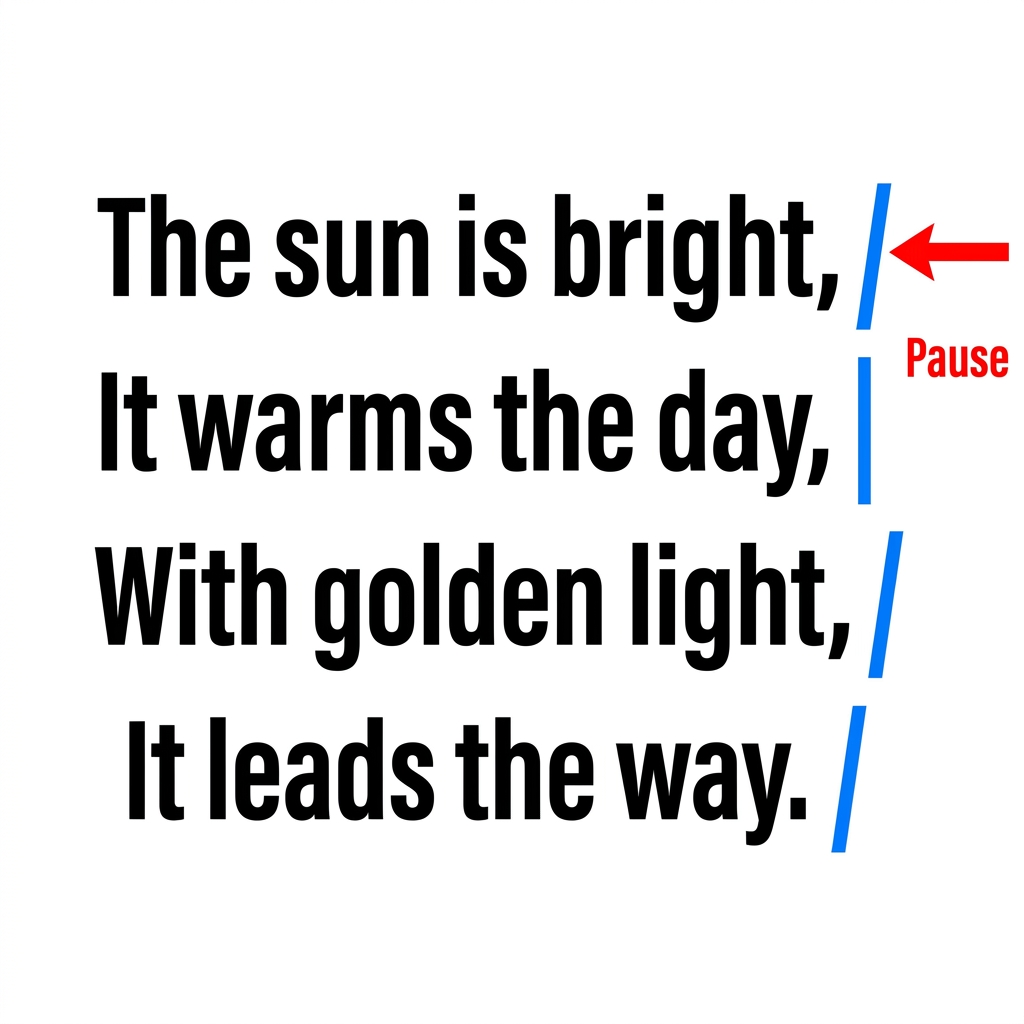
The lesson also moves into the nuances of reading poetry. In a worked example scenario, the material explains that if a poem has four lines, a reader should pause slightly at the end of each line to hear the pattern of the words. It is an effective way to show students that punctuation and line breaks are instructions, not just visual decorations. They are learning to listen to the rhythm they create with their own voices. The guided practice then puts the students into a mystery passage, forcing them to apply these rules to find clues and interact with the text with more intention.
If you are looking for fluency and expression instruction, this lesson fits into your routine by addressing the California-adopted standard CA.ELA.RF.4.4. This standard asks that students read with sufficient accuracy and fluency to support comprehension. It includes three specific parts: reading on-level text with purpose and understanding, reading prose and poetry with accuracy and appropriate expression, and using context to confirm or self-correct word recognition. These foundational skills are taught across the state, from Irvine Unified and Corona-Norco Unified to Salinas City Elementary School District and Menifee Union School District. Every student in these districts is working toward the same goal of becoming a more fluent, thoughtful reader.
Why this lesson matters for long term growth
I have seen too many students hit a wall in the fifth and sixth grades because they never mastered the ability to adjust their reading rate or notice when a sentence does not make sense. If they are reading solely for speed, they miss the mood of a narrative or the specific facts in a news story. The lesson includes a why-it-matters statement that reminds students that accuracy matters for understanding facts, while expression makes storytelling fun for a younger sibling. This matters because it connects the technical skill of reading to the actual social utility of language. When reading is accurate, the facts are clear. When reading has expression, the story breathes.
My one caveat is that this lesson requires active listening on your part. You cannot simply hand this to a student and walk away. You have to hear them read aloud. The lesson is most effective as a whole-class assignment where you can demonstrate the difference between reading a sentence with a flat voice and reading it with purpose. If you use it as an intervention for a student who missed the week or as an independent study tool, ensure they are recording themselves reading. Hearing their own playback often acts as the mirror they need to realize they are rushing or ignoring the period at the end of a line.
Practical ways to implement this in the classroom
You can use this material for more than just a standard reading block. It works exceptionally well as a substitute day plan. Since the instructions on how to pause and check for meaning are so clear, a substitute can easily guide the class through the mystery passage exercise. It is also a high-impact intervention tool for those students who are stuck in a cycle of guessing words based on the first letter rather than checking the full context of the sentence.

When I look at the progression of reading skills, I see this lesson as the essential filter for later work. If a student does not master the ability to self-correct and adjust their expression now, their ability to analyze complex literature in middle school will suffer. The mechanics of reading should become invisible by the time they reach upper grades, but that only happens if they have spent enough time being conscious of their own errors. Use the mystery passage as a way to lower the stakes for your struggling readers. They are not just reading; they are detectives looking for clues to make the sentences make sense. That shift in perspective can change how they approach every other text they open this year.
Related lessons
Decoding Multisyllabic Words, Teaches strategies for breaking down long words into manageable parts