

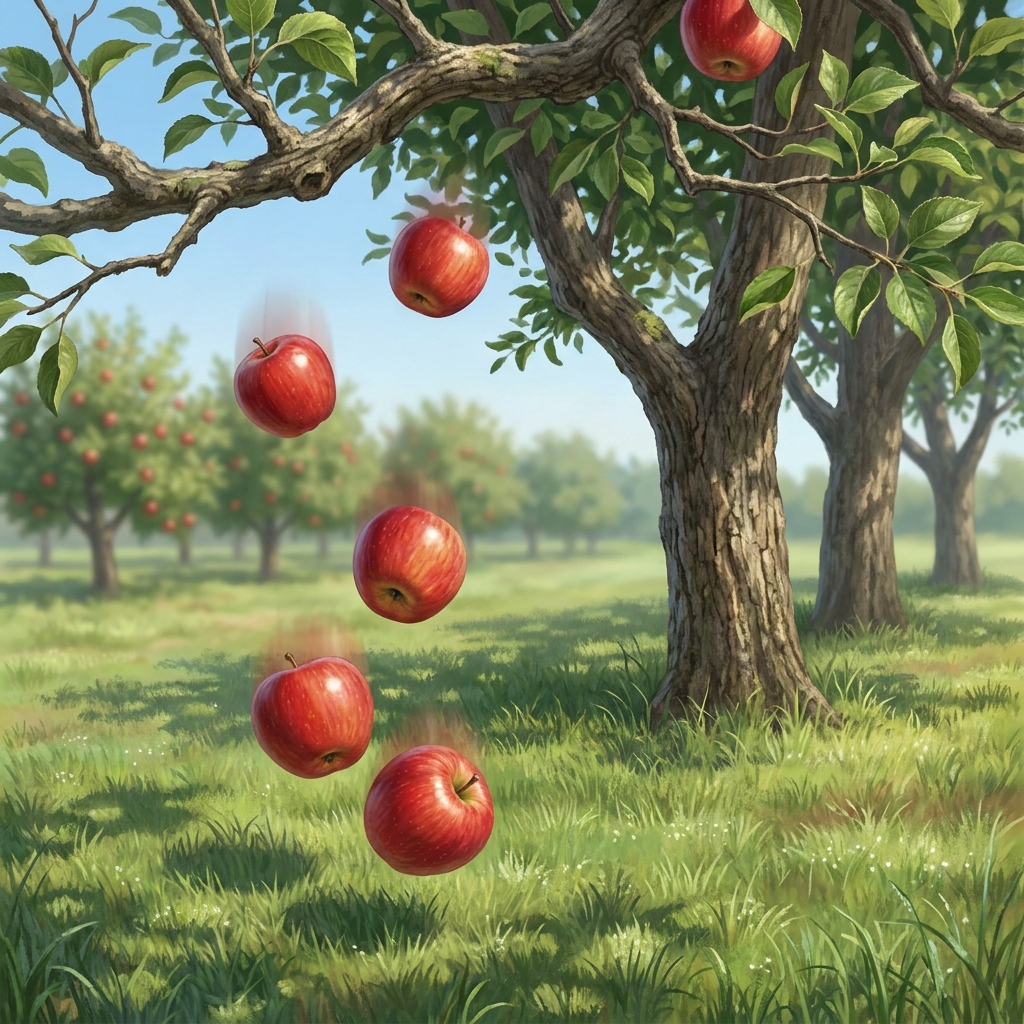
When we get to our unit on forces in 6th grade science, students often arrive with the stubborn misconception that gravity is a property only massive planets have, or that it is somehow turned off for objects floating in orbit. It is a common hurdle to overcome because, in their daily experience, the floor is always there to stop their motion. To help your students move past the idea that gravity is a stationary force, Gravity: The Invisible Pull provides a clear path to understanding that gravity is actually an interaction between any two objects with mass.
Connecting mass to gravitational force
This lesson hits the nail on the head by defining gravity as an attractive force that pulls objects toward one another. Students learn that this isn’t just about the Earth pulling on us; it is a two-way interaction. The lesson uses the example of an apple falling from a tree to illustrate that while the Earth pulls the apple down, the apple is technically pulling the Earth up. Because the Earth has so much more mass, which is defined here as the amount of matter or stuff that makes up an object, the apple is the only one that appears to move. This specific distinction is the key to helping students grasp that gravity depends on the masses of interacting objects.
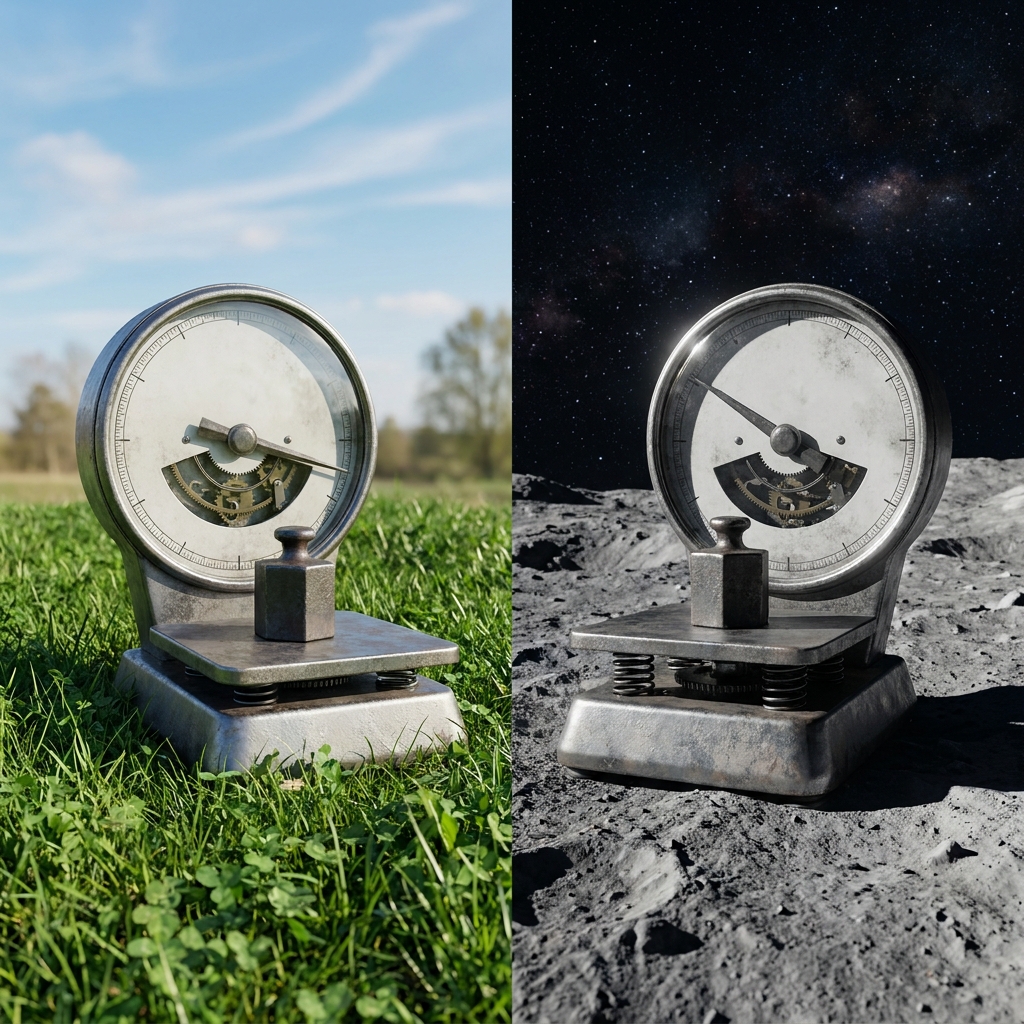
If you are looking for a solid 6th grade gravity science lesson, this one fits well for a whole-class introduction or for a student who missed the week and needs to catch up on the fundamentals. The lesson explains that gravity is an attractive force, or a pull that brings two objects closer together. It moves from that simple concept to a guided practice where students think about a satellite orbiting the Earth. It does a great job of connecting the abstract math of physics to the physical reality of the solar system.
Beyond just basic definitions, the material encourages students to ask thoughtful questions about what happens when objects of different sizes interact. By visualizing the invisible tether between a satellite and the Earth, students start to see that gravity is not some mysterious, magical phenomenon occurring only in distant galaxies, but a constant presence in every interaction. It forces them to grapple with the idea that every object in the classroom, from their pencils to their desks, actually has a tiny, albeit measurable, gravitational pull. This realization is often the spark that ignites a deeper curiosity about how the universe stays organized.
Standard alignment and classroom application
The lesson covers the California-adopted standard CA.MS-PS2-4. This standard asks students to construct and present arguments using evidence to support the claim that gravitational interactions are attractive and depend on the masses of interacting objects. Teachers in Escondido Union School District, Desert Sands Unified, Tustin Unified, and Coronado Unified all teach this standard to ensure students understand the physical laws governing motion and stability in our universe. This is a core part of the integrated model California uses to weave life, physical, and Earth sciences together.
I find the inclusion of why this matters particularly helpful. The lesson explains that gravity is essential for the stability of California’s diverse ecosystems, as it influences the distribution of water and soil nutrients on steep coastal hillsides, which maintains the unique habitats found in our varied landscapes. Furthermore, the material reminds students that gravity holds our atmosphere in place and keeps the Moon in its path. Connecting these big, celestial ideas to the actual soil and water in their home state gives students a concrete hook that makes the physics feel less distant.
By grounding these lessons in the California-adopted standards, educators can be confident that they are not just teaching interesting facts, but are actively helping students meet the rigorous expectations required at this grade level. It bridges the gap between theoretical physics and the observable world around them, making the curriculum feel relevant rather than abstract. This connection is vital, as it shifts the perspective of the students from passive learners to active observers of the forces that shape their local environment.
Where students usually slip up
The place where I see most 6th graders get stuck is the relationship between distance and mass. They often want to assume that if an object is moving, gravity must have ceased acting on it. This lesson addresses that by focusing on the satellite example. By shifting the focus to a satellite in orbit, it forces students to reconcile their belief that objects in space are weightless with the fact that gravity is still doing the work of pulling them into a curved path.

This is a great resource if you are planning for a substitute day or setting up an independent study module. It is direct and avoids the fluff that often gets in the way of clear instruction. Because it clocks in at about 45 minutes, you can easily slot it into a period without needing to overhaul your entire pacing guide. I appreciate that the lesson doesn’t try to cover every single aspect of physics, but rather focuses on the specific relationship between mass and attraction, which is exactly where they need the most practice before moving on to more complex force diagrams.
Addressing these misconceptions early is critical for future success in physical science. If students leave 6th grade thinking gravity is only about planets and not about the interaction between any two objects, they will struggle to comprehend universal gravitation in high school. This resource helps prevent those long-term gaps in understanding. By slowing down to focus on the nuance of mass and interaction, we are setting our students up to be much more confident and capable scientists as they move forward into more advanced topics.
Related lessons

Electric and Magnetic Forces, Covers how electric and magnetic forces act on objects

Thermal Energy in Chemical Reactions, Explains energy changes during basic chemical reaction processes

Energy in Motion: Transfers and Changes, Examines how energy transfers through motion and change