

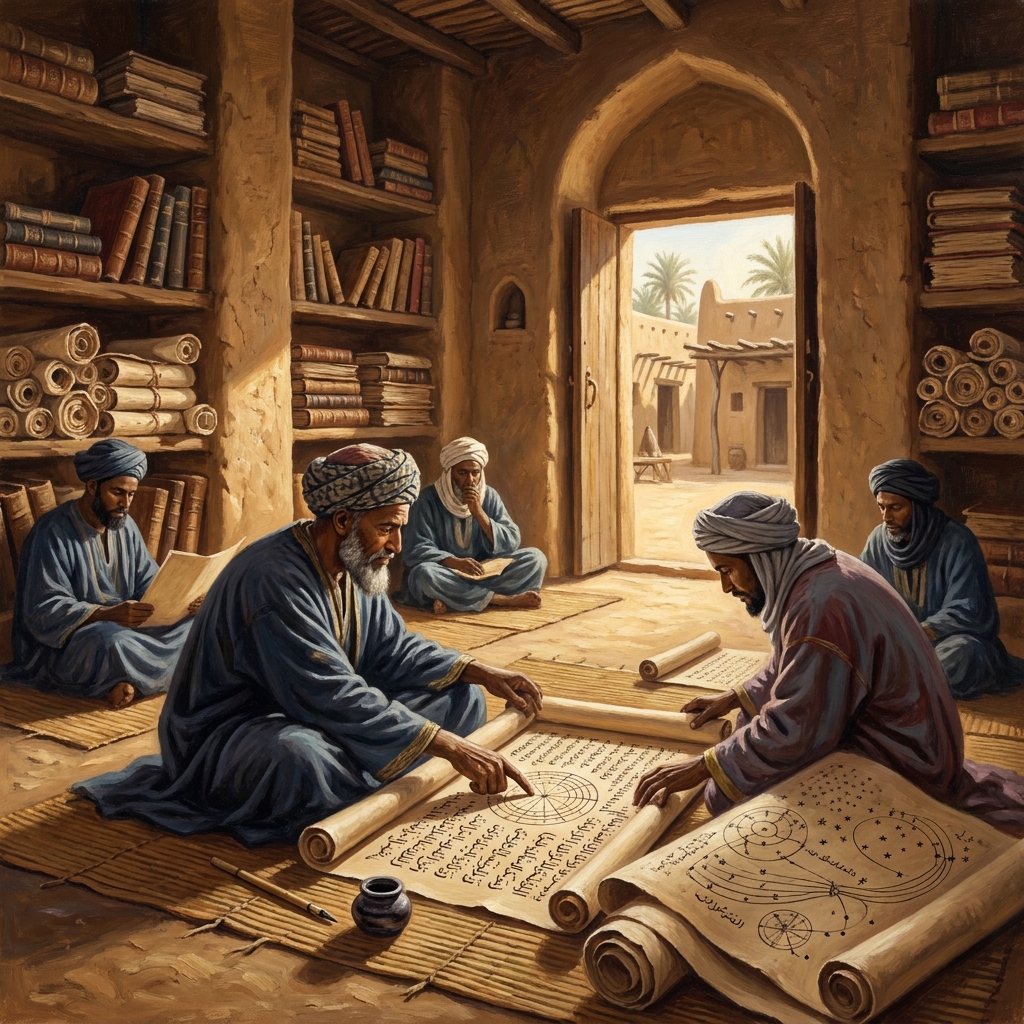
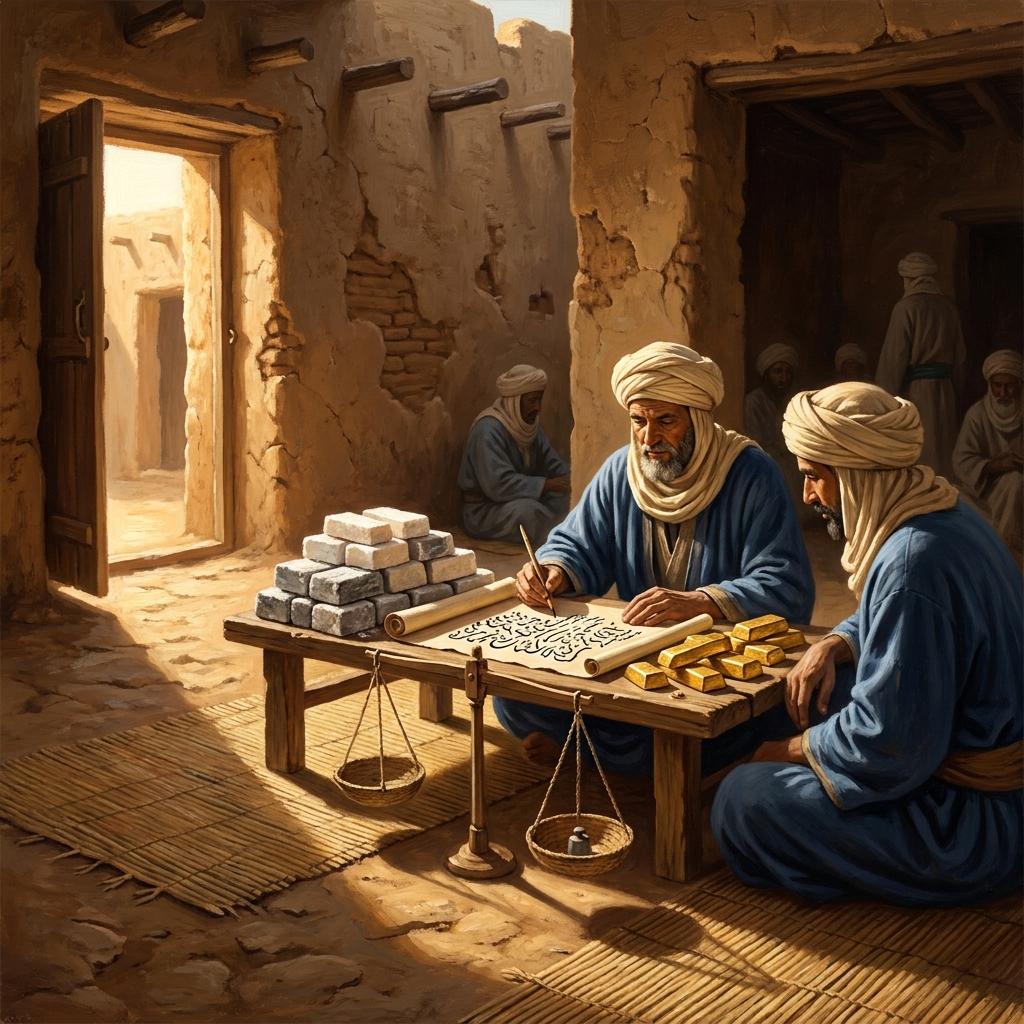
Imagine a merchant standing in the heat of a market in Timbuktu, needing to verify a complex exchange of gold for salt without sharing a common native tongue with his trading partner. In the medieval period, merchants traveled across the Sahara Desert to trade goods like gold and salt. To keep track of these exchanges, they often used a standardized receipt written in Arabic. This allowed a merchant in a distant city to know exactly what was traded without needing to speak the same local language. This specific moment of historical commerce sits at the heart of Arabic: The Language of Power and Trade in West Africa, a resource designed for your 7th grade social studies class.
We all know how the history curriculum can feel like a sprint toward the end of the semester. By the time we arrive at the sub-Saharan civilizations of Ghana and Mali, the calendar is often tight. Whether you are teaching in Clovis Unified, San Ramon Valley Unified, Sunnyvale School District, or Kings Canyon Joint Unified, the pressure to cover the state curriculum is constant. This lesson is a rare, self-contained unit that helps when students are missing work or when you need a high-quality assignment for a sub day that actually moves the needle on student learning.
How the lesson connects language to imperial power
The lesson moves past simple memorization to explain why Arabic became the essential tool for managing empires. Students learn that a Lingua Franca is a common language used by people who do not share a native language to communicate for trade, government, or scholarship. This concept is vital for understanding the Trans-Saharan Trade, which served as a network of trade routes crossing the Sahara Desert that connected West African empires to North Africa and the Mediterranean. By the time students finish, they understand that a script on a page was not just for books, but for the actual administration of a massive, profitable economic zone.
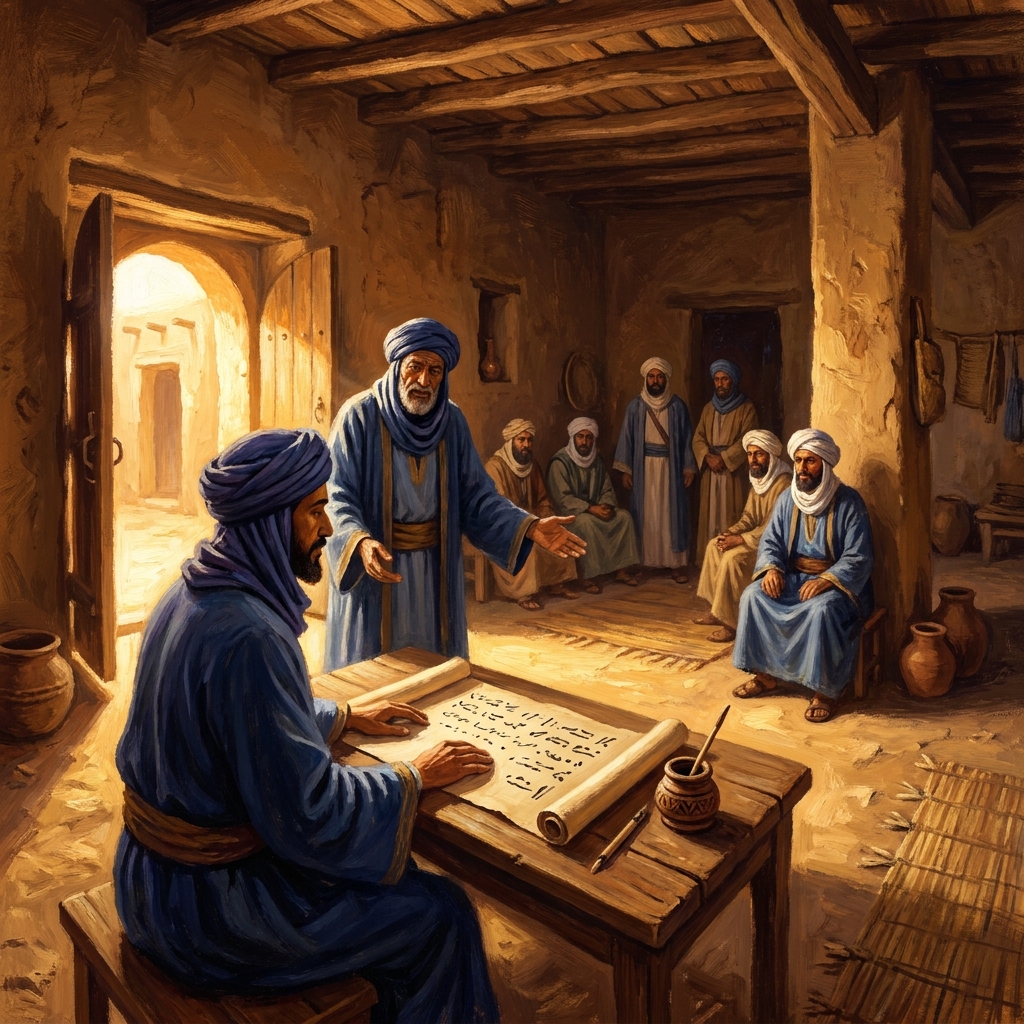
The lesson includes a concrete example regarding Timbuktu. Scholars there wrote manuscripts on subjects like astronomy. These manuscripts were written in Arabic, which allowed scholars from different parts of the Islamic world to share their knowledge. This shows that Arabic was the language of learning, connecting Timbuktu to other centers of knowledge. When a student defines a Manuscript as a document written by hand, they start to see the physical weight of history. It brings the reality of medieval life into the classroom better than any textbook summary.
Meeting the California social studies standards
This lesson directly addresses CA.HSS-7.4.4, which asks students to trace the growth of the Arabic language in government, trade, and Islamic scholarship in West Africa. This standard is part of a larger cluster where students analyze the geographic, political, economic, religious, and social structures of the sub-Saharan civilizations of Ghana and Mali. It is satisfying to find a digital resource that sticks so closely to this specific expectation. It does not wander into side topics but stays focused on the mechanics of how a language creates a governing system.
The lesson guides students through a royal letter sent from the Songhai Emperor to a neighboring ruler. By looking at this letter, students see how the written word was used to build an alliance between two leaders. This is a practical, authentic way for a student to engage with primary source analysis. It provides the context needed for them to realize that the Arabic language was a technology of its time, used by monarchs just as much as by merchants to secure their borders and their business interests.
When students get behind on history content
I find this 7th grade social studies lesson on West African history particularly useful for independent study or as an intervention tool. We have all had those students who miss a full week of school during our Mali unit. Catching them up usually involves handing them a packet or pointing them to a chapter they might find dry. This lesson is different because it builds the narrative step by step. It explains why a shared language matters today, drawing a line between the past and our present reality where communication is the base of all problem solving.
Using this for attendance recovery or for a student who needs a refresh allows them to work at their own speed while still hitting the core concepts. The reading load is manageable for a seventh grader, yet the vocabulary is precise. It demands they think about history as a series of connected choices rather than just a list of dates. If you are worried about the workload, the 45-minute estimated time is accurate. It is long enough to provoke thought but short enough that it can be completed within a single class period.
A practical perspective for the classroom teacher
If I have one caveat, it is that the jump between the trade receipt and the Songhai royal letter is quite brisk. Some students might need you to pause and talk about what a government alliance actually looks like in practice before they read the letter. It is worth taking five minutes at the start to talk about how governments use documents to prove their authority. This lesson provides the material, but your framing of that material will make it stick. It does not pretend to be the whole unit, but it is an incredibly effective anchor for your study of West African structures.
The lesson also works well as a sub day plan because it is designed to be teacher-proof. The instructions are clear, the vocabulary is defined, and the task is specific enough that a substitute teacher can easily facilitate it without needing to be an expert in medieval Islamic history. It keeps students working on the standard, which is all we really want when we are away from our classrooms. You will know exactly where they are in the content when you return, which is a relief for any of us who have come back to find our lesson pacing stalled.
Related lessons
From Magna Carta to Independence: The Evolution of Rights, Tracing the historical development of legal rights and human freedoms
The Columbian Exchange and Global Connections, Exploring the impact of trade and exchange across the globe

The Enlightenment and Its Roots, Examining the origins and influence of Enlightenment philosophical thought