

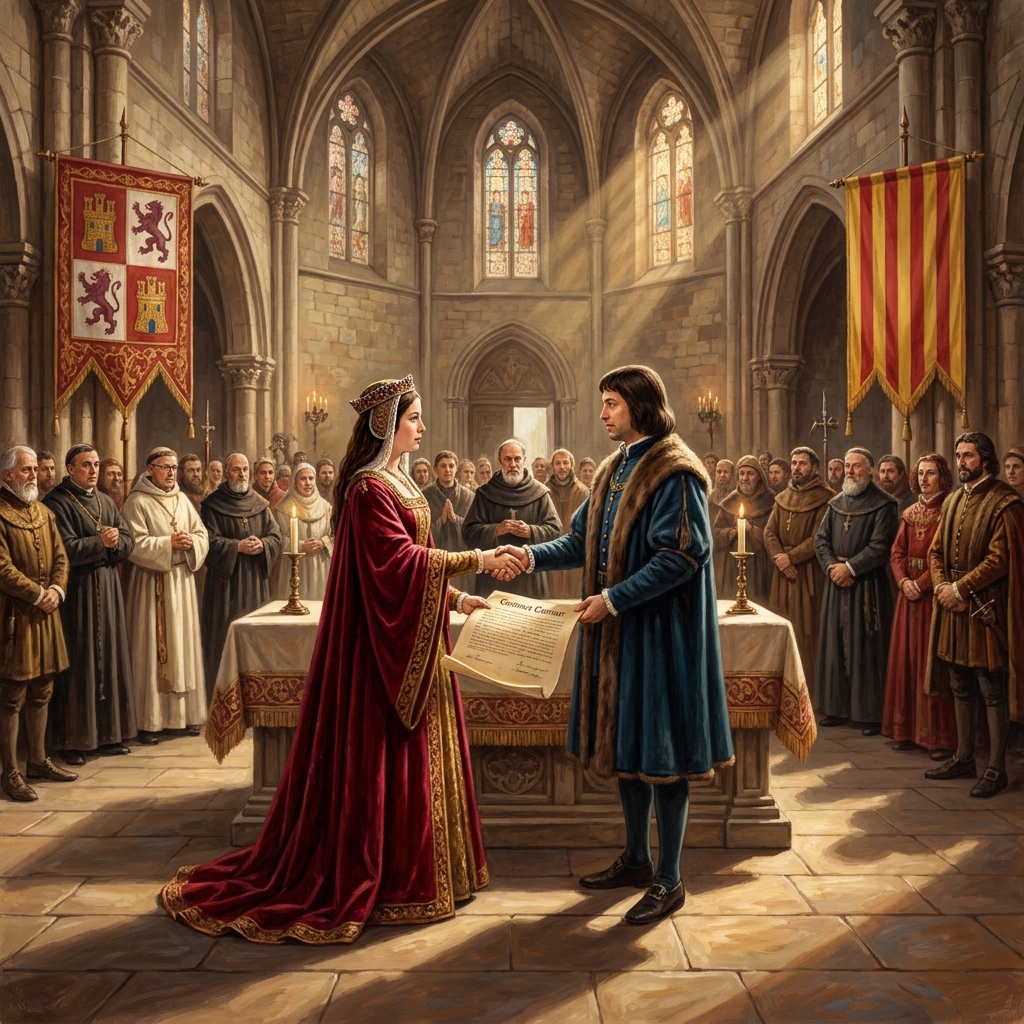
The most common mistake seventh graders make when we study the Middle Ages is assuming that the Reconquista happened all at once, rather than as a long, slow grind of shifting frontiers. Students often treat history like a light switch, expecting a clean flip from Muslim rule in Al-Andalus to a unified Christian Spain. In reality, it was a centuries-long process of border adjustments, strategic marriages, and regional power plays. When we fail to show the incremental changes, students struggle to grasp the actual political consolidation that took place. That is where The Changing Map of Medieval Iberia comes in handy.
Why students struggle with the shifting map of Iberia
This 7th grade social studies lesson is designed to head off that misconception by focusing on the mechanics of power. Instead of just listing battles, the material helps students understand how territory changed hands through both force and political union. You can use this during a whole-class assignment on Medieval Europe or even assign it to a student who missed the week and needs to catch up on the sequence of events. It is a solid choice for a substitute day because the logic of the lesson is easy for students to follow on their own. By keeping the focus on how power structures evolved, the lesson prevents the common student error of viewing history as a static image. Instead, students see the constant movement of lines on a map, which is more representative of how medieval kingdoms actually functioned. The lesson materials provide clear visual aids that track these movements over decades, ensuring that students do not assume a sudden shift in geography.
What the lesson actually covers
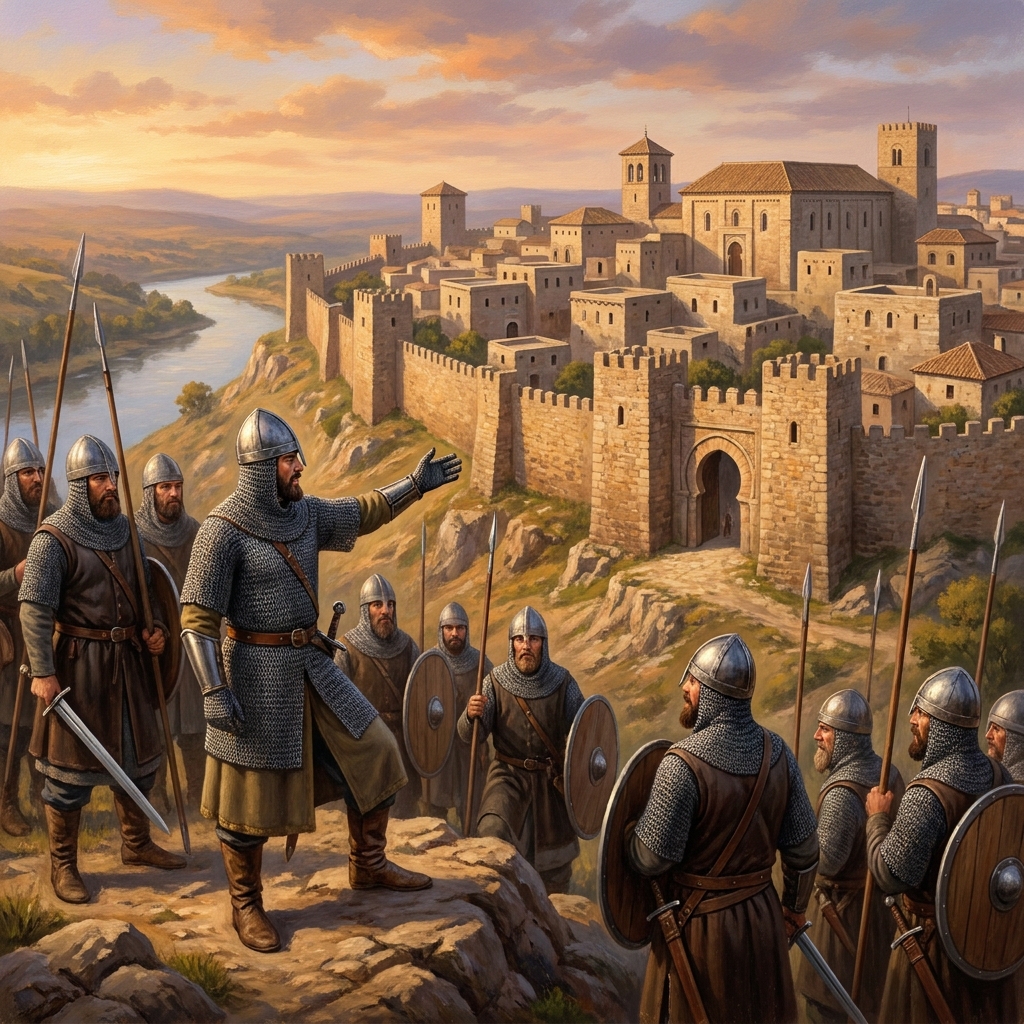
The lesson begins by orienting students to the map of the Iberian Peninsula as it existed under Muslim governance, known as Al-Andalus. It frames the Reconquista not as a single event, but as a long, complicated process where northern Christian kingdoms steadily expanded southward. The vocabulary is crisp, defining Reconquista as a centuries-long process and Consolidation as the act of strengthening political control. Understanding these two terms is the anchor for the rest of the work. The meat of the lesson comes in the worked example focusing on 1469. It uses the marriage of Isabella of Castile and Ferdinand of Aragon to illustrate how personal alliances provided the strength needed to finalize the Reconquista. This is a great moment to push your students past the dates and names, forcing them to consider how a dynastic marriage acts as a military tool. By the time they arrive at the guided practice regarding the surrender of Granada in 1492, they have the context to see it as the final piece of a puzzle rather than a random historical occurrence. This is the same history we teach across our state in districts like Capistrano Unified, San Ramon Valley Unified, Sonoma Valley Unified, and Cupertino Union School District. Educators in these districts often find that students benefit from repeated exposure to the vocabulary. When students define Reconquista and Consolidation early, they have a set of tools to apply when analyzing later territorial shifts. This prevents the confusion that often arises when students try to memorize isolated battles rather than understanding the broader trends of political expansion.
Meeting state standards with purpose
This resource serves the CA.HSS-7.6.9 requirement perfectly. That standard asks us to cover the history of the decline of Muslim rule in the Iberian Peninsula, specifically the rise of the Spanish and Portuguese kingdoms. It is a demanding standard because it requires students to synthesize geographic changes with political shifts. When you use this middle school medieval history lesson, you are helping your students fulfill this part of the California-adopted standard by showing them exactly how those borders moved and why the resulting power structure matters for the birth of modern nations. I find that my students often get lost in the map work if they don’t have a reason to look closely at the borders. The why-it-matters section included in the lesson is the best way to keep them focused. It forces them to acknowledge that the borders they see on a modern map are not arbitrary, but the result of these medieval processes of consolidation and surrender. If you are preparing for a unit exam, using this as an independent study tool can help solidify those connections before the summative assessment. Just watch for the students who want to breeze through the text without looking at the map transitions, as that is where they will lose the nuance of the material. By ensuring they understand the vocabulary and the specific examples of dynastic unions, you prepare them to answer questions about the causes and effects of these shifts. This structured approach helps students in all districts, from those in the San Ramon Valley Unified to the Cupertino Union School District, succeed on assessments related to the Reconquista.
Related lessons
Renaissance Innovations and the Changing World, Discusses technological and cultural shifts during the Renaissance era
The Crusades: Conflict and Cultural Exchange, Examines the causes and results of the medieval Crusades
Innovations of Medieval China, Details major technological and scientific advancements in medieval China