

This one is for third grade teachers who reached the forces and motion unit and found the calendar had other plans, and for the student who was out the week the class did it. Predicting Motion in California Ecosystems is a self-contained third grade science lesson that runs about 45 minutes, and it teaches one idea well: if you watch how something moves and notice that it repeats, you can say what it will do next.
The reason I keep pointing teachers toward it has less to do with the content than with timing. Physical science in third grade often gets scheduled after the life science and weather work, which in a lot of classrooms puts it somewhere in the back half of the year. That is exactly when assemblies, testing windows, and the long tail of math and reading intervention start eating science blocks. Motion and Stability is the cluster that tends to shrink. A teacher who planned a week of rolling balls down ramps ends up with two afternoons, and the pattern-and-prediction piece, which is the actual point of the standard, is the part that falls off.
So a lesson that a student can open and finish in one sitting, without the teacher setting up materials, has real value in April and May.
What the lesson actually asks students to do
The objective is short: use patterns in how objects move to predict their future motion. The lesson builds toward that with three California scenes, and I like the order they come in.
It opens in the Sierra Nevada, with oak trees on steep slopes. An acorn drops, hits the ground, and rolls downhill. Students are asked to think about the path it takes. That is a good starting point for eight-year-olds, because nearly every one of them has watched something roll down a hill and already has an intuition about where it will end up. The lesson is just asking them to notice that intuition.
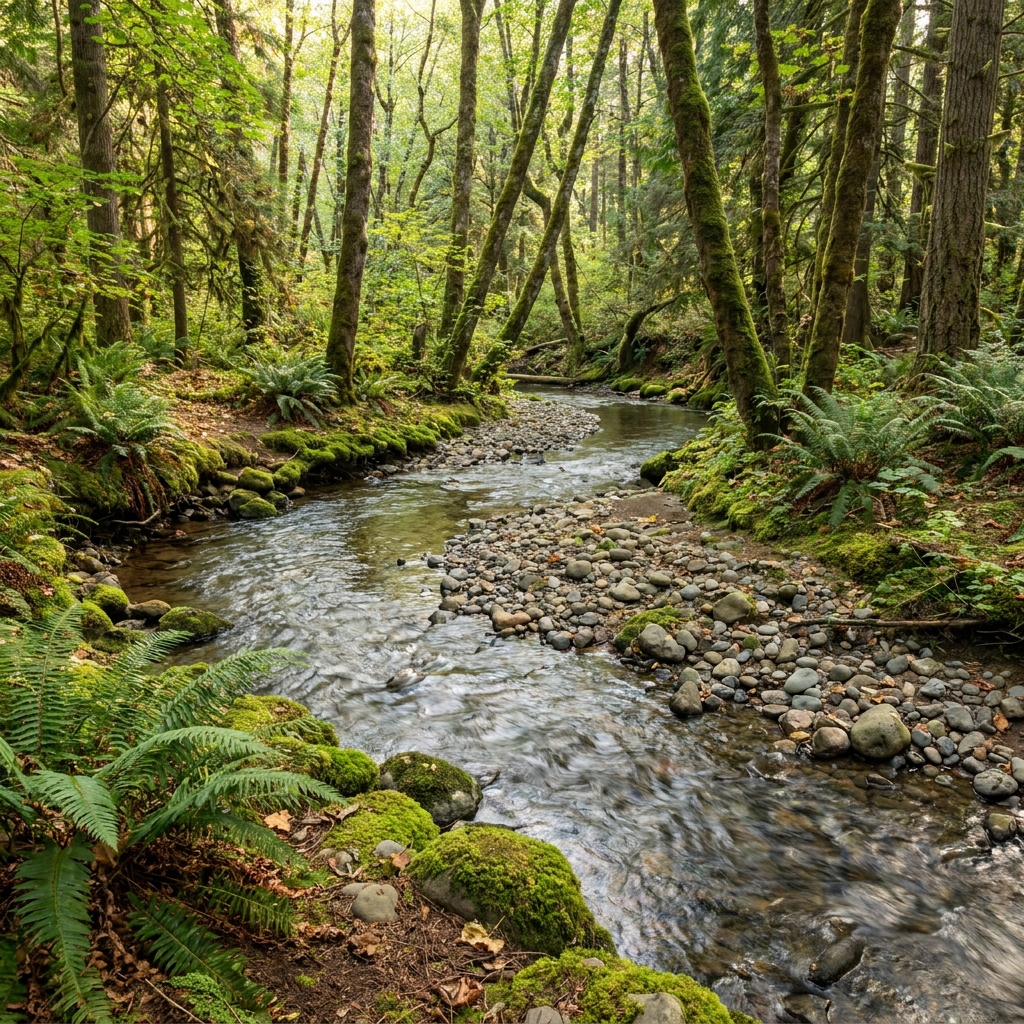
The worked example moves to water in a creek bed. The water follows the shape of the land, and if the bed curves, the water curves with it, every time. The lesson names that repetition as the pattern, which is the move third graders need to see modeled. Kids will happily say “the water goes that way” without realizing the reason they can say it is that it went that way before. The creek makes the connection between “it repeated” and “so I can predict” visible.
Guided practice shifts to a California sea lion coming out of the surf onto a rocky shore. Sea lions use specific landing patterns to get from the water onto the rocks safely, and because the path is predictable, students can observe it and reason about where the animal will go. It closes with a why-it-matters note about meteorologists, the scientists who study weather, using patterns to predict whether a storm is coming or a river will flood.
The vocabulary is just two words, and the lesson defines them in kid-friendly language:
- pattern: a series of events or motions that repeat in a predictable way
- predict: using what you know to make a smart guess about what will happen next
I would hold students to both definitions in their own words before they leave. “Smart guess” is the phrase that sticks, and it is worth asking a student what makes a guess smart. The answer you want is “because I saw it happen before.”
The standard, and where it fits your week
The primary standard is 3-PS2-2, part of California NGSS, the state-adopted science standards. It asks students to make observations or measurements of an object’s motion and use them as evidence that a pattern can predict future motion. The word that matters there is evidence. Third graders are not just supposed to predict; they are supposed to point to what they observed that justifies the prediction.
The same lesson page also carries CA.3-PS2-2, which is the California version of that same performance expectation. It keeps the wording and adds the state’s framing: California ecosystems, native species, weather hazards like wildfire and drought, and local phenomena. That is why the lesson uses oaks, creeks and sea lions instead of generic carts and ramps. A third grader in San Francisco Unified works toward the same expectation as one in Chula Vista Elementary School District, Hawthorne School District, or Beaumont Unified, because the standard is the same statewide.
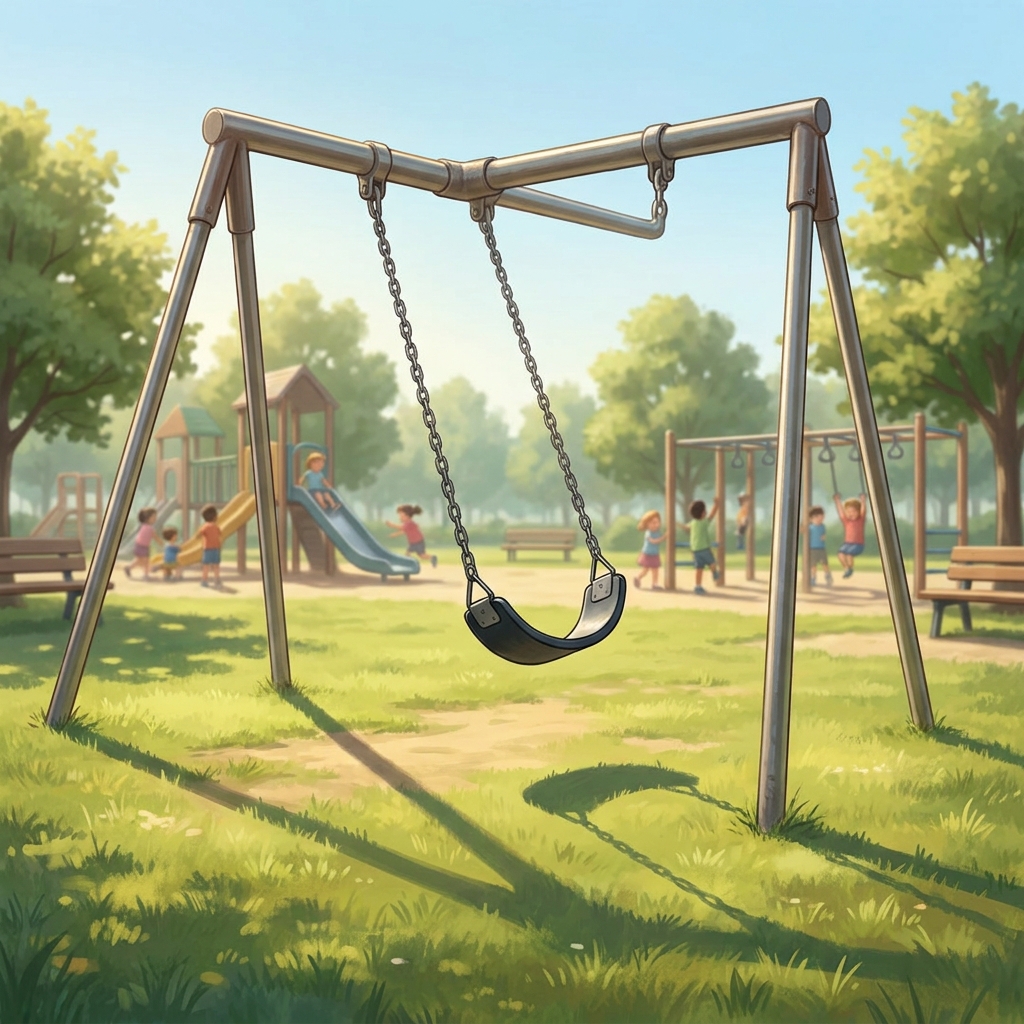
Now the honest caveat. The standard says observations and/or measurements, and a 45-minute digital lesson can describe motion but cannot put a ball in a student’s hand. If you have any time at all, follow the lesson with ten minutes of rolling something down a book propped on a desk, three times, and asking students to mark where it stops before the fourth roll. That gives them their own evidence. The lesson gives them the language for it. I also think the sea lion section is the weakest of the three examples. An animal choosing where to land is behavior, not quite the same as an acorn obeying a slope, and the guided practice text refers back to a quail that the lesson never introduced. Some students will be briefly confused by that. It is worth a sentence of framing from you: animals that repeat a path also make a pattern we can use.
Where does it fit? Three uses stand out to me. First, as a whole-class assignment for a teacher who is behind and needs the core idea of the unit covered in a single block. Second, for a student who missed the week, since the lesson does not depend on having been there for a lab. Third, on a substitute day, because the sequence is clear enough that a sub does not need science background to keep students moving through it.
If you are searching for a third grade science lesson on predicting motion with patterns, this is a reasonable one to assign this week. Pair it with a rolling-ball check the next day and ask each student to tell you, in one sentence, what pattern let them make their prediction.
Related lessons
Balanced and Unbalanced Forces in Nature, How balanced and unbalanced forces show up in the natural world
Using Magnets to Solve Problems, Applying what students know about magnets to solve practical problems
Forces That Shape Our California Home, Forces at work shaping the land and places across California