


This lesson does not try to turn eighth graders into fact-checkers who treat every sentence as a lie. It doesn’t ask them to debunk anything, and it isn’t a media literacy unit about fake headlines. What it does is narrower and, I think, more useful: it teaches students to read a sentence in a technical text and ask where that sentence came from. Was it measured? Was it concluded from something measured? Or is someone guessing?
The lesson is Distinguishing Facts, Judgments, and Speculation, an eighth grade English language arts lesson from the ELA 8 Reading: Literacy in Science and Technical course. It runs about 45 minutes. The texts are about bridges, buildings and weather, not novels, which is exactly why I like it. A lot of students who can argue about a character’s motives freeze when the reading has a data table in it.
The standard behind it
The lesson is built on CA.ELA.RST.6-8.8, part of the California Common Core State Standards for English language arts, in the strand for literacy in science and technical subjects. The standard asks students to tell apart three kinds of statements in a text: facts, reasoned judgments based on research findings, and speculation. It sits in the Integration of Knowledge and Ideas cluster, which tells you something. This isn’t a vocabulary standard. It’s about how claims connect to evidence.

The middle category is the one that makes this standard interesting. Most students already have a loose sense of fact versus opinion from earlier grades. What they rarely have is a slot for a conclusion that isn’t directly measured but is earned by the data. That’s what a reasoned judgment is, and it’s what most scientific writing actually consists of.
Eighth graders in Tulare City School District, Twin Rivers Unified, Oak Park Unified and Santa Maria-Bonita School District all work toward this same standard, since it reads the same in every California classroom.
How the lesson unfolds, start to finish
The opener leans on prior knowledge. Students already know how to read informational text, and the lesson reminds them that reading technical writing means looking for evidence to see whether a statement can be proven. Then it points to a weather report as the place to watch this happen. It’s a smart choice. A forecast mixes all three categories in about thirty seconds: today’s measured temperature, a prediction drawn from models and data, and the occasional loose guess about the weekend. Students have heard hundreds of these without ever pulling them apart.
Next comes the concept, carried by four vocabulary terms. The definitions are tight and worth putting on the board:
- fact: a statement that can be proven true or false through direct observation or measurement
- reasoned judgment: a conclusion or opinion supported by research, data, or logical analysis
- speculation: a statement that expresses a possibility, guess, or theory without enough evidence to prove it
- hedging language: words like “likely,” “suggests,” or “possibly” that signal a claim rather than a proven fact
Notice that a fact is defined as something that can be proven true or false. That trips students up every year. They assume “fact” means “true.” A wrong measurement is still a factual kind of statement, because you can check it. I’d spend a minute on that before moving on.
The skill gets modeled through the worked example, and it’s a good one. A study on bridge stress loads includes a data table of weight tests. The report then concludes that the bridge design is safe for heavy traffic. The lesson labels that conclusion a reasoned judgment, and explains why in one clean line: “This is a reasoned judgment because it is based on the data table.” The weight test numbers are the facts. The safety claim is a step beyond them, but a step the numbers support.
Guided practice moves from bridges to buildings. Students get a passage about architecture and the structural integrity reports architects use to decide whether a building design is safe. It’s the same move in a new setting, which is what guided practice should be. The context shift is small enough that students can transfer the reasoning without getting lost in new content.
The closure ties it back to ordinary life. The lesson’s point is that news, health advice and technical instructions all mix these three kinds of statements, and knowing which is a fact and which is a guess helps you make better decisions. Health advice is the example I’d push on with eighth graders. They’re already getting it from every direction.
Where students slip
The hardest line to draw is between a reasoned judgment and speculation. Both go beyond the data. The difference is whether the data actually backs the leap. In the bridge example, the conclusion matches what the weight tests show. If the report had said the bridge would probably last two hundred years, with no test on longevity, that’s speculation, even though it sounds just as confident.

Hedging language is the clue the lesson gives, and it’s a real one. Words like “suggests” and “likely” usually mark a claim. But I’d warn students that hedging isn’t a perfect detector. Careful scientists hedge reasoned judgments all the time, and careless writers state pure guesses with no hedge at all. The word list gets students looking. It doesn’t replace asking what the evidence is.
My one honest caveat: 45 minutes gives you one worked example and one guided passage. That’s enough to introduce the three categories, not enough for most students to sort them reliably on their own. Plan on a follow-up with a short article from a science unit you’re already teaching, and have students mark each sentence F, J or S with a reason.
Who it fits beyond the regular lesson plan
Because the lesson is self-contained and leans on a clear sequence, it works well for a student who missed the week and needs to catch up without a reteach from you. The vocabulary carries most of the weight, so a student can follow the arc on their own.
It also fits independent study. A student working through ELA 8 asynchronously gets a full model, from opener through closure, and the bridge and building examples don’t depend on anything read earlier in the course.
And it’s a reasonable choice for intervention with students who read fiction comfortably but stall on technical text. The short, concrete scenarios give you something to talk through one-on-one.
If your science colleagues are teaching anything with a data table this month, this is the eighth grade ELA reading pairing I’d suggest to them. Open the eighth grade lesson on facts, judgments and speculation in technical texts and walk the bridge example before you assign it, so you know where you want to slow down.
Related lessons

Distinguishing Central Ideas from Opinions, separating a text's central ideas from opinions about them
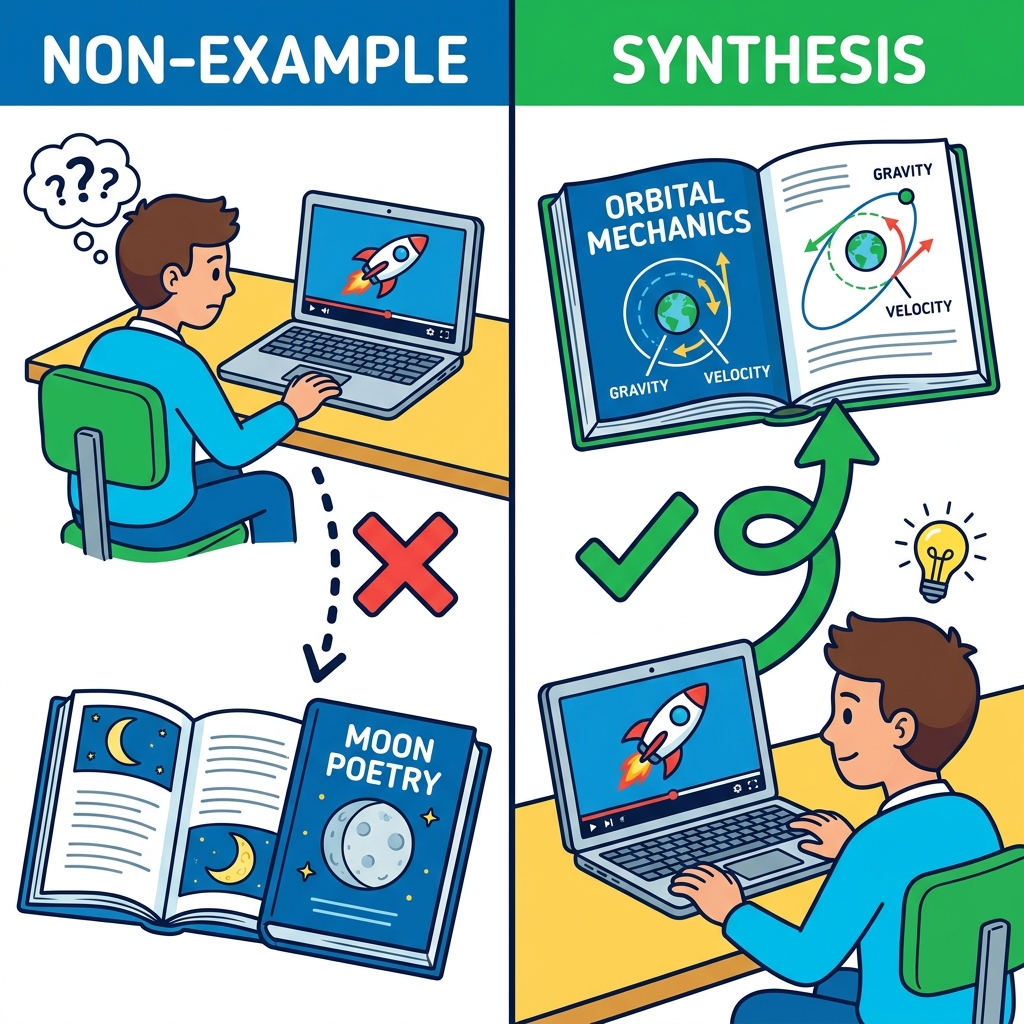
Comparing Scientific Information Across Media, comparing how scientific information is presented in different media
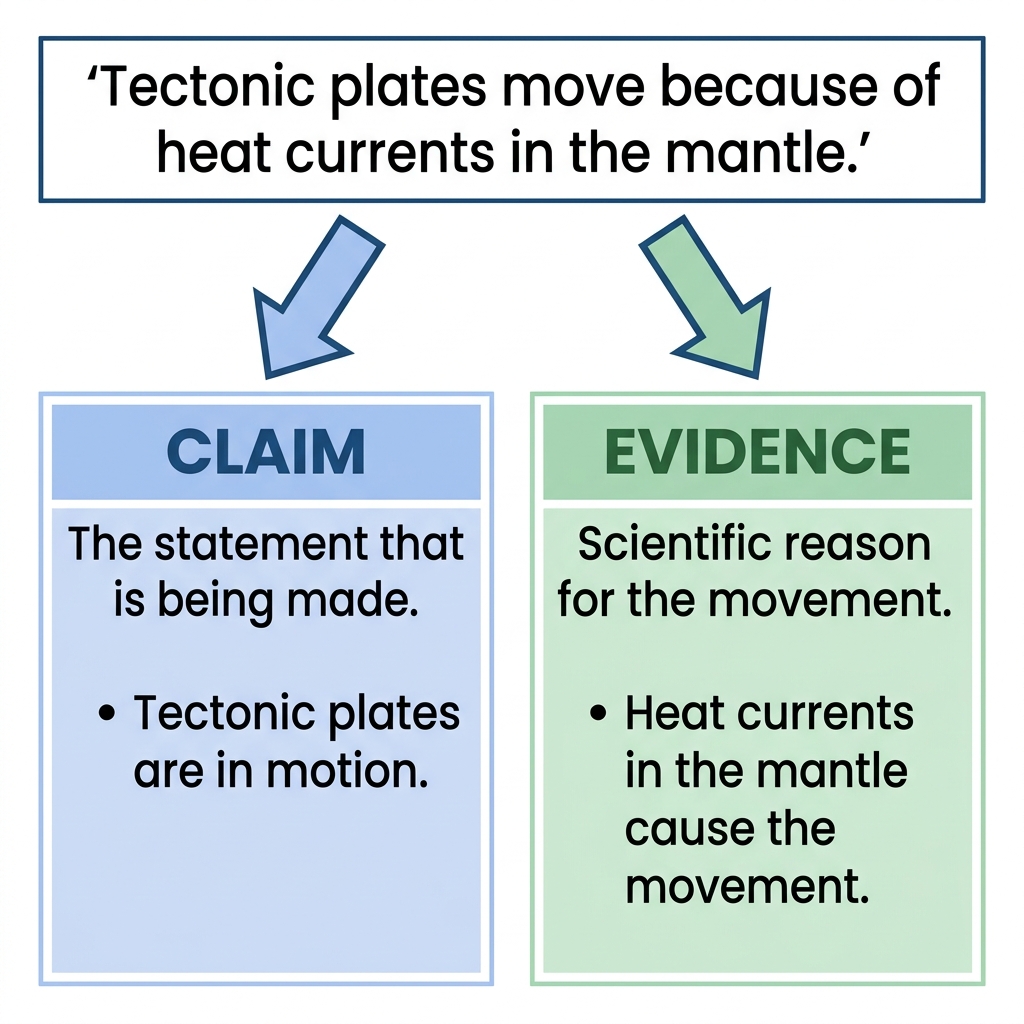
Citing Evidence in Science and Technical Texts, citing specific evidence to support analysis of science texts