

Eighth-grade social studies lessons on the Gilded Age provide a clear window into the high-stakes world of the late 19th-century American economy. Teachers need to help students look past simple memorization and see the human costs that defined this era.
Connecting students to the Gilded Age
When you start teaching the era of rapid industrial growth, your students need to grasp more than just the names of railroad tycoons. They need to understand the human cost of the period. The lesson Labor and Industry in the Gilded Age is designed to help eighth graders connect those big economic shifts to the rise of the labor movement. It moves past simple memorization to explain why working conditions became the primary focus for early labor organizers like Samuel Gompers.
The content covers the core concept of laissez-faire, defining it as a policy where the government avoids interfering with business practices. This allows companies to set their own rules for wages and working conditions, often at the expense of their employees. For students in Moreno Valley Unified, Los Angeles Unified, Campbell Union School District, and Selma Unified, mastering these foundational terms is just as important as it is for students everywhere across the state.
What the lesson actually asks students to do
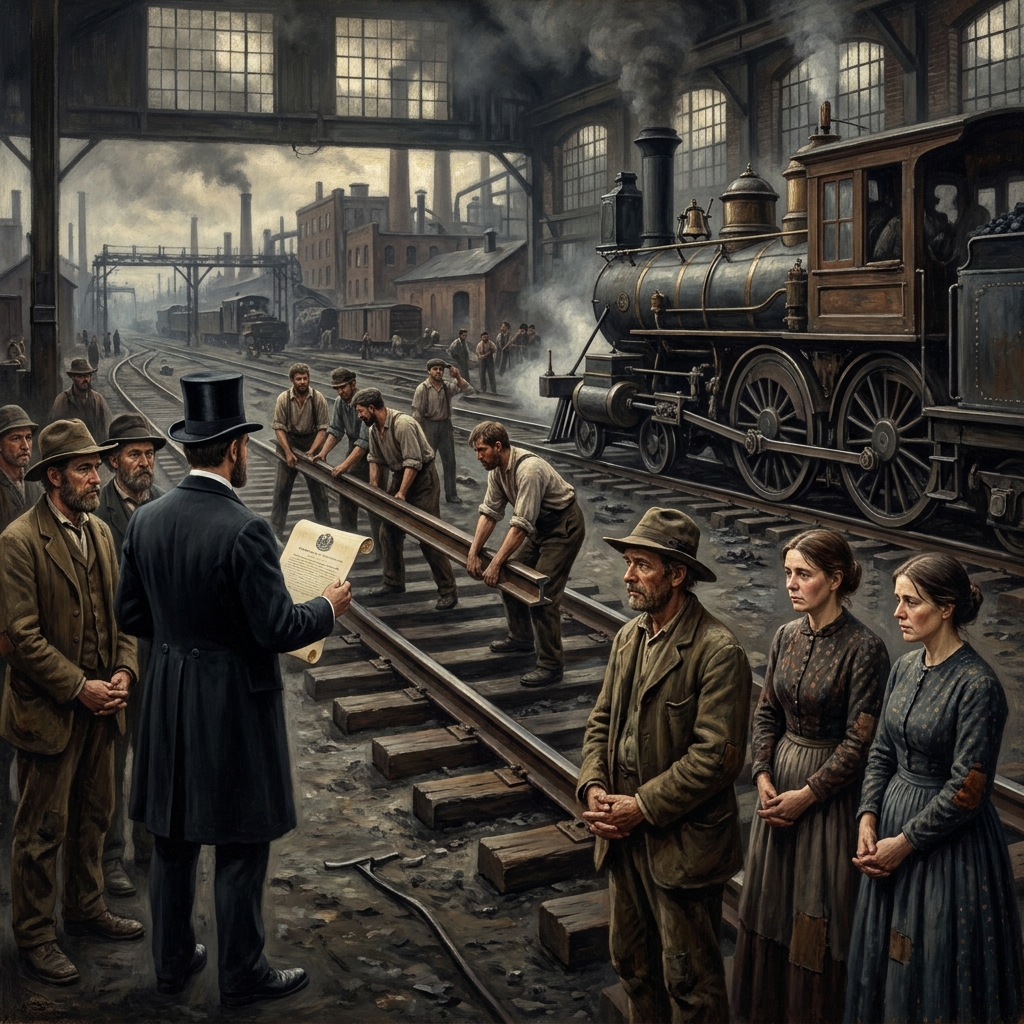
To really get this, students walk through a specific scenario involving railroad construction. The material explains how the government provided free land to companies without regulating how they treated farmers. It then pivots to the human element of that same era. Your students look at textile mills where workers faced 12-hour shifts operating dangerous machinery. It is a stark contrast, and the lesson handles that tension well by providing concrete vocabulary:
- Laissez-faire: A policy where the government does not interfere with business practices.
- Collective bargaining: A process where workers negotiate as a group with their employer.
- Labor union: An organized group of workers formed to protect their rights.
- Strike: A form of protest where workers refuse to work until demands are met.
By defining these terms within the context of industrial growth, the lesson prepares students to analyze the 8th grade industrialization and labor history curriculum with more confidence. The guided practice asks students to step into the role of a worker in an unsafe factory, forcing them to weigh the risks and rewards of collective action.
Meeting the California standard
The lesson specifically maps to CA.HSS-8.12.6, which is the California-adopted standard for this topic. This standard asks students to discuss child labor, working conditions, and laissez-faire policies toward big business. It also requires them to examine the labor movement, focusing on leaders like Samuel Gompers, the push for collective bargaining, and the significance of various strikes and protests.
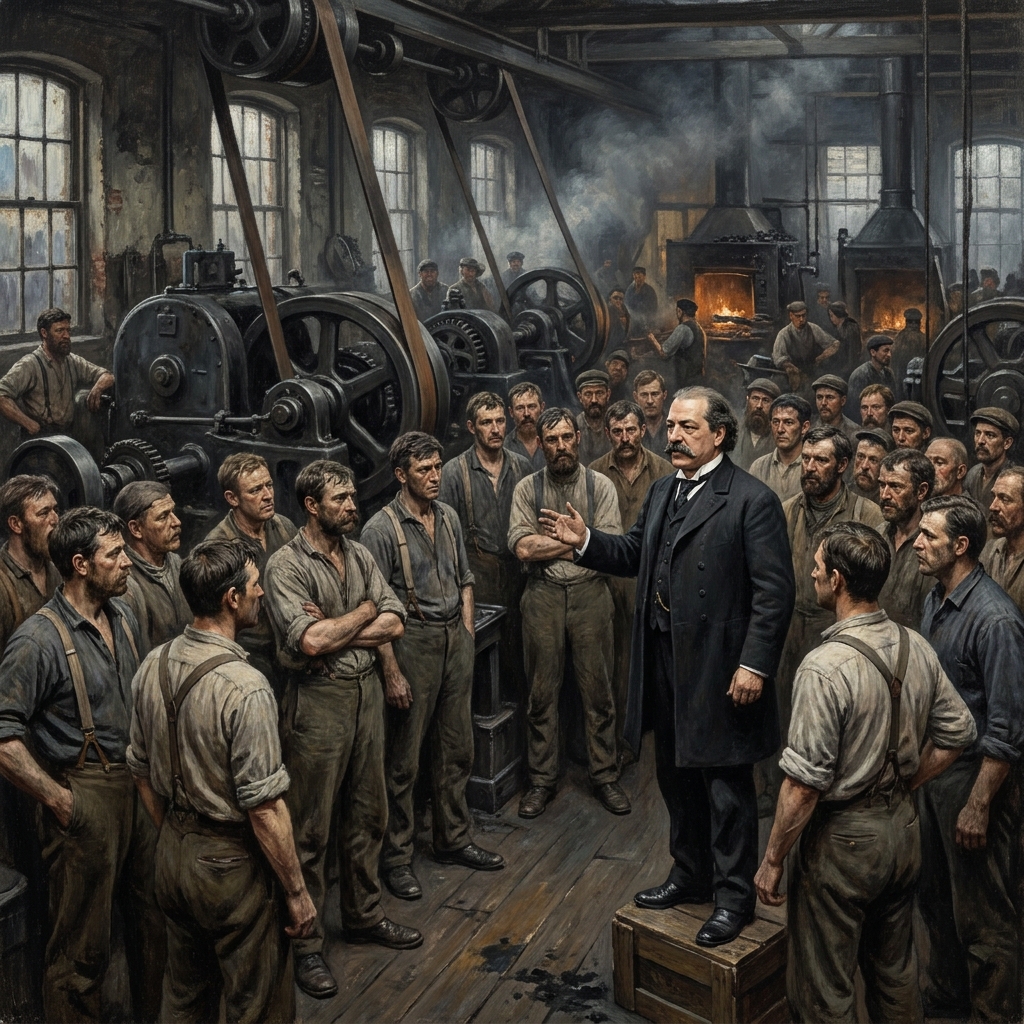
If a student misses the nuance of this lesson, they will struggle when you move on to later topics like the Progressive Era or the eventual government regulations of the early 20th century. You cannot explain why safety laws exist today if you haven’t laid the groundwork regarding why those regulations were absent in the 1880s. When students understand that the 8-hour workday and safety standards were the direct outcomes of these early labor movements, they begin to see history as a series of deliberate choices rather than just a list of names and dates.
Where students slip
One common pitfall I see is students conflating a general protest with the specific mechanism of a strike. The lesson does a nice job of distinguishing the two, identifying a strike as a powerful, collective form of protest that aims to force an employer to the bargaining table. I suggest spending a little extra time on the concept of collective bargaining. Many eighth graders assume an individual worker could just walk into an office and demand better pay. Realizing that collective action, or the act of unionizing, is what creates bargaining power for a worker is a major shift in their thinking.
This material works best as a whole-class assignment to introduce the concept of organized labor, but it is also excellent for independent study for a student who missed the week of class. You could also keep it in your back pocket for a substitute day, as the scenarios are self-contained and the objectives are easy for a sub to facilitate without prior knowledge of your specific classroom routine. It provides just enough structure that a student can work through it alone, yet the concepts are rich enough to generate a solid class discussion the following day.
Related lessons
Moving Forward: Migration After the Civil War, Covers demographic shifts and population movement following the Civil War
Abolition and Early State Constitutions, Discusses abolitionist efforts and the creation of early state laws
Growth and Conflict: The Rise of American Capitalism, Explores the development and expansion of capitalism in American history