

This lesson is for seventh grade science classes in the energy unit, right before students are asked to design something that keeps heat in or keeps it out. It also fits a student who missed those days and needs the reasoning before the build. The reasons have a lot to do with one stubborn idea most twelve-year-olds walk in with.
Designing for Thermal Energy Control runs about 45 minutes and sits in a middle school physical science course. Its objective is plain: design solutions that control how thermal energy moves so buildings stay comfortable.
Where students go wrong first
Ask a class how an insulated wall keeps a house cool in July and you will hear some version of “it keeps the cold in.” Ask how a jacket works and you get “it makes you warm.” Both answers treat cold as a substance that flows and insulation as something that produces or stores temperature. Neither is true, and a student who believes either one will design a bad device.

The mistake is common for good reasons. Everyday language is built on it. Adults say “close the door, you’re letting the cold in” all winter. The body feels cold as a sensation arriving from outside, so it seems like a thing that travels. And a jacket really does feel warmer the moment you put it on, so it is easy to credit the jacket with the heat instead of the person inside it.
I think this is the single biggest obstacle in the whole energy cluster. If students do not have the direction of transfer straight, every design choice after that is guesswork. They will pick a material because it “feels cold” or “looks warm” rather than because it slows the flow of energy from the warmer side to the cooler side.
How the lesson heads it off
The lesson starts with the direction, before any design talk. The opener sets a cup of coffee at 80 degrees Celsius on a table in a cooler room and walks through what happens: the coffee is warmer than the air, so thermal energy leaves the coffee and moves into the room. Nothing cold moves anywhere. That is the anchor, and it is stated in one line students can hold onto: “Thermal energy always moves from a warmer object to a cooler one.”
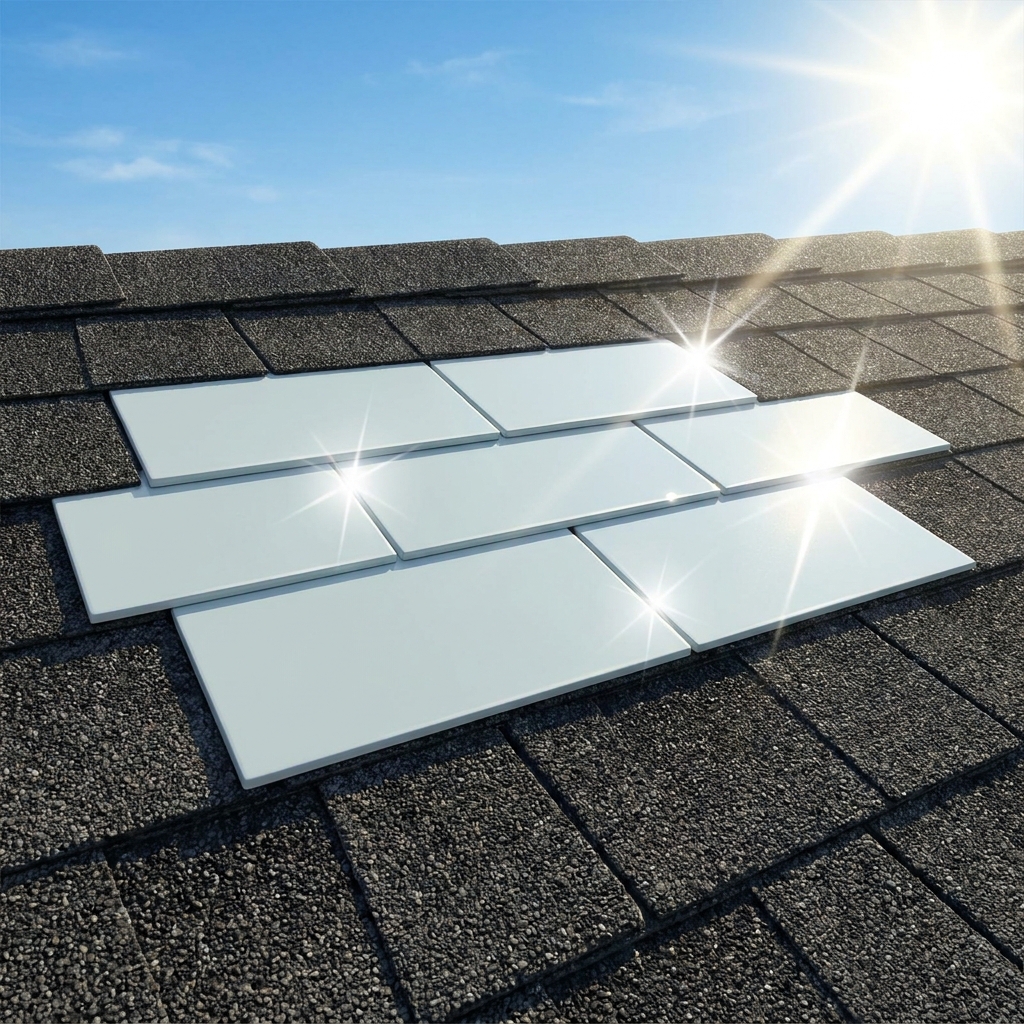
Then it flips the situation to buildings, which is where the misconception actually bites. The worked example is cool roof shingles. They are designed to reflect sunlight, so they reflect more light than standard dark shingles and absorb less heat. The lesson names this as minimizing thermal energy transfer into the building. I like this example a lot because it gives students a design that works without any “cold” being added at all. The roof just lets less energy in.
Guided practice moves students into the decision themselves. They imagine building a house in the Central Valley, where summers are very hot, and they have to choose insulation for the walls. The lesson describes high-performance materials as substances designed to be exceptionally effective at resisting heat flow, which is exactly the phrasing you want students to borrow. Resisting heat flow. Not holding cold.
The vocabulary is short and does real work:
- Thermal energy transfer: the movement of heat energy from a warmer object to a cooler one
- Insulation: a material that slows down the movement of thermal energy
- Passive solar heating: a design strategy that uses sunlight to naturally heat a space without mechanical systems
Notice that insulation is defined as something that slows movement. That definition alone, if you make students say it back, does a lot of the corrective work. And passive solar heating gives the other half of the picture, where the goal is to maximize transfer into a space instead of blocking it. Students need both directions to see that a designer is controlling flow, not choosing between hot materials and cold materials.
The lesson closes on why it matters: understanding this transfer helps keep homes comfortable without leaning so hard on air conditioning, which saves electricity and money. For students in hot inland towns, that is not abstract.
The standard, and where this fits
The primary standard is MS-PS3-3, from the Energy cluster of Physical Science in California NGSS. It asks students to apply scientific principles to design, construct and test a device that either minimizes or maximizes thermal energy transfer. In other words, the science is supposed to drive the engineering. The same page covers CA.MS-PS3-3, the California version of that standard, which adds a call to design solutions that fit California settings: energy-efficient buildings for hot Central Valley summers, passive solar heating and cool roof technologies. That is why the lesson’s examples look the way they do. It is one standard with a California layer on top, and the lesson treats them together.
Seventh graders in San Juan Unified, Ontario-Montclair School District, Paramount Unified and Live Oak Elementary School District all work toward this same standard, since California NGSS is the same expectation statewide.
Here is my honest caveat. The standard says design, construct and test. A 45-minute lesson handles the first part well, the thinking behind the design, but it does not put a thermometer and a box of materials in students’ hands. I would treat it as the reasoning day that comes before a build, not a substitute for one. If your class goes straight into a hands-on challenge without this, expect a few insulated cups wrapped in aluminum foil “to keep the cold in.”
Where it fits best: as a whole-class assignment the day before a design challenge, so everyone starts from the same principle; for a student who missed the week and needs to catch the logic before rejoining a group build; and on a substitute day, because the sequence from coffee cup to cool roof to Central Valley wall is clear enough to run without you there. It works in independent study too, as long as someone checks the student’s insulation choice and asks them to explain it in terms of heat flow.
If you are looking for a seventh grade thermal energy design lesson that fixes the direction-of-heat problem before students start building, this one is worth assigning. Listen for who still says “cold” as a noun on the way out.
Related lessons
Energy Transfer and Temperature Change, How energy moving between objects connects to changes in temperature
Chemical Processes in California, Chemical processes explored through examples drawn from California
Building Blocks of Matter: Molecules and Crystals, Molecules and crystals as the basic building blocks of matter