

Eighth grade history often moves at a breakneck speed once you get past the American Revolution. We are usually deep into the messy business of nation-building by the second semester, which is exactly where this 8th grade social studies material sits. It is a transitional time when students have to move from the abstract ideas of liberty they memorized in 7th grade to the practical, sometimes contradictory, realities of how that liberty functioned for the actual people who founded the country.
This Religious Freedom and the First Amendment lesson hits on the core concept of the separation of church and state. It is not just a dry timeline. It forces the class to look at the Virginia Statute for Religious Freedom as a piece of legislation that actually mattered. The lesson defines a statute as a formal written law passed by a legislative body, and it effectively walks students through the shift in colonial life where, previously, people were forced to pay taxes for a state-sanctioned clergy. The goal here is simple: to make sure students understand how the statute became a direct forerunner to the First Amendment, which the lesson defines as the part of the United States Constitution that protects freedom of religion, speech, and other basic rights.
Breaking down the standard
When we look at CA.HSS-8.2.5, it is easy to see it as one large, vague requirement. But it asks for something very specific: to understand the significance of Jefferson’s Statute for Religious Freedom as a precursor to the First Amendment, and to analyze the origins, purpose, and differing views of the founding fathers on the separation of church and state. Whether you are teaching this in Capistrano Unified, Desert Sands Unified, Western Placer Unified, or East Whittier City Elementary School District, the expectation is the same. It is a California-adopted standard that demands students move past simple memorization and actually compare the views of the founders.

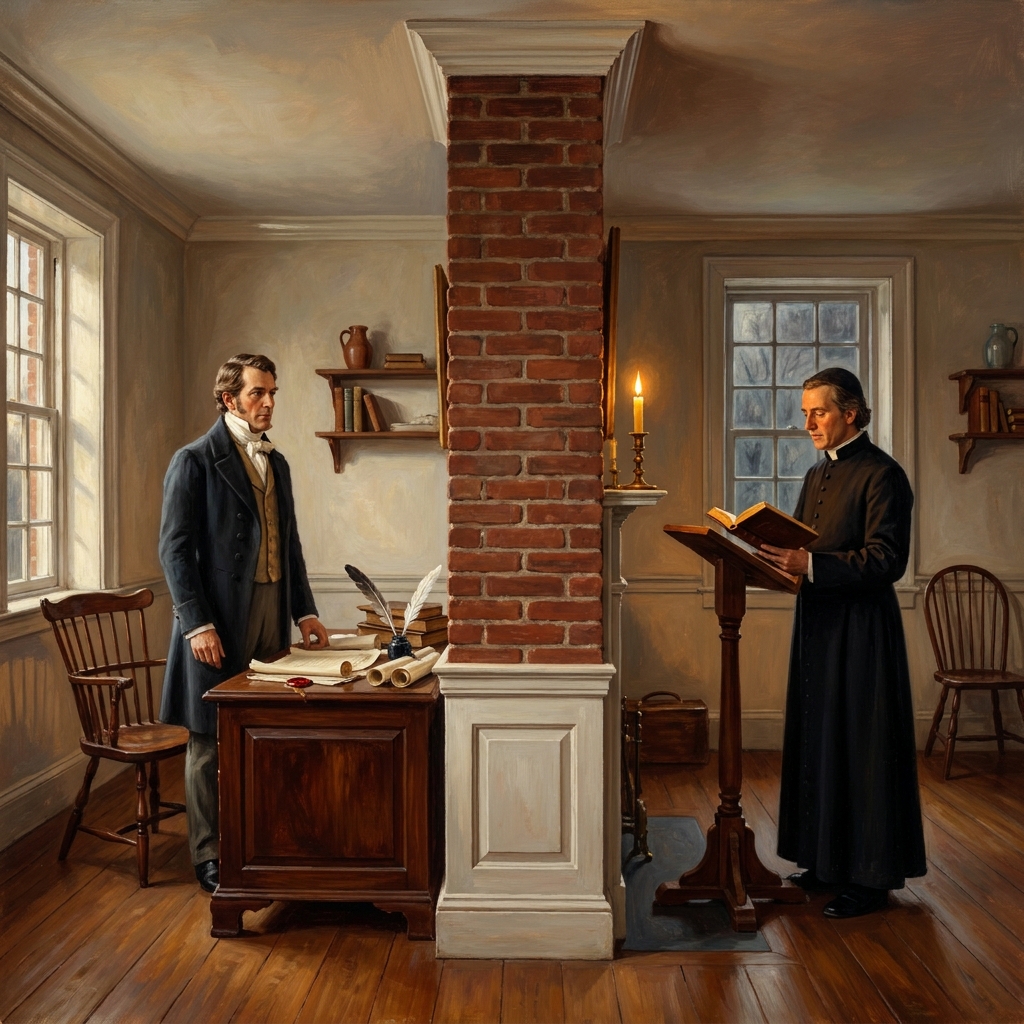
The lesson breaks this down by having students work through the provided scenario of Thomas Jefferson and his famous letter about the wall of separation. Jefferson argued that government should not interfere with the church, and the church should not interfere with the government. This is a powerful visual for middle schoolers. It turns a dense political concept into a solid, tangible boundary. You are not just teaching them to define persecution as hostility and ill-treatment, especially because of race or political or religious beliefs; you are teaching them why that protection was necessary in the first place.
Connecting the Statute to the Amendment
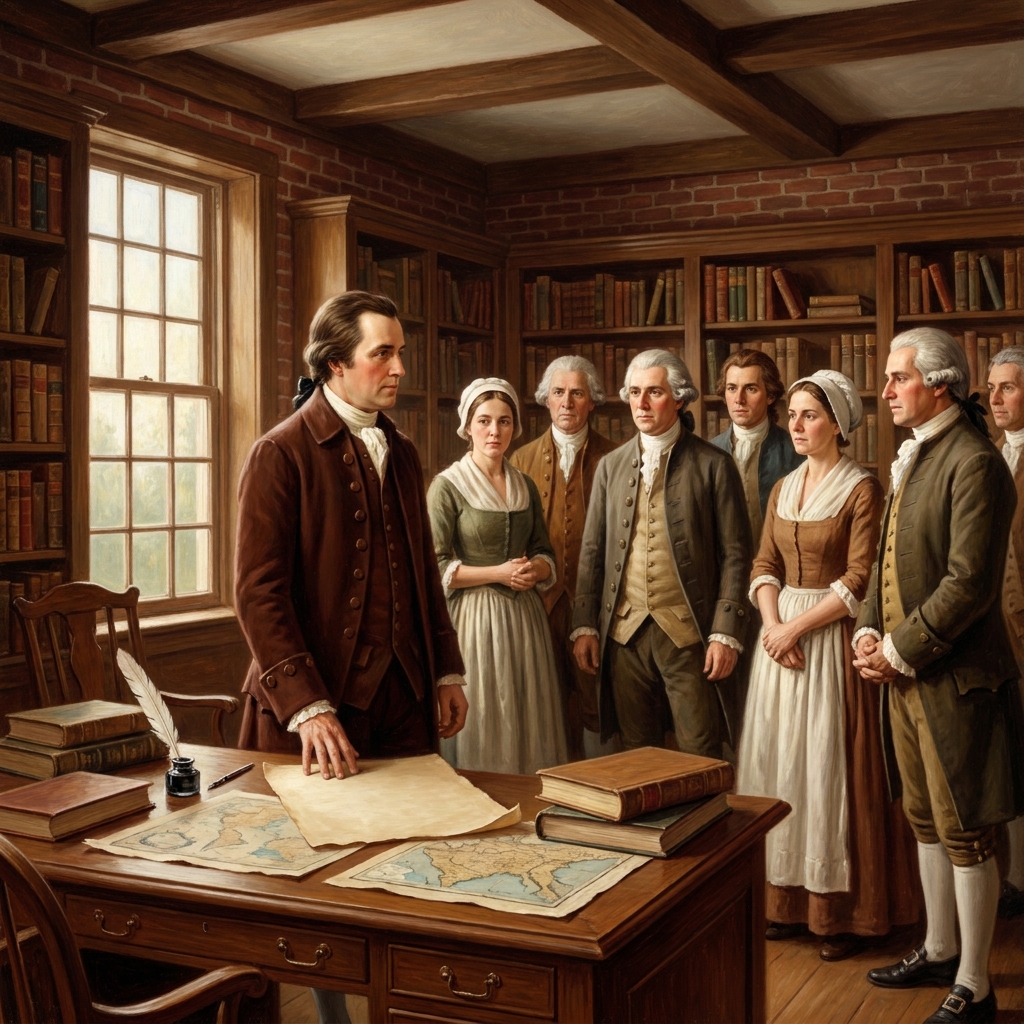
One of the strongest parts of this eighth grade government and history lesson is the guided practice. It uses an imaginary debate between James Madison and a state legislator regarding public funds for religious teachers. This is a brilliant way to handle the requirement for analyzing differing views. Madison argued that public funding for religious instruction would violate the rights of conscience, which is the freedom to hold and practice one’s own religious beliefs without government interference. When students have to step into that debate, they stop seeing the First Amendment as a static rule and start seeing it as a compromise that people had to fight for. It makes the history feel earned.
I find that my students often assume the separation of church and state was always a widely accepted, settled fact. They treat the Constitution like a finished product that arrived in the mail. This lesson strips that assumption away. It shows that it was a deliberate, contested choice by people who lived through the fallout of state-mandated religion.
Where students slip
The trickiest part for students is usually the nuance between a government having no religion versus a government having a stance on religion. They often get tripped up on the idea of the wall of separation. They struggle to articulate how a law like the Virginia Statute protects someone’s right to believe whatever they want, rather than just protecting them from one specific church. You might need to pause and remind them that the statute was about preventing the government from forcing citizens to support a clergy they did not choose. If a student thinks the First Amendment just keeps the government out of the church, they have only done half the work. It also prevents the church from using government power to punish those who disagree. It is a two-way street that requires constant attention.
Using the lesson in the classroom
This is a solid candidate for a whole-class assignment because it anchors the abstract constitutional concepts in a specific legislative history. If you have a student who missed the week of instruction, this is one of the better ways to get them caught up because the logic flows linearly from the statute to the amendment. It also works quite well for independent study, provided the student has a chance to write out their thoughts on Madison’s arguments. It forces them to engage with the text rather than just skimming for definitions. I would skip using it for a substitute day unless you have a class that is already comfortable with the basics of colonial politics, as the debate segment requires a bit of teacher guidance to really stick. Regardless, this is a clean, focused resource for hitting one of the harder concepts in the 8th grade curriculum.
Related lessons
The Growth of American Public Education, A look at the development of public schooling in America
Authority and Resistance in Early America, An analysis of colonial power dynamics and early dissent

Women on the Western Frontier, The roles and challenges of women during westward expansion