

The most common mistake I see when teaching fourth grade math is the automatic tendency for students to add the denominators along with the numerators.
Why students add the denominators
If you ask a student to add three-fifths and one-fifth, they will almost inevitably write four-tenths on their paper. They have spent years building a sense of whole numbers where addition means putting everything together, so when they see two fractions, they try to force that same logic onto parts of a whole. It is a logical leap for them, but it ignores the fundamental rule that the denominator identifies the size of the piece, not the quantity of pieces.
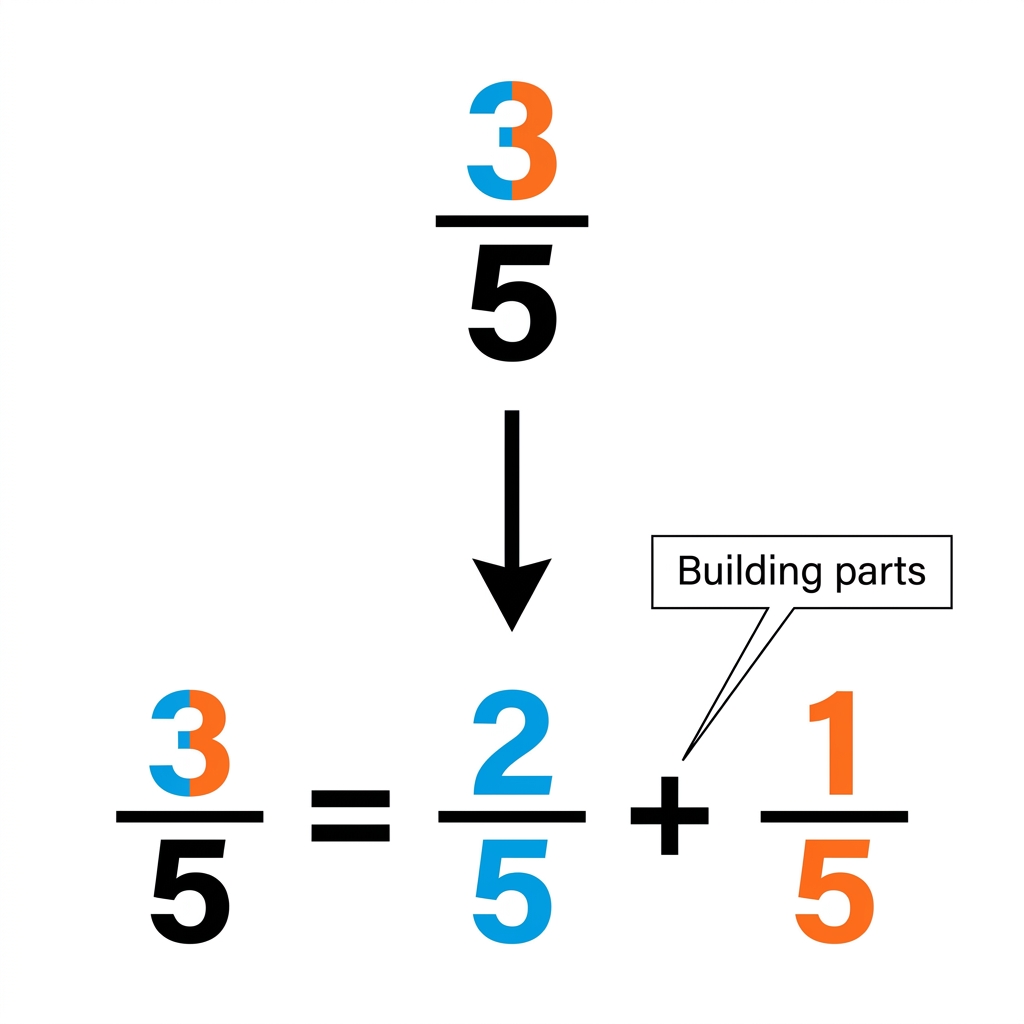
When you use Adding and Decomposing Fractions, you address this head-on by starting with the idea of a whole. The lesson uses the example of a chocolate bar divided into four equal pieces to show that each slice represents a specific fraction of that total. Once they visualize the part, they are better prepared to see that adding fractions requires keeping the size of the pieces identical. The lesson moves quickly into this concrete visualization, which is exactly what a student who is struggling with the concept needs to see to stop the habit of adding bottom numbers.
How the lesson builds unit fractions
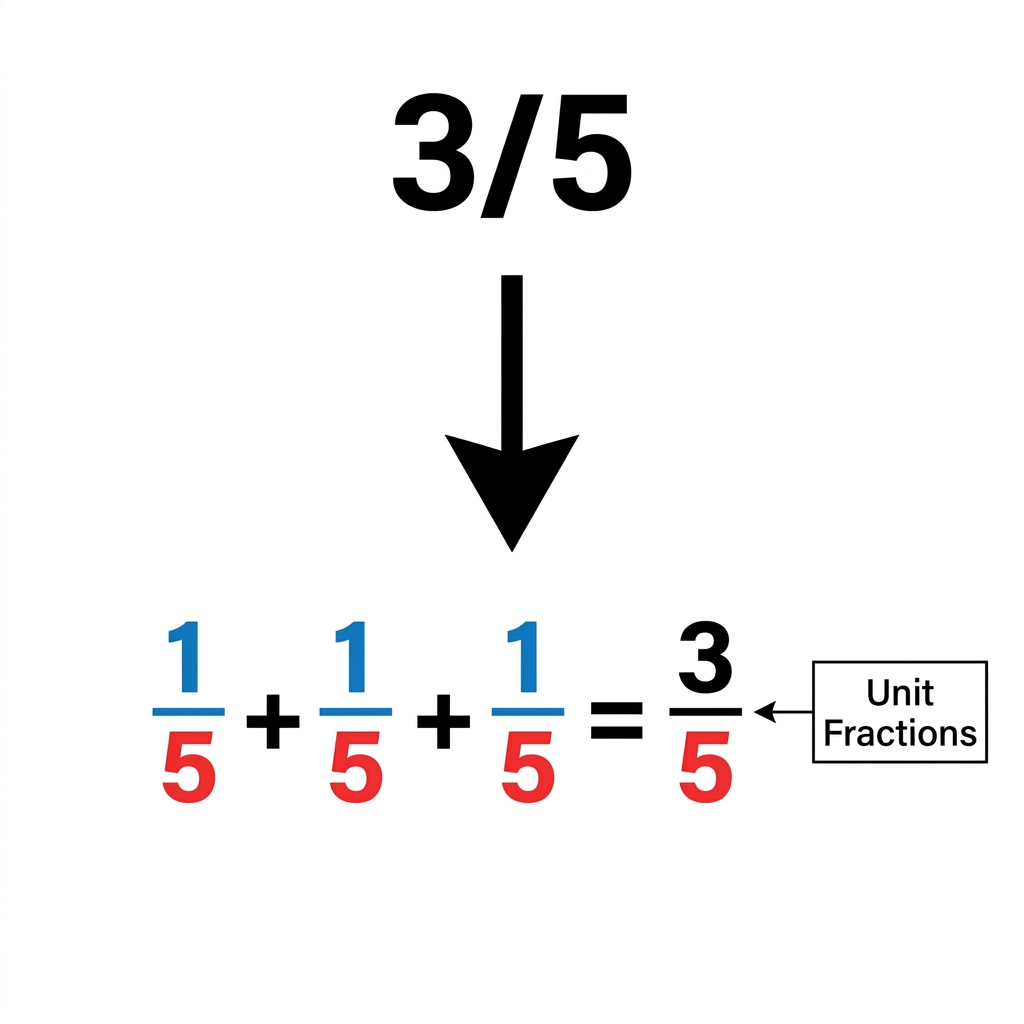
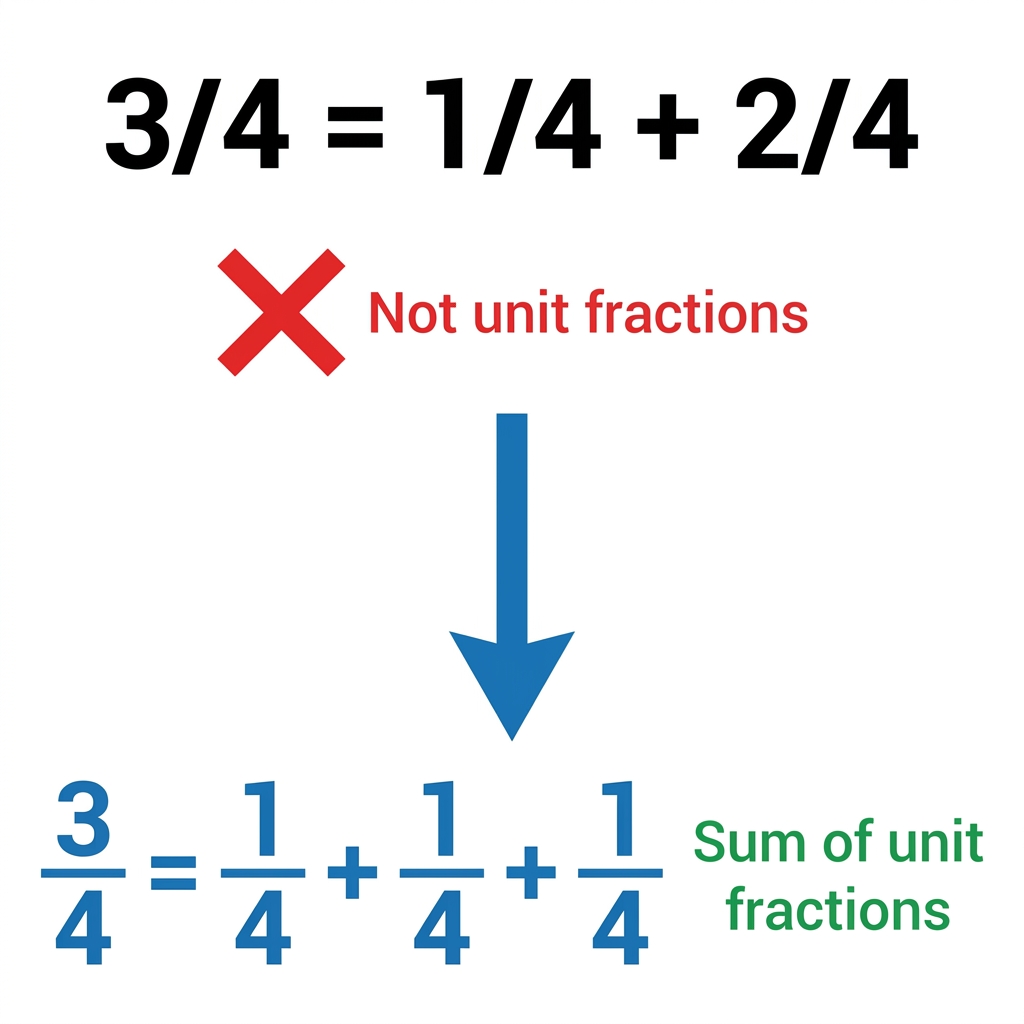
The objective here is simple: break fractions into smaller parts and solve addition and subtraction problems. The material introduces the concept of a unit fraction, which is defined as a fraction with a numerator of one that represents one equal part of a whole. It then guides the class through breaking down a fraction like three-fifths into one-fifth plus one-fifth plus one-fifth. This fourth grade fraction addition lesson shows why the denominator remains constant during the process of addition. By focusing on the numerator as a count of those unit fractions, students learn that they are merely counting how many pieces they have on the table rather than changing the size of the pieces themselves.
Meeting the California standard
This lesson is specifically built for CA.MATH.4.NF.3d. This standard asks that students understand a fraction a/b with a numerator greater than one as a sum of fractions with a numerator of one, specifically using one over b as the unit fraction. The standard also requires students to solve word problems that involve adding or subtracting fractions with like denominators by using visual models and equations. This is the exact same standard taught in San Bernardino City Unified, Palmdale Elementary School District, Fall River Joint Unified, and Antioch Unified classrooms across the state of California.
The standard builds on the idea that fractions are constructed from these smaller unit fractions. It moves away from the abstract memorization of rules and forces the student to represent the math visually. The lesson includes a guided practice section where the class works on a problem about painting two different sections of a wall. This helps ground the math in a real-world context where the student can see the wall as the whole and the painted sections as the parts being combined.
Practical application and classroom fit
Fractions are everywhere in the real world. Carpenters use them to measure wood for building houses, and cooks use them to measure ingredients for recipes. When you explain to a student that we cannot change the denominator because it would change the size of the boards or the amount of flour in the bowl, the rule starts to make sense. It stops being a random teacher rule and starts being a necessity for accurate work.
I find this lesson works best for a whole-class assignment when introducing the concept, but it is also a perfect tool for a student who missed the week and needs to get back up to speed quickly. If you have a student who is stuck on the basic math, this is also excellent for small-group intervention. It is a straightforward 45-minute lesson that cuts through the noise and helps the students focus on the denominator as the identifier for the size of the slice. If your students are still struggling with the concept of the denominator, this material provides the visual scaffolding they need to move past that initial frustration.
Related lessons
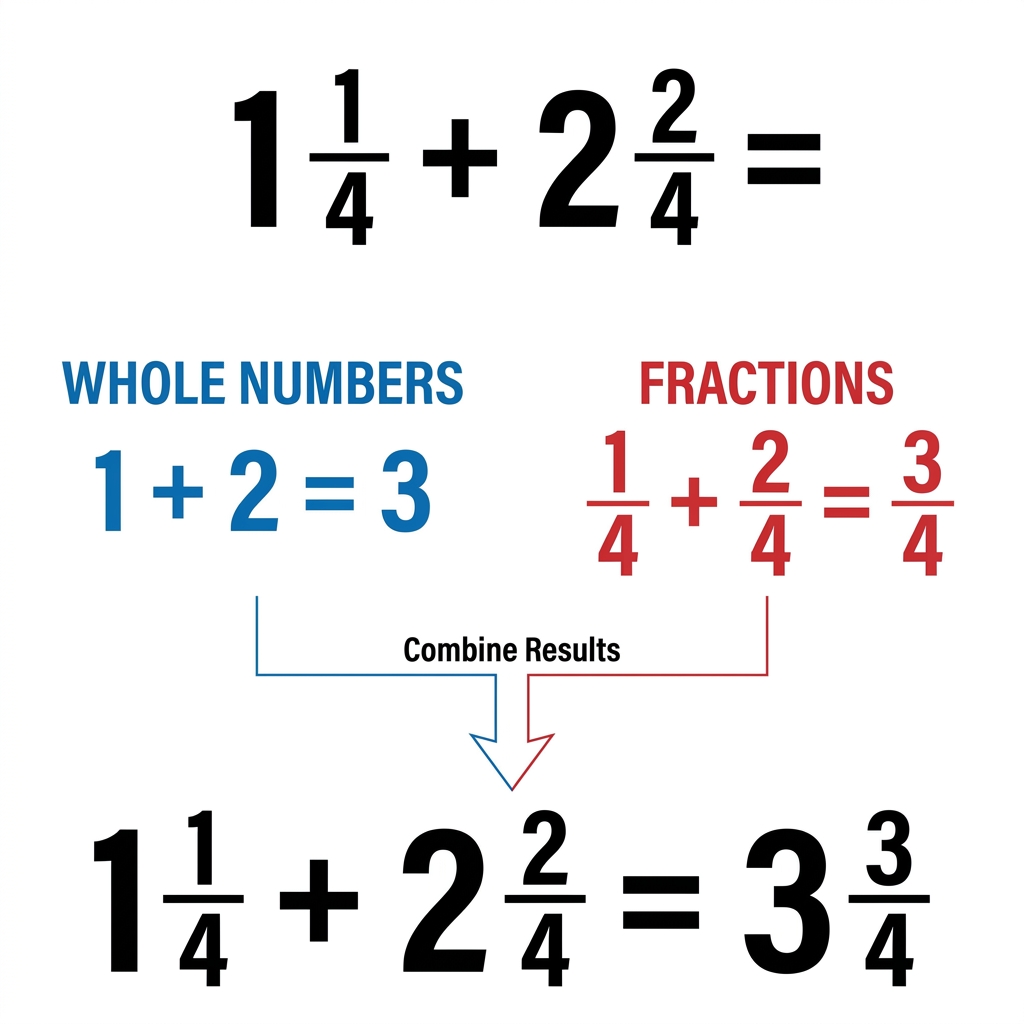
Adding and Subtracting Fractions and Mixed Numbers, Covers addition and subtraction of fractions and mixed number values
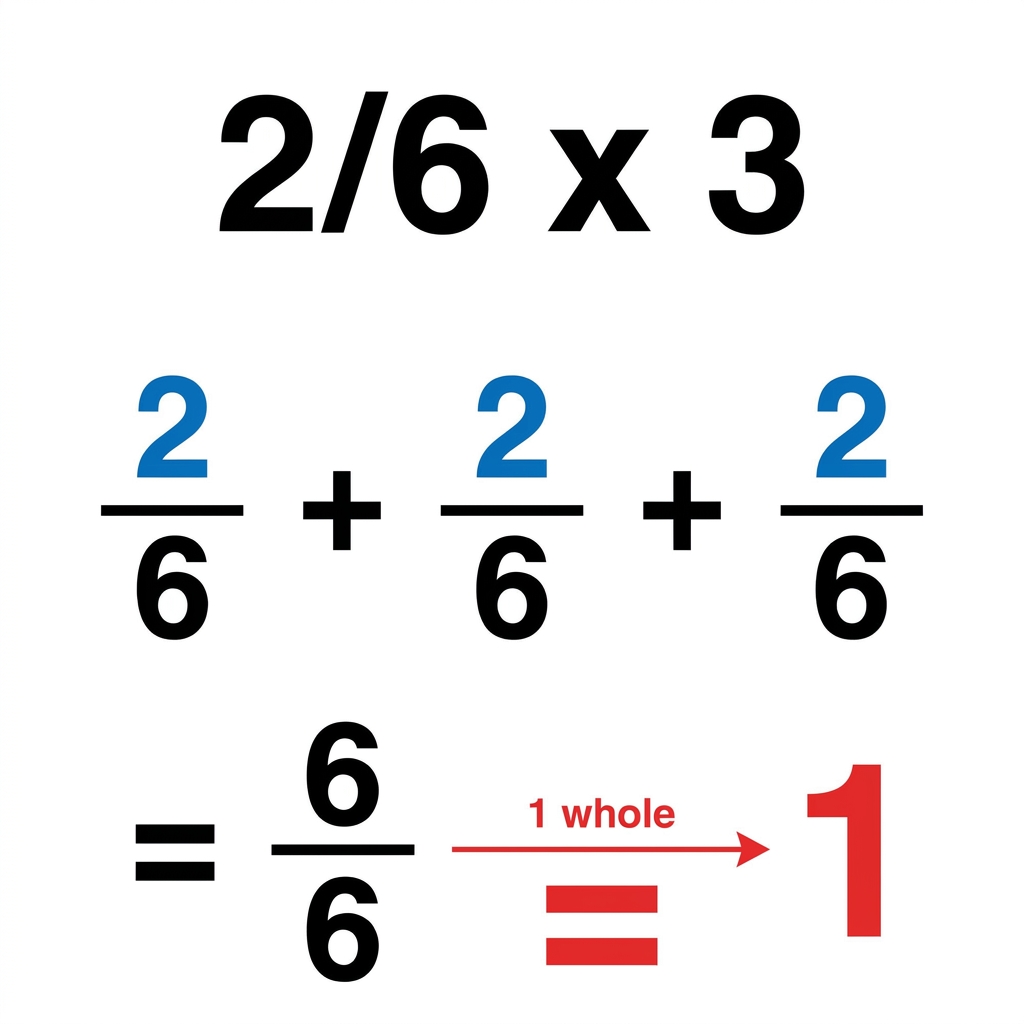
Multiplying Fractions by Whole Numbers, Focuses on multiplying whole numbers by various fractional values
Understanding Fractions as Parts of a Whole, Explains how fractions represent parts of a single whole object