


By the time high school students reach the middle of the term, they are often moving into more complex territory with their science coursework. For students who need extra time to grasp how systems behave under pressure, finding a resource that explains these mechanisms without unnecessary jargon is a major win. This high school science lesson, titled Controlling Chemical Equilibrium, provides a clear, focused path for students to see how chemistry works in the real world.
When you have a student who needs to revisit the principles of high school chemistry equilibrium, this lesson offers a perfect balance of theory and application. It is designed to take about 45 minutes, making it a manageable addition to an independent study plan or a targeted intervention session. The material is centered on the objective of changing the conditions of a chemical system to increase the amount of products it creates.
What the lesson actually asks students to do
The lesson begins with a straightforward look at how solids dissolve in liquid to build foundational knowledge. It uses the scenario of a saturated solution, explaining that when 36 grams of salt are added to water until no more can dissolve, the system has reached a specific state where any extra solid simply rests at the bottom of the beaker. This provides a strong visual bridge to the primary vocabulary terms students encounter here.
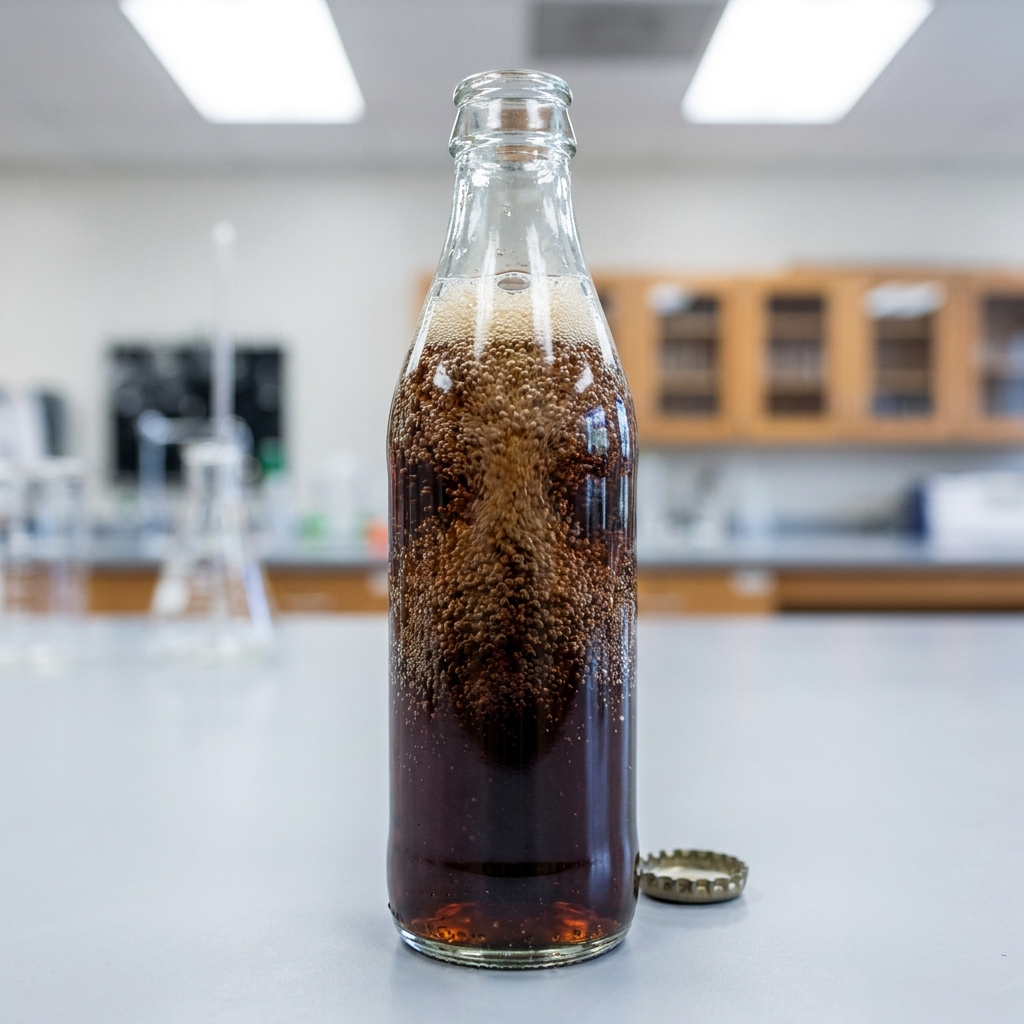
Students work through three definitions that define the logic of the lesson. Chemical Equilibrium is defined as the state in a reversible reaction where the rate of the forward reaction equals the rate of the reverse reaction, keeping the amounts of products and reactants constant. Le Chatelier’s Principle explains that if a change is applied to a system at equilibrium, the system will shift its equilibrium position to counteract that change. Finally, the material defines a Reversible Reaction as a chemical reaction where the products can react to reform the original reactants. These concepts are treated as tools for problem solving rather than just terms to memorize.
The lesson brings these concepts to life with practical scenarios. For instance, it walks students through water softening, where the goal is to remove minerals like calcium by forcing them to form a solid precipitate. By adjusting the pressure or the concentration of reactants, the system is pushed toward the solid precipitate product. A subsequent guided practice section asks students to apply this logic to ammonia production, where nitrogen and hydrogen react at high heat and pressure to yield specific results.
Applying the science standards
This lesson directly addresses CA.HS-PS1-6, the California-adopted standard for physical science. This standard asks students to refine the design of a chemical system by specifying a change in conditions that would produce increased amounts of products at equilibrium. Teachers across the state, from those at Oxnard Union High School District to San Juan Unified, San Pasqual Valley Unified, and Coronado Unified, rely on these same principles to ensure students understand how to manipulate chemical systems.
The standard also includes specific California context requirements. It asks students to apply chemical equilibrium concepts to industrial and environmental contexts. This includes looking at water treatment chemistry, semiconductor manufacturing processes, and the atmospheric chemistry of smog formation in the Los Angeles Basin. By grounding the theory in these local examples, the lesson makes the abstract math of chemical shifts feel much more concrete and relevant to the students who live here.
Where students slip
If there is one place where students frequently trip up, it is in the transition from understanding that a reaction is reversible to actually predicting the direction of a shift. It is common for a student to correctly identify that a system is at equilibrium but struggle when asked to decide if adding heat or changing pressure will favor the products or the reactants. The lesson handles this by keeping the focus on the system design rather than just the math. It forces the student to stop and think about the physical outcome. Does adding more reactants push the system forward or pull it back? Asking them to design the change helps them move beyond simple definitions.

When to assign this lesson
This lesson is quite versatile for your needs as an educator. It works well as an independent study assignment for a student who needs to catch up after an absence. It also functions as a strong intervention tool for a student who needs to see the concept presented differently after a standard lecture has failed to stick. If you have a substitute teacher covering for a week, this is a clean, self-contained lesson that keeps the class on track without requiring the sub to have a deep chemistry background. Because the lesson flows logically from the simple act of dissolving salt to complex industrial ammonia production, it offers a consistent path for the student to follow on their own.
The material emphasizes that understanding equilibrium is essential in environmental engineering and manufacturing. It reminds the student that from keeping our water supply clean to making sure the air we breathe is safe, we use these principles to ensure we have the products we need efficiently. This provides the kind of why-it-matters context that keeps a student engaged when they are working through the material independently. Whether you are prepping a student for a makeup exam or simply shoring up their foundational knowledge, the structure here is consistent and clear, allowing the student to move through the content at their own speed while still meeting the requirements of the standard.
Related lessons

Nuclear Energy and Stability, Concepts regarding nuclear stability and energy release

Bond Energy and Chemical Reactions, Relationship between bond energy and chemical change
Thermal Energy Transfer and Equilibrium, Mechanisms of thermal energy transfer and equilibrium