

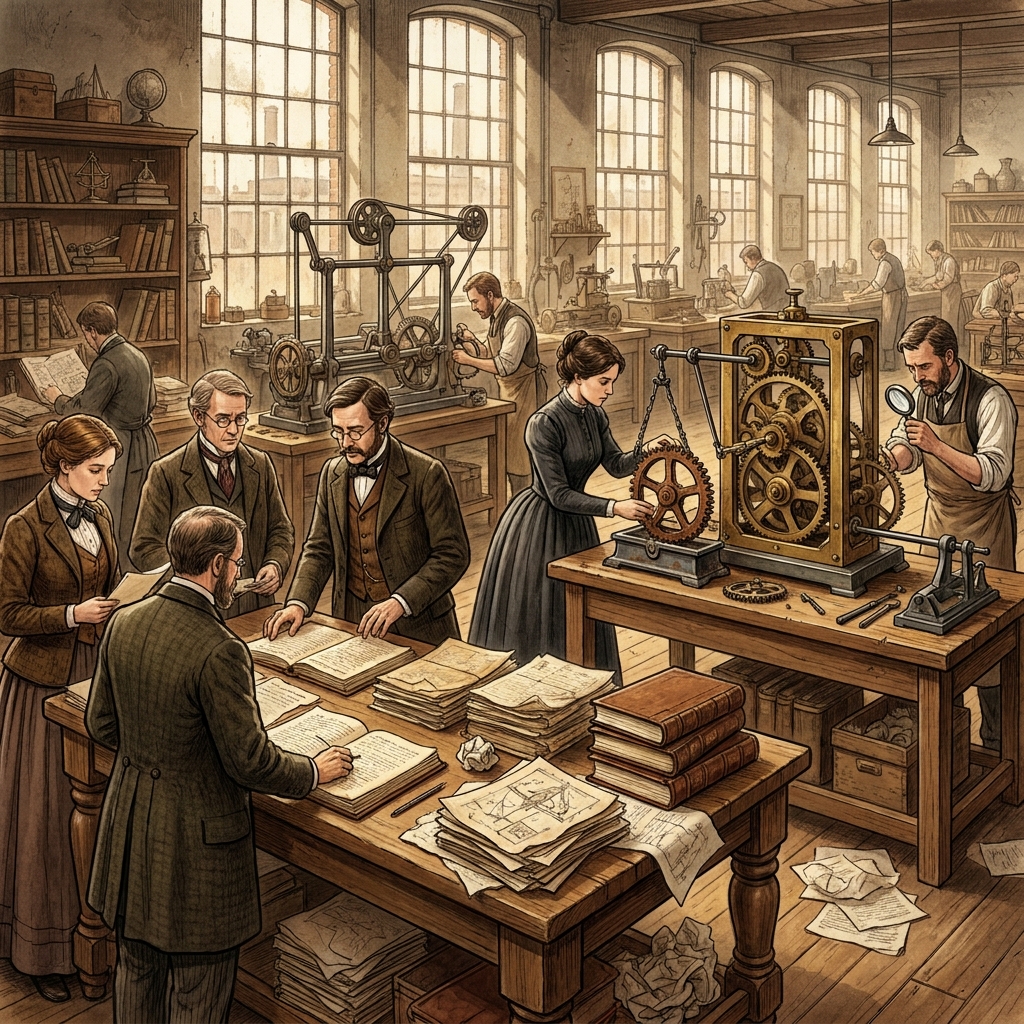
Digital research methods change how students approach their assignments in English Language Arts classrooms. Instead of focusing on final, static reports, students need the ability to build, maintain, and update their work throughout a project cycle. This shift prepares them for professional environments where information is rarely fixed and constantly requires verification. By using standard digital tools, educators can guide students through this process effectively.
Breaking the habit of static writing
Most students treat digital research as a fixed task: they open a document, type their findings, and consider the project finished once they hit export. They treat their word processor like a digital typewriter. This high school digital research lesson challenges that limited view by demonstrating that modern research is often living information that requires constant refinement. It is a high school English Language Arts lesson designed to help ninth graders transition from static writing to dynamic, updateable projects.

Teachers often face a calendar squeeze when teaching research in the ninth grade. By the time students move through the foundational requirements of source evaluation and drafting, the weeks vanish. This lesson acts as a self-contained unit that helps students who missed the week or those in an intervention setting catch up on the technical requirements of the curriculum. It works well for a substitute day or for students on independent study who need to manage their workflow without a physical presence in the room.
Meeting the California standard
The lesson focuses on CA.ELA.WHST.9-10.6, which requires students to use technology to produce, publish, and update their writing. This is the California-adopted standard, and it is taught with the same expectations across the state, from Manteca Unified and San Francisco Unified to Redlands Unified and Coronado Unified. The standard expects more than basic typing; it asks students to build projects that take advantage of technology to link to other information and display data in ways that are flexible and dynamic.
Students start by looking at how research has evolved. Before digital tools, a printed report was a final product. Today, students learn that a research report on a subject like water quality should have sections that remain accessible and editable. The lesson uses the Industrial Revolution as a primary example. It shows students that as historical evidence is uncovered, researchers must track those changes. The goal is for students to see that raw data is not stagnant but evolves as new evidence appears.
Applying data and collaboration
The guided practice moves into scientific report drafting, specifically using climate data. This is where the technical vocabulary becomes vital. Students learn that dynamic content is information that can be easily updated or expanded after publication. They practice using hyperlinks, which are the digital connections that allow a reader to click and jump immediately to a related source. Finally, they cover collaboration, which is the act of working together in a shared digital workspace. These terms are not just theory; they are the tools needed for the guided exercise.

In this section, students grapple with Data Visualization. They learn to represent complex information using charts, graphs, and maps to make difficult patterns easier to understand. This is a skill many students struggle with because they often want to summarize everything in paragraphs rather than letting the visuals do the heavy lifting. The lesson teaches them to transform raw numbers into insights that a reader can interpret at a glance. You will find that this helps students understand that scientific reporting relies on live data tables that change as the environment changes.
The lesson includes a clear why-it-matters section that explains how news outlets use dynamic linking to track a developing story or how scientists use cloud-based documents to share results across different cities. By assigning this work, you show your class that these tools are not just for school assignments but are the standard for professional communication. Access the full materials at Leveraging Digital Tools for Research to begin moving your students toward this more modern approach to writing.
Related lessons
Constructing Research Narratives, Building coherent stories from academic research and gathered source material
Mastering Rhetorical Style and Organization, Structuring arguments with precision and adapting tone for specific audiences
Constructing Disciplined Arguments, Developing clear claims backed by evidence and logical reasoning paths