


Eighth grade social studies is the moment when the abstract concepts of government stop being theoretical textbook definitions and start being the practical rules that run our country.
When we look at Foundations of American Democracy, we are really setting the stage for every historical conflict or success story our students will study for the rest of the year. If they do not grasp the basics of how our republic functions, the later lessons on growth and conflict will lack the necessary context. This 8th grade government lesson provides a clear, manageable entry point for students to identify the core foundations of the American political system and the various ways citizens participate in it. Whether you are using this as a whole-class assignment, a makeup day for a student who missed the week, or an independent study module, it keeps the focus on the mechanics of our representative democracy.
What the lesson actually asks students to do
The material begins by framing the U.S. Constitution through its Preamble, which serves as a statement of purpose for the entire government. It highlights how the famous opening phrase, We the People, roots the entire legitimacy of the state in the citizens themselves. From there, the lesson moves into the structural guardrails of our system, specifically focusing on checks and balances. The worked example scenario is particularly helpful: it explains the President’s power to veto a law passed by Congress. This is a concrete way to show that no single branch holds total control, which is a concept that often confuses middle schoolers. They also define key terms that they will need to use correctly throughout the year: Preamble, Consent of the governed, Checks and balances, and Civic engagement.

I find the guided practice section to be the most effective part of this resource. Instead of just quizzing students on definitions, it walks them through a scenario where a community organizes to advocate for a new public park. It grounds the idea of civic engagement in a tangible neighborhood need. Teachers across the state, from Twin Rivers Unified to Irvine Unified, and from Folsom-Cordova Unified to Hayward Unified, teach CA.HSS-8.3 to ensure students grasp these foundational concepts. This is the California-adopted standard which asks that students understand the foundation of the American political system and the ways in which citizens participate in it. I appreciate how the material avoids becoming overly bureaucratic. It stays focused on the why and the how, which is vital for students who might otherwise struggle to see why a document written centuries ago affects their own lives today.
Where students slip
The biggest hurdle for 8th graders with this content is usually the concept of consent of the governed. They often assume that government power is just a natural feature of a country, like its geography, rather than a system built on public approval. If they miss the connection that our system relies on the informed consent of the governed, they will have a hard time understanding why we study voting patterns or local activism later on. I suggest really pushing them on that specific vocabulary term during the lesson. Make sure they understand that when they participate in their own community, even in small ways like the park project mentioned, they are actively engaging in the same logic that the founders built into the Constitution. If they do not internalize this, they tend to view the government as a distant, static entity rather than something they can influence or hold accountable.
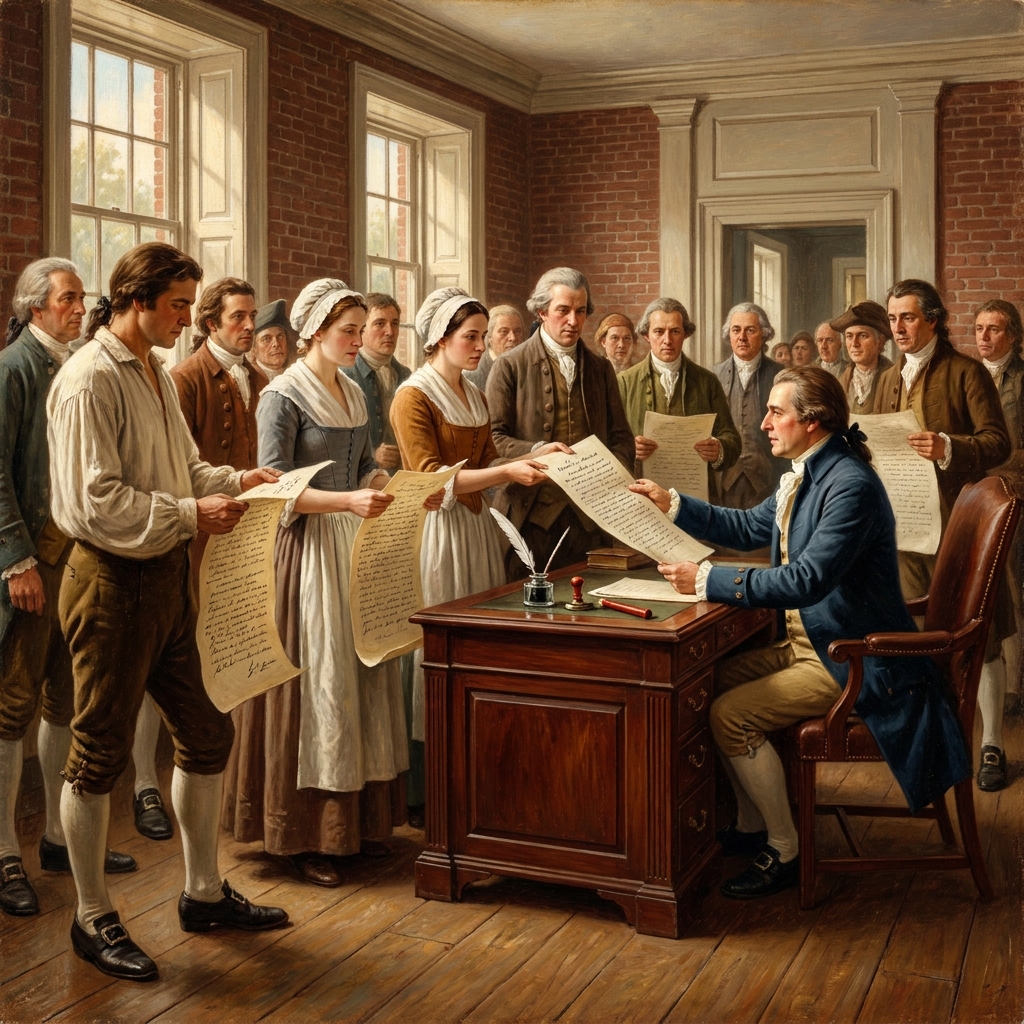
The lesson is brief, typically taking about 45 minutes, so it is a good fit if you need to squeeze in a lesson during a week with a short schedule or if you are preparing for a substitute day. It is straightforward and does not require a massive amount of prior preparation, which I know is a blessing during a busy term. By the time they finish, students should have a solid grasp of why a republic requires participation to remain stable. It is a necessary foundation; if this is shaky, the later units on the development of the nation will feel like a list of disconnected names and dates rather than a functioning system of people and power. Let them grapple with the park example, let them discuss why a veto exists, and you will find they are much more prepared for the heavier historical analysis coming next.
Related lessons
Moving Forward: Migration After the Civil War, Examines migration patterns and demographic shifts following the Civil War
The Rise of Jacksonian Democracy, Covers political changes and the growth of democratic participation
Growth and Conflict: The Expanding United States, Details territorial expansion and internal national growth and conflict