

Fluently add and subtract within 20 using mental strategies. By end of Grade 2, know from memory all sums of two one-digit numbers. This objective is the heart of Adding and Subtracting Within 20, a lesson designed for second grade mathematics classes. When we talk about fluency in this context, we are looking for more than just a correct answer. We want students to move past the finger counting that served them in first grade and start interacting with numbers as flexible, usable pieces.
This lesson provides a path for students to move from counting to calculating. By the time students finish this unit, the California-adopted standard CA.MATH.2.OA.2 requires them to achieve automaticity with addition and subtraction facts up to 20. Educators in Corona-Norco Unified, Long Beach Unified, Castaic Union School District, and Davis Joint Unified rely on this specific standard to ensure students are ready for the multi-digit work that comes later in the year. The lesson also incorporates CCSS.MATH.2.OA.B.2 as a central part of the same standard, which reinforces the necessity of using mental strategies to reach those memory-based sums by the end of the year.
What the lesson actually asks students to do
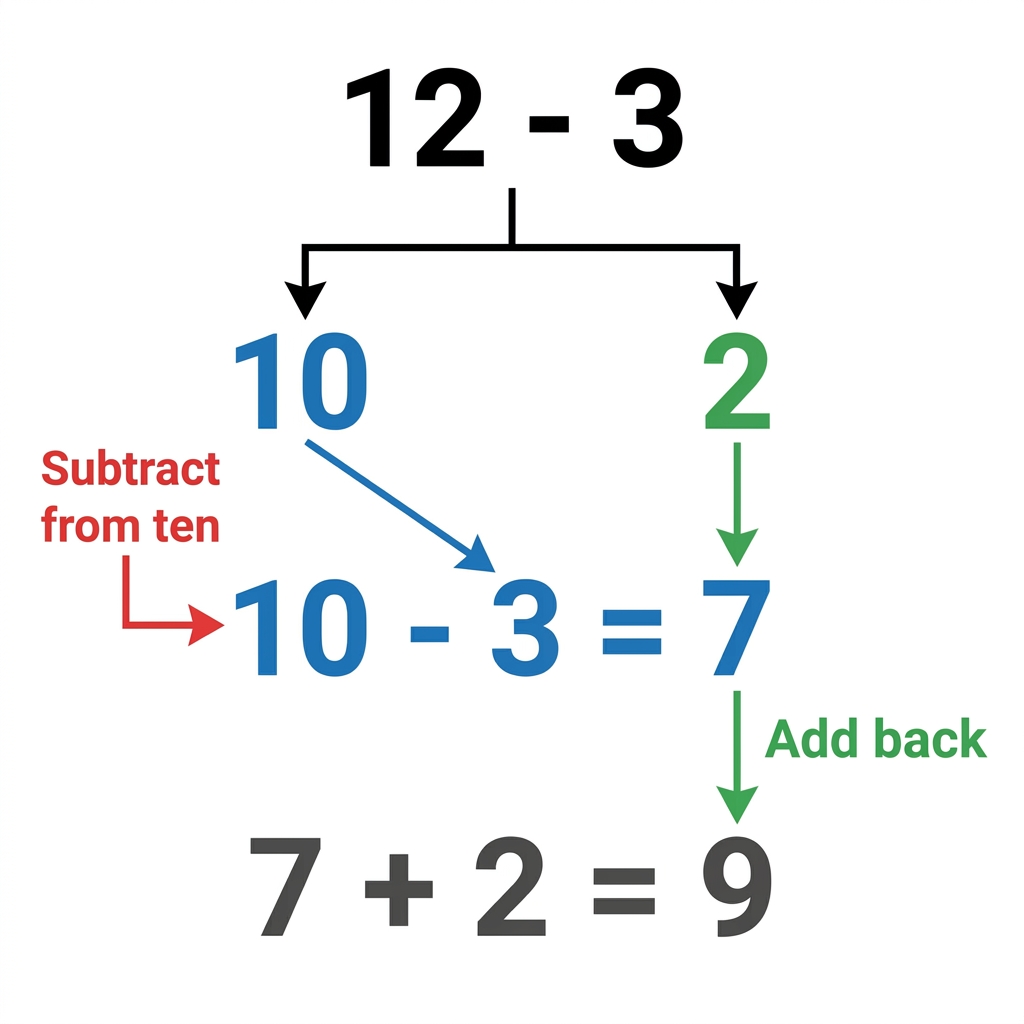
The core concept here is decomposition. The lesson defines decomposition as breaking a larger number into smaller, easier parts to make adding or subtracting simpler. For many of our students, 12 minus 3 is a daunting task if they try to visualize the whole 12 at once. By teaching them to see 12 as a 10 and a 2, they gain a tool that makes the math manageable. The lesson walks students through this explicitly: to solve 12 minus 3, we can break 12 into 10 and 2. Then we take 3 away from the 10. Since 10 minus 3 is 7, we add the 2 back to get 9.
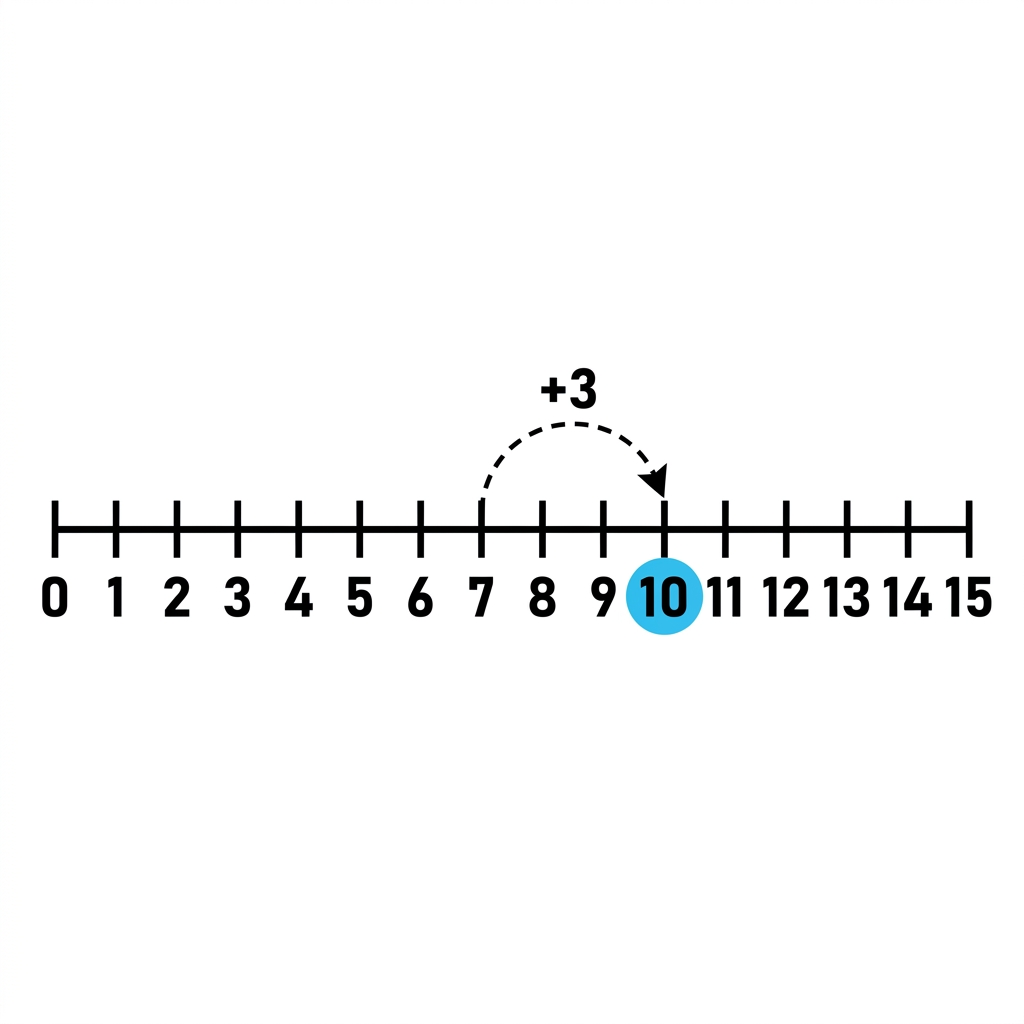
This is a major shift for a second grader. It moves them away from the additive property of just counting forward and into the world of place value and number properties. The lesson introduces the number line as a bridge. Students likely already know how to count forward on a number line to find a total. The lesson takes that familiar tool and shows them how to jump to 10 first. A number line is a line with numbers in order that helps us see how far apart numbers are, and using it to hit that anchor of 10 makes the math feel lighter for the student.
When you are looking for an effective addition and subtraction within 20 lesson to use with the whole class, this one works well because it keeps the vocabulary tight and focused. Students track their progress by finding the sum, which the lesson defines as the total amount you get when you add two or more numbers together. I find that when we use this vocabulary consistently, students stop seeing subtraction as just taking away and start seeing it as finding the missing part of the sum.
Managing guided practice and word problems
The guided practice in this lesson features a scenario about a store clerk who has 18 pencils and sells 4 of them to a student. We need to find out how many pencils are left. This is a smart way to frame the practice because it mirrors how we use math in the real world. Decomposition is useful in daily life, such as when you are at a store adding prices or figuring out change. When you run this with your students, spend a moment asking them to explain why breaking 18 into 10 and 8 helps. You will see those students who struggle with the abstract math suddenly find a foothold when they talk about the pencils.
I recommend using this lesson for a student who missed the week or as a focused intervention session for those who are still counting on their fingers to solve basic equations. If you have a group that is moving through the curriculum faster than others, this is a good independent study module. Just watch for the students who want to skip the decomposition step and jump straight to the answer. We want them to understand the bridge, not just memorize the landing point before they are ready.
Where students slip and how to support them
The goal is automaticity. This is the ability to recall math facts from memory instantly, like knowing that 5 plus 5 is 10 without needing to count or break the numbers apart. My experience is that teachers often feel a conflict between teaching the strategy, decomposition, and pushing for the rote memory required for automaticity. The lesson addresses this by acknowledging that while decomposition is a great tool, our ultimate goal is to practice these facts until we reach automaticity. Just as we memorize addition facts, we must also memorize subtraction facts to reach automaticity.
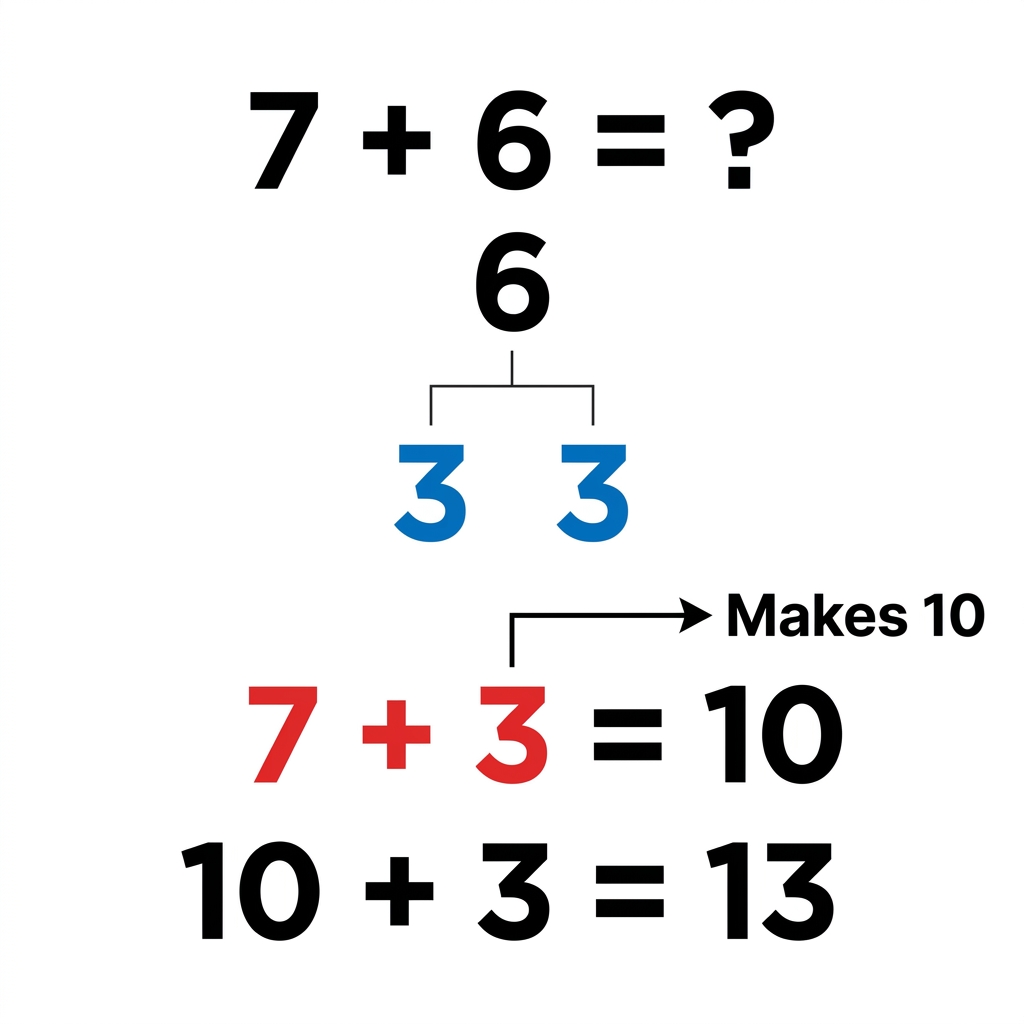
Knowing subtraction facts by heart allows you to solve problems instantly, which is a key requirement for success by the end of Grade 2. The limitation here is time. You cannot force automaticity in one 45-minute lesson. If you notice a student can explain the decomposition process but still stalls when asked for the answer to 15 minus 6, they need more time, not more explanation. Use the decomposition method as the training wheels, but keep the flashcards or quick-fire whiteboard games in your back pocket for the next day. The lesson gives you the logic to build the foundation. Your job is to make sure they eventually don’t need the foundation anymore.
If you have a student who is struggling to internalize these concepts, try to sit with them while they draw out the number line. When they see the jumps of 10, the logic often clicks. The most important thing is that they stop seeing these numbers as abstract digits and start seeing them as quantities they can manipulate. Once they see that 14 is just a 10 and a 4, the addition and subtraction facts become much friendlier.
Related lessons

Counting Arrays with Addition, Uses rectangular arrays to teach early multiplication and repeated addition
Solving Math Word Problems, Guides students through strategies for solving various addition word problems

Odd and Even Numbers, Explains how to identify odd and even numbers using pairing