

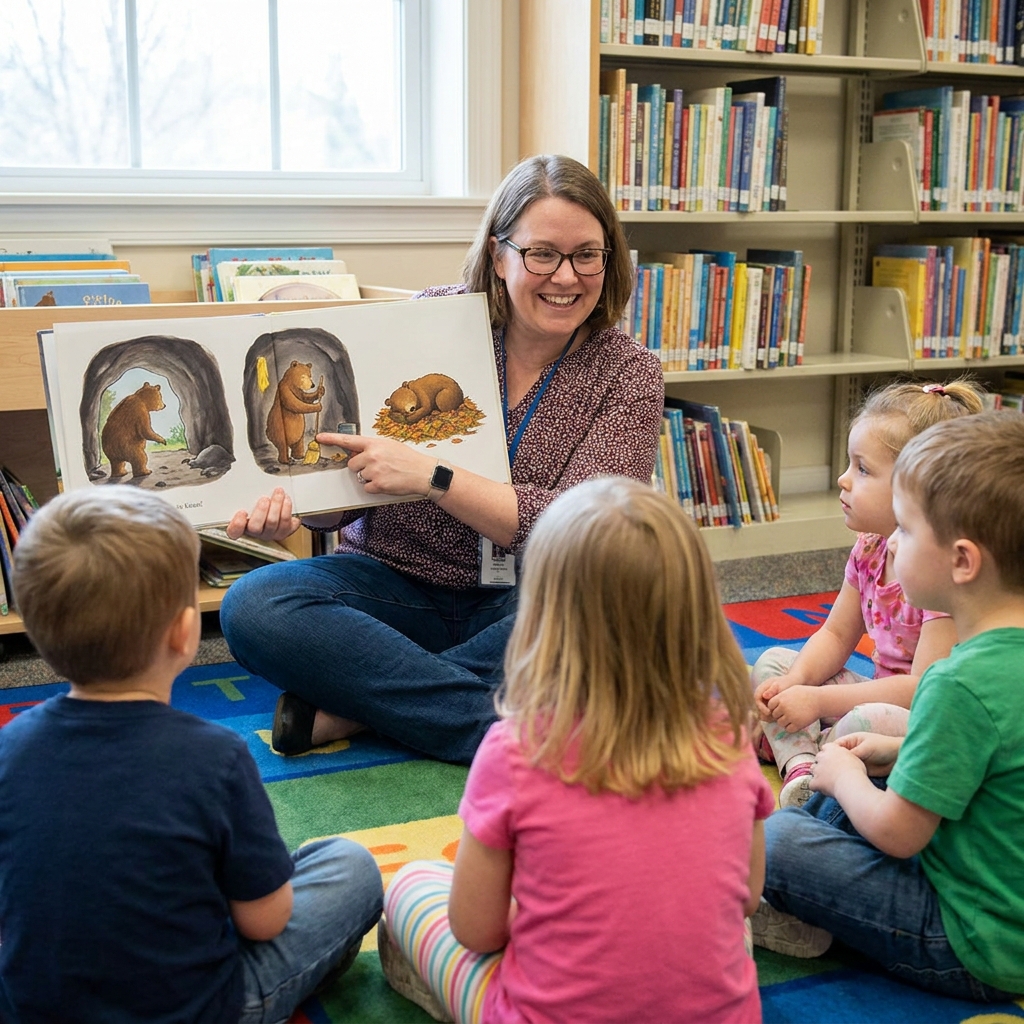
Some lessons promise that they will magically fix every classroom management issue you have ever faced. That is not the case here. This second grade English language arts lesson is not a silver bullet for student behavior. Instead, it is a straightforward, practical tool for helping your students get better at the actual mechanics of listening. We know that second graders often hear the first part of a directive and jump into action before we finish speaking. This lesson offers a clear framework to slow that process down and train their ears for detail.
You can find the resources in Listening and Following Directions. It is designed to take about 45 minutes of instructional time. The primary focus is on active listening, where students learn to identify key details in a text or oral presentation and then successfully execute a sequence of three or four specific instructions. It is a simple concept, but when you watch students struggle to keep track of a simple list, you realize how much they actually need this kind of intentional practice.
Understanding the core standard
This lesson is built to address CA.ELA.SL.2.2. In the California Common Core framework, this standard asks students to recount or describe key ideas from information they hear or see. The sub-standard part of the requirement specifically demands that students give and follow three- and four-step oral directions. It is a fundamental skill for academic success because, whether in math or science, the ability to parse a multi-step instruction is what separates a student who knows the content from one who just guesses the steps. This is the same standard used by teachers in San Diego Unified, Anaheim Elementary School District, Escalon Unified, and Galt Joint Union Elementary School District.
I appreciate that the lesson takes a step-by-step approach to the standard. It breaks the barrier between hearing sounds and actually processing information into actionable items. By using stories to practice these skills, the lesson avoids the dryness of rote memorization. It asks students to find the sequence in a narrative, which is something they are already doing when they retell a favorite book, only now they are being asked to apply that same mental organization to a list of tasks.
What the lesson actually asks students to do
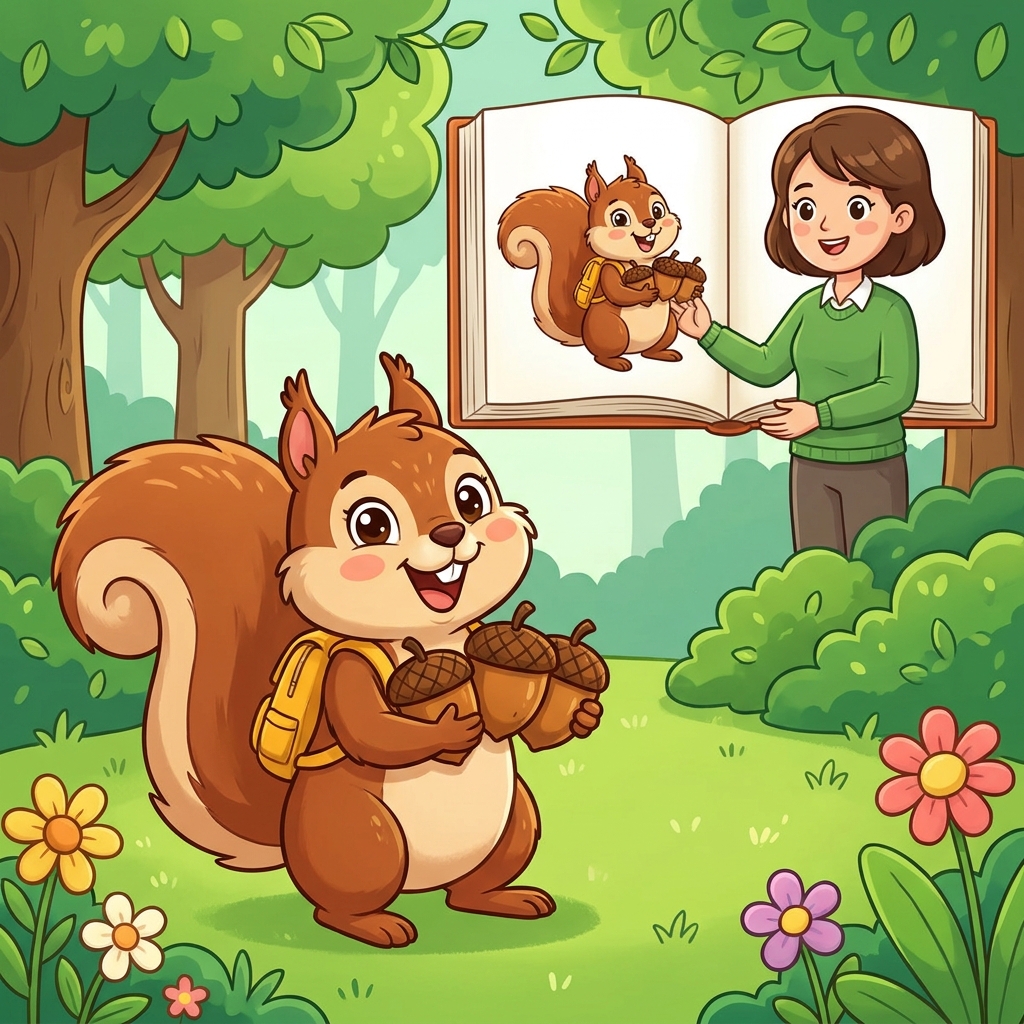
The arc of the lesson starts with an opener about a squirrel gathering nuts for winter. A teacher reads a short story about the squirrel finding three acorns, hiding them in a hollow tree, and running back for more. It is a perfect, bite-sized example. By tracking the squirrel’s movements, students are already practicing the logic of sequences. They have to hold three pieces of information in their heads at once to make sense of the story, which sets the stage for the more formal directive practice later.
For a second grade active listening lesson, the examples need to be concrete. The lesson uses a scenario where a librarian talks about a bear finding a cave, cleaning it out, and then sleeping through the winter. This is a classic sequence of events that requires no complex background knowledge. You can really see which students are tracking the progression and which ones are just waiting for the librarian to stop talking. The guided practice then moves them to a passage about a local community park, where they have to listen to the history of the park and then follow directions based on that information.
The lesson includes a why-it-matters segment that I think is worth using as a conversation starter. It uses the example of a construction site foreman who must give clear safety instructions to a crew. It is an easy way to frame listening as a professional skill rather than just a compliance task. Most children do not realize that the foreman’s crew would get into real trouble if they skipped a step or got the order wrong, which helps them see the value in paying attention to the details.
Using the lesson in your schedule
You have a few ways to fit this into your week. If you have a few students who consistently fail to follow simple directions during group work, this works well as a focused intervention. It gives them a safe space to practice without the pressure of a high-stakes lesson. It is also an excellent resource for a substitute day. When you are out, having a structured, self-contained lesson like this keeps the class on track without requiring the sub to know the entire unit arc. If you have a student returning from an extended absence, this is a clean, manageable way to get them back into the rhythm of the classroom expectations.
One detail I like is the emphasis on three- and four-step sequences. It is a specific threshold. Anyone can follow a one-step command, but adding that third or fourth step introduces the real friction of the standard. It exposes the mental fatigue that sets in when someone has to hold too many variables in their head. The lesson manages this by keeping the context simple, which means the students are focusing on the skill of listening rather than decoding complex vocabulary.
Where students slip
In my experience, the place where students slip is the transition between the second and third step. They get comfortable with the first two, think they have the gist of the request, and tune out for the final two. When they are practicing this with the park passage or the squirrel story, watch for that tell-tale look of distraction. You can see their eyes drift away right when the instructions get complex. This is the moment for you to pause and ask them to visualize each step separately.
If you have students who struggle, have them repeat the instructions back to you before they move to the guided practice. This is not about shaming them for not listening; it is about building the habit of internalizing the sequence. If they cannot repeat it, they cannot do it. By using this lesson, you are giving them the structure to build that habit. It is a quiet, steady kind of work that pays off over the entire year, especially as you move into longer units where complex, multi-step projects are the norm.
Related lessons
Making Stories Come Alive, Exercises for reading aloud with expression and dramatic flair

Speaking in Complete Sentences, Techniques for improving student verbal responses and communication skills

Asking Questions to Learn More, How to guide students to formulate and ask quality questions