

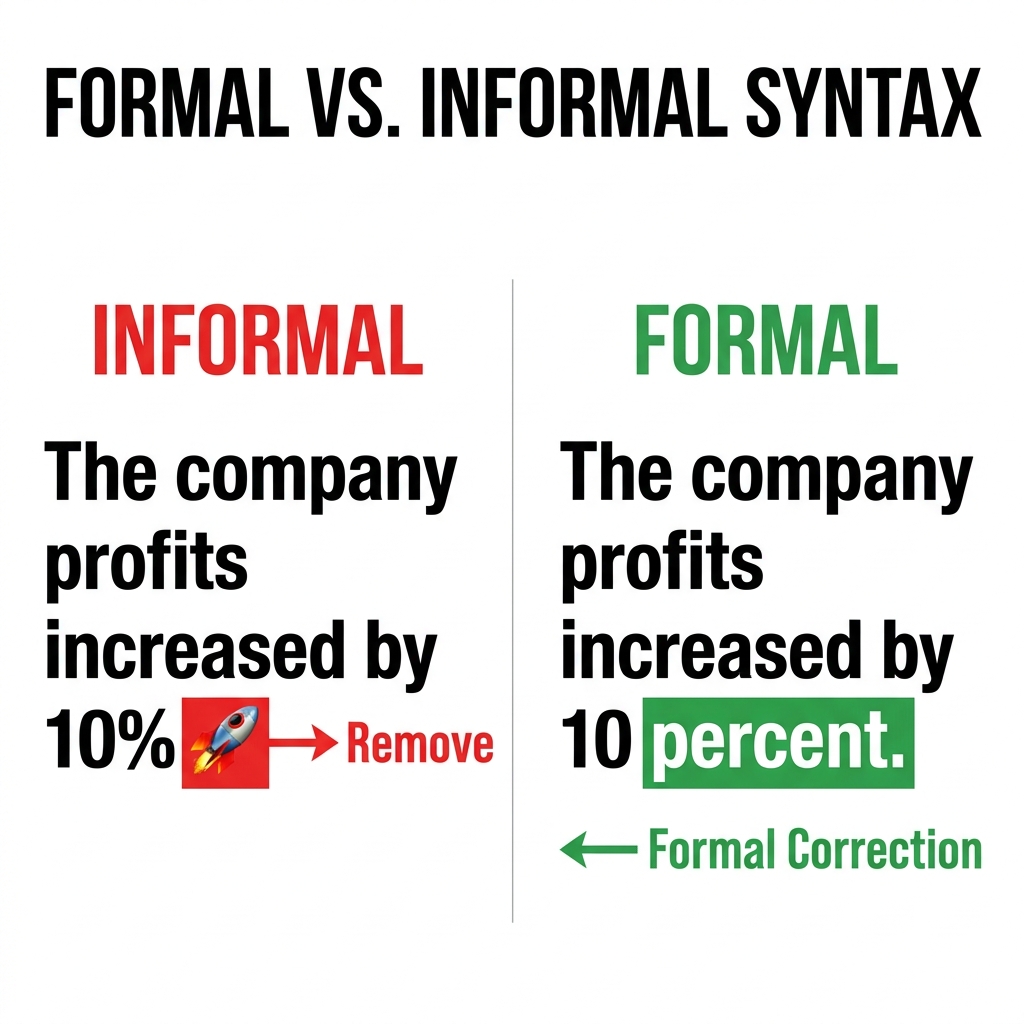
By the second half of the year, seventh graders have usually given a presentation or two. Most of us have watched the same thing happen. A student who argues brilliantly at lunch stands at the front of the room and either freezes into stiff, borrowed vocabulary or talks to the class exactly the way he talks at the lunch table. That is the moment this lesson is built for. Not September, when nobody has spoken in front of the room yet, but the stretch before the bigger speeches, when students have enough experience to notice that the way they talk changes depending on who is listening.
Speaking with Purpose: Adapting Your Language is a seventh grade English language arts lesson from the ELA 7 Speaking & Listening course, and it takes about 45 minutes. The objective is short: students adapt their speaking style to match different settings and tasks. Getting there is less short, which is why I think it helps to read the standard slowly before assigning it.
Reading the standard one phrase at a time
The lesson is aligned to CA.ELA.SL.7.6, part of the California Common Core State Standards for English language arts, in the Presentation of Knowledge and Ideas cluster. Its first sentence is identical to CCSS.ELA-LITERACY.SL.7.6, the national Common Core version, and that shared sentence is the base of the lesson. California then adds a second sentence, and that addition is where the real work hides.

Start with “Adapt speech.” The verb puts the burden on the student. Nobody adapts by accident; a speaker has to notice the situation and make a choice.
“To a variety of contexts and tasks” packs in two separate ideas. Context is who is listening and where. Task is what the speaker is trying to do: report, persuade, explain. A seventh grader can be in the right context and still miss the task, like speaking politely at a meeting without ever asking for anything.
“Demonstrating command of formal English when indicated or appropriate” also has two halves. Command means control, not decoration. And “when indicated or appropriate” means the student has to judge when formality is called for. The standard does not say formal English all the time. I like that it leaves room for judgment.
The California addition asks students to “use the techniques of an effective speaker to present claims and findings, emphasizing salient points in a focused, coherent manner.” So it is not enough to sound formal. The speaker needs a claim, needs to know which parts of it matter most, and needs the parts to hang together. That is a structure demand, and it is the piece students skip.
This is the same standard taught in Corona-Norco Unified, San Jose Unified, Arcadia Unified, and Lakeside Union Elementary School District, and in every other California district, since the state adopted one set of expectations for seventh grade speakers.
How the lesson gets students there
The opener begins with something students already know: they talk differently to a friend than to a teacher or a judge. Slang and short phrases with friends, more formal words with adults in official roles. The lesson names that shift as register, which gives students a word for something they already do without thinking.
Then comes the worked example, a line from a city council speech: “We must prioritize the development of our public parks to benefit all citizens.” The lesson explains why it counts as formal: the language is clear, respectful, and precise, and it addresses a community issue. I appreciate that the example is a single, plain sentence. It shows students that formal does not mean long.
Guided practice puts students in the speaker’s position. They prepare a speech for a town hall meeting about a new park. Same topic as the worked example, new task, so students can lean on the model without copying it. The civic setting also gives the word civic a real job in the lesson instead of leaving it as a vocabulary card.
The vocabulary is worth previewing before students start:
- Register: the level of formality in speech, which changes with the listener and the setting
- Salient points: the most important parts of a message, the ones the speaker wants remembered
- Formal English: speech that follows standard grammar and uses vocabulary suited to school or work
- Coherent: logical and easy to follow because the parts fit together
- Civic: relating to the duties and activities of people in a community
Where students slip
The most common mistake is treating formal English as a thesaurus exercise. Students swap “use” for “utilize” and think the job is done. The council sentence is a good corrective because it is formal and still short. Point back to it often.

The second slip is salient points. Asked to speak about a park, many seventh graders will list everything they can think of: swings, trees, parking, a dog area, the old fountain. Nothing gets emphasized, so nothing gets remembered. Push students to pick one or two points and say why those matter to the people in the room.
One honest limitation: the lesson’s scenarios stay in civic, formal settings. That fits the California addition well, but the standard says “a variety of contexts,” and students learn register best by contrast. I would add a quick casual version of the same park pitch, delivered to a friend, so students hear the difference out loud. Plan speaking time too. Forty-five minutes covers the thinking, but a speaking standard needs students actually standing up and talking.
When to assign it
As a whole-class lesson, it fits right before a persuasive speech unit, since it sets up register and salient points before students build a full argument. It also works well for a student who missed the week of presentation prep and needs the core ideas without sitting through everyone else’s speeches. And because the lesson carries its own example and practice task, it holds up on a substitute day; leave a note asking students to write out their town hall opening so you can hear them deliver it when you return.
If you have been looking for a seventh grade speaking and listening lesson on formal English and register, this one is a solid first step. The real test comes later, when the student who froze at the front of the room makes one clear point about a park and stops talking while the room is still listening.
Related lessons
Enhancing Presentations with Multimedia, Adding visuals, audio, and other media to strengthen presentations

Understanding Media and Main Ideas, Identifying main ideas in information presented through different media

Constructing and Delivering a Persuasive Speech, Building a persuasive speech and delivering it to an audience