

“Apply scientific principles to design a method for monitoring and minimizing a human impact on the environment.” That is the entire standard, one sentence long, and it asks far more of a twelve-year-old than it seems to on first read. Skim it and it sounds like “learn about pollution.” Read it slowly and almost every phrase is a demand. It wants a student to stop being a person who worries about the environment and start being a person who measures it.
The seventh grade science lesson Monitoring and Minimizing Human Impact takes that sentence seriously in about 45 minutes. It lives in the Middle School Earth & Space Science course, under the Earth and Human Activity cluster, and its objective is tight: students design methods to monitor and reduce human impacts on California ecosystems. I think the clearest way to judge it is to pull the standard apart one phrase at a time and then see how the lesson answers each piece.
What each phrase of the standard asks for
“Apply scientific principles.” Apply, not recall. A student who can define pollution has not met this. The principle doing the work here is a simple one that seventh graders underestimate: if you collect data over time, change becomes visible, and once it is visible you can act on it. Students have to use that idea, not repeat it.
“Design a method.” This is the phrase students slide past. A method is a procedure. It says what gets measured, where, how often, and what number counts as a problem. When I ask middle schoolers to design something for the environment, the first answers are usually solutions (“put up signs,” “ban straws”), and those are fine instincts, but they are not methods. The standard wants the measuring plan, not the slogan.
“Monitoring.” The lesson defines it as tracking changes in the environment by collecting and analyzing data over time. The words that matter are “over time.” One measurement is a snapshot. Monitoring is a series.
“Minimizing.” Reducing the negative effects of human activity on natural systems. Note that it says reduce, not eliminate. I like that the standard is honest about this. Students often want to fix the whole problem, and part of the maturity this standard builds is accepting that less harm, measured and confirmed, is a real result.
“A human impact.” Singular. Students pick one. That constraint is a gift, because a design for “pollution” in general goes nowhere, while a design for water waste in one garden can actually be checked.
There is one word the standard never says that the lesson adds anyway: baseline, a starting measurement used as a reference point for comparing future changes. Honestly, this is the hidden key to the whole standard. You cannot claim you minimized anything unless you know where you started.
How the lesson walks students toward a design
The opener is small and familiar on purpose. A school garden keeps a water-usage log, recording the flow every 15 minutes, so the school can tell when the plants are getting too much water or too little. Nothing dramatic happens. But every element of the standard is already sitting in that log: a human activity (watering), a measurement, a time interval, and a decision that follows from the data. Students who have kept a reading log or a step count will recognize the shape immediately.
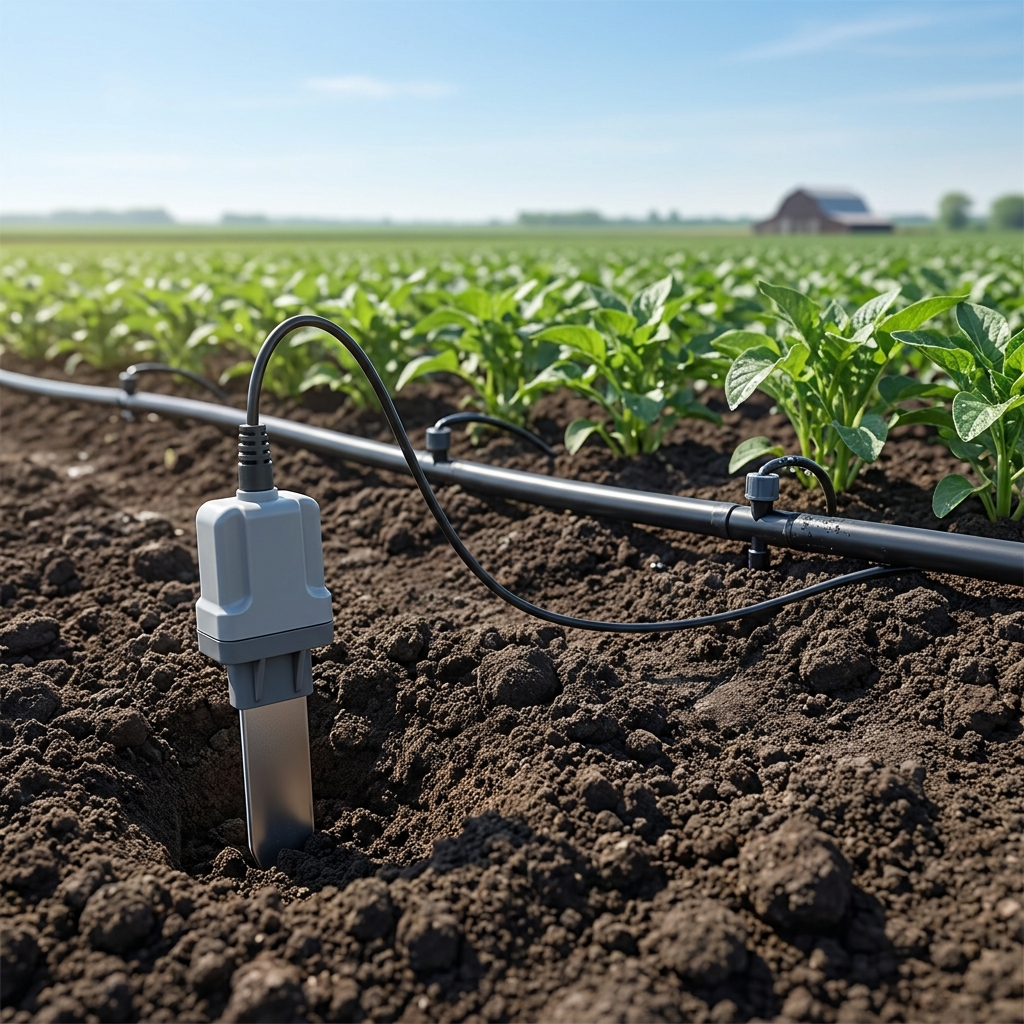
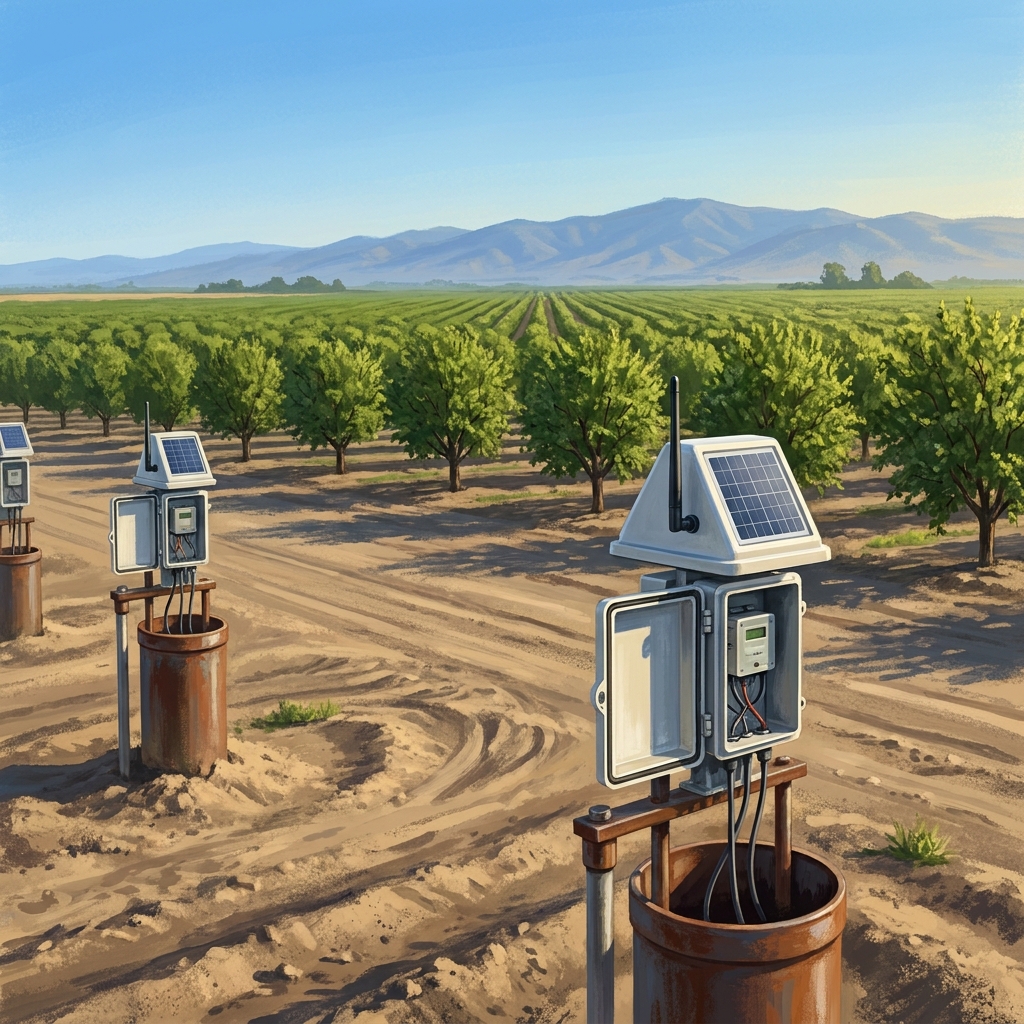
The worked example scales the same idea up to agriculture. Drip irrigation sensors read soil moisture in real time, which lets farmers skip watering soil that is already wet. That is monitoring and minimizing in one device, and it is a good example to linger on, because the sensor does not reduce waste by itself. The data does. The farmer still has to act on what the sensor reports. I would push the class on that point before moving on.
Then the guided practice turns the task over to students with a harder case. A coastal community is worried about plastic pollution in the Pacific Ocean and needs to work out where the plastic is coming from. This is the right jump. In the garden, the source of the impact was obvious. On the coast it is not, so the first job of the monitoring design is to find the source before anyone can minimize it. Students have to think about where to collect, what to count, and how a baseline would let them see whether anything improves later. That is exactly the “design a method” muscle the standard is after.
The vocabulary is short and worth posting on the board:
- Monitoring: tracking environmental change by collecting and analyzing data over time
- Minimizing: reducing the negative effects of human activity on natural systems
- Baseline: a starting measurement used to compare future changes
The lesson closes on why this matters: clean air, safe water, healthy ecosystems, and enough resources left for later, with data as the tool that makes stewardship more than good intentions. That framing is earnest, and seventh graders can roll their eyes at earnest, but the garden and the sensor give it something concrete to stand on.
The California version of the standard, CA.MS-ESS3-3, carries the same text with an addition about how the state teaches it: middle school science in California follows an integrated model that blends physical, life and Earth science, grounded in California phenomena like water systems, diverse ecosystems and energy policy. You can see that in the lesson’s choices. Irrigation and Pacific plastic are California problems, and the water thread connects naturally to what students may be doing in life science units. This is the California NGSS standard, and students in Los Angeles Unified, Twin Rivers Unified, Franklin-McKinley Elementary School District and Fowler Unified meet the same expectation, word for word, as every other seventh grader in the state.
One honest caveat. Forty-five minutes is enough to sketch a monitoring design, not to run one. Students will leave knowing how to plan the measurement, but they will not have collected a week of real data. If you have the room in your calendar, a follow-up where students log something on campus (water at a drinking fountain, trash in one hallway bin) would turn the sketch into evidence.
Where it fits in your week
As a whole-class assignment, this works well as the bridge between learning about human impact and asking students to propose anything. It is the lesson that teaches them to say “here is how we would measure it” before “here is how we would fix it,” and that habit will improve every design project you assign afterward.
It also suits a student who missed the week. The progression from garden log to drip sensors to the coastal plastic problem is self-contained, so a returning student can work through it and come back with the same vocabulary as everyone else, baseline included.
And it is a sensible substitute day plan. The examples are concrete, the guided practice has a clear task, and it fits a single period. A sub does not need a science background to keep students on the plastic problem and ask them where they would put their first measurement.
If you are looking for a seventh grade human impact on the environment lesson that treats design as a measuring problem rather than a poster project, this one earns its 45 minutes. The full lesson for MS-ESS3-3 is ready to assign. My suggestion: before students open it, ask each one to name a single human impact they could see from the classroom window, and then see whether they can tell you what its baseline would be by the end of the period.
Related lessons
Mapping the Solar System, Plotting the planets and other objects in our solar system

California Weather and Air Masses, How air masses shape weather patterns across California

Gravity and Motion in Space, How gravity governs the motion of objects in space