

The standard reads: “Construct an explanation based on evidence that describes how genetic variations of traits in a population increase some individuals’ probability of surviving and reproducing in a specific environment.” It is a long sentence, and most students skim right past the word that does the heavy lifting. Probability. The standard does not say the right trait guarantees survival. It says the odds shift. And it says “in a specific environment,” which means a trait is only good or bad relative to where the organism lives. Strip either of those ideas out and you end up teaching a cartoon version of natural selection.
That is why I paid attention to how Survival and Genetic Variation handles it. This is a sixth grade science lesson from the Middle School Life Science course, about 45 minutes long, and its objective is simple to state: students explain how differences in traits help some individuals survive and reproduce in their environment. Simple to state. Harder to do well.
The standard behind it is MS-LS4-4, part of the Biological Evolution cluster in the California NGSS. The same lesson page also carries CA.MS-LS4-4, which is the California version of that standard. The wording of the performance expectation is identical; what the California addition brings is context. California teaches middle school science through an integrated model that weaves life, physical and Earth science together, and it asks teachers to ground standards in California phenomena like diverse ecosystems and water systems. You can see that in the lesson’s choice of examples, which I’ll get to. Students in Poway Unified, Santa Ana Unified, Ocean View School District and East Whittier City Elementary School District are working toward this exact standard, because it is the same expectation for every sixth grader in the state.
How the lesson moves, start to finish
It opens with something students can picture. Tree bark is home to a lot of insects and small animals, and the lesson puts a population of 10 moths there. Some have light-colored wings. Some have dark-colored wings. That difference, the lesson tells students, is genetic variation. It is a small population on purpose, I think, because ten moths is a number a sixth grader can hold in their head. If I were teaching it live, I would stop right there and ask the class which moths they would bet on, and why, before anyone says the word predator. The prediction is the hook.
From there the lesson moves into the concept itself: individuals in a population differ, and the environment presses on those differences. The vocabulary is modest and well chosen:
- genetic variation
- trait
- environmental pressure
- drought-resistant
- drought-sensitive
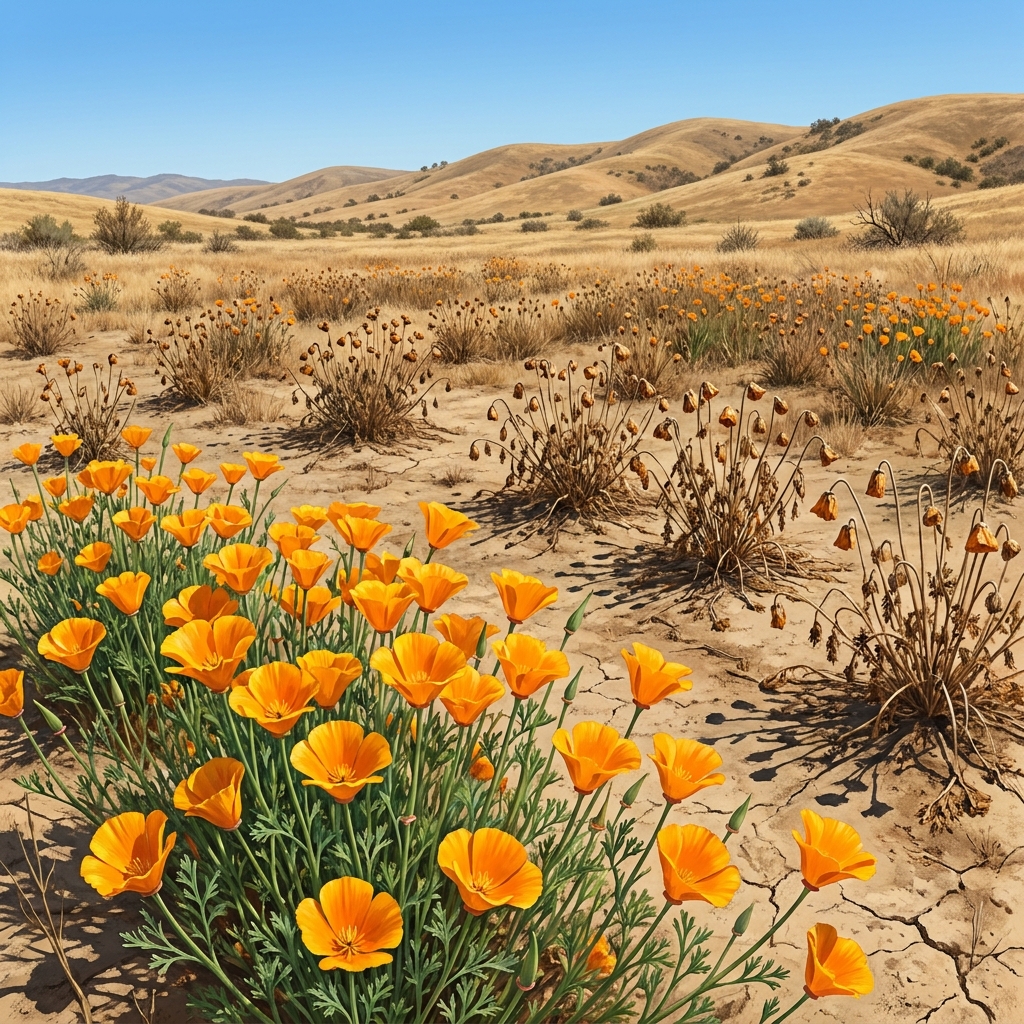
The worked example is where the California piece shows up, and it is the strongest part of the lesson. California grasslands hold poppies with different traits. Some are drought-resistant and can get by on very little water. Others are drought-sensitive and need more moisture. Then comes an exceptionally dry year, and the drought-resistant poppies are more likely to survive and produce seeds. I like that the example says seeds. That word quietly carries the reproduction half of the standard, which students tend to forget. Survival alone is not the point; surviving long enough to leave offspring is. If you are teaching this, slow down on that sentence and make students say it back to you.
Guided practice hands students a new phenomenon and asks them to apply the same reasoning. A wetland is dealing with rising sea level, and the water is pushing more salt into the soil. The lesson defines environmental pressures as the external factors that make survival difficult, and it frames them as a filter: the salt sorts out which plants have the genetic traits to handle it. The filter image is useful. It gives students a mental model that is not about plants trying harder or choosing to change. The environment acts, and the variation that already exists determines who gets through.
Closure pulls the idea up to the species level. The lesson’s point is that genetic variation matters for the survival of a species, because when environments change (climate change is the example it names) a range of traits means some individuals can make it and keep the population going. It is a short landing, and it connects the poppies and the wetland to something students hear about outside of school.
Where students slip, and where it fits
The most common mistake with this standard is the idea that individuals change to fit their environment. A student writes that the poppies became drought-resistant because it was dry. The lesson’s structure works against that misconception, since the variation is described as existing before the dry year and before the salt arrives, but students will still drift there in their own explanations. Listen for verbs like “adapted” or “learned” attached to a single organism. When you hear them, send the student back to the 10 moths: the light and dark wings were already there.
My honest caveat is about the explanation part. The standard asks students to construct an explanation from evidence, and that is a writing skill as much as a science skill. One 45-minute lesson sets up the reasoning clearly, but it will not make students fluent at citing evidence. Plan to come back to the claim-and-evidence move in later lessons, and do not judge the whole class on their first written attempt.
As for where it fits, I would use it three ways. It works as a whole-class lesson to launch a unit on natural selection, since the moth opener gives everyone the same starting picture. It is also a solid choice for a student who missed the week, because the arc is self-contained and the examples build on each other in order; a student can move from moths to poppies to the wetland without needing much from you. And for independent study students, the guided practice is a natural checkpoint. If a student can explain the salty wetland using the filter idea, they have the core of the standard.
If you have been looking for a sixth grade genetic variation and natural selection lesson that uses California examples instead of the same peppered moth slide everyone has seen, open this one and start with the poppies in a dry year. That example is worth the 45 minutes on its own.
Related lessons
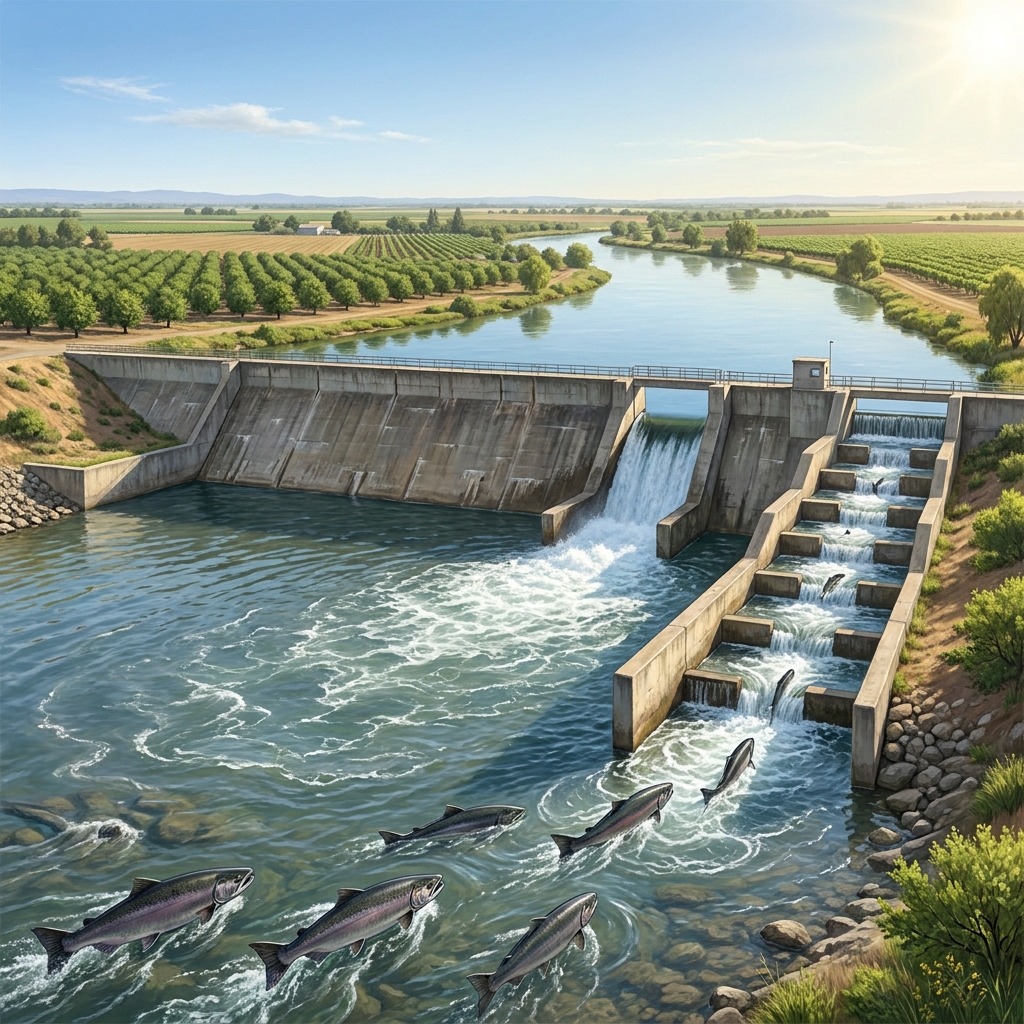
Managing California's Natural Resources, How California manages and protects its natural resources
Reading the History of Life in Rocks, Using rock layers and fossils to trace life's history
Resource Availability and Ecosystem Populations, How available resources affect population sizes within ecosystems