

This first grade science lesson does not try to explain the complex orbital mechanics behind the tilt of the Earth. Instead, Sunlight and Seasons keeps the focus squarely on the visible experience of your students. It asks them to observe how the amount of daylight shifts throughout the year. The lesson is quick, coming in at about 15 minutes, which makes it a very efficient way to hit a specific earth science concept without overcomplicating the narrative for seven-year-olds.
First graders often have a vague sense that summer days feel longer, but this material gives them the vocabulary and the observational framework to back that up. The lesson asks students to connect the amount of light they see during the day to the specific time of year. It is a straightforward approach that mirrors how concepts like this are introduced in districts like San Bernardino City Unified, Clovis Unified, Livermore Valley Joint Unified, and Manteca Unified, where the expectations for science literacy remain consistent across the state.
Observing change through the year
The core objective here is simple: we will see how sunlight changes with the seasons. The material guides students through the realization that daylight is not constant. You are asking your students to become data collectors of their own environments. When you open first grade seasonal science activities, you will find that the lesson relies on clear, simple prompts that push students to think about why it gets dark earlier in winter than it does in the middle of a summer vacation. This aligns directly with the California-adopted standard CA.1-ESS1-2. This standard asks students to make systematic observations at different times of the year to build a relationship between the quantity of light and the season itself.
One thing to watch for as you move through this with the class is how they differentiate between light and temperature. Students frequently conflate a hot day with a long day. This lesson provides the structure to help them isolate the light aspect. It is a good opportunity to ask them about their own routines. You might hear someone mention that they play outside later in the summer or that they go to bed when it is already dark during the winter months. These anecdotal moments are exactly the kind of personal data points that anchor scientific observation for this age group.
Fitting this into your weekly plan
Given the 15-minute runtime, this is not something that needs to take up a whole block of time. I see this fitting best into a whole-class assignment where you launch a discussion, or as a quick intervention piece for a student who missed the week and needs a focused look at the content. If you have an independent study student, this is also a very clear, self-contained module that they can complete without a massive amount of back-and-forth guidance.
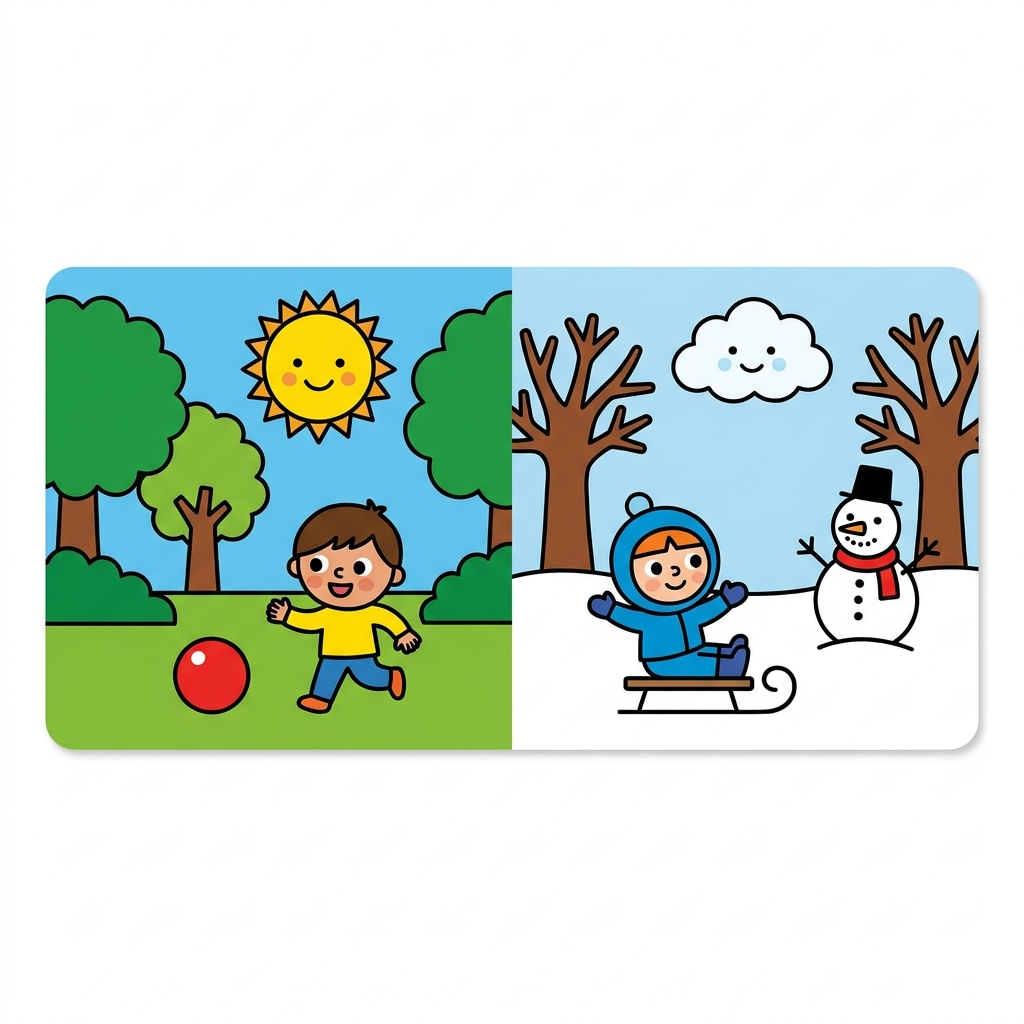
The lesson does not try to cover every aspect of seasonal weather patterns. It is narrowly focused on light. I think this limitation is its biggest strength. Too often, we try to cram weather, temperature, and light into a single discussion, and the students get lost in the variables. By isolating light, you can ensure they actually understand the target standard. When you are looking at the lesson, keep an ear out for students who might be confused by the difference between an early sunset and a cloudy day. Use those questions to clarify that we are looking at patterns over weeks and months, not just the weather report for a single Tuesday. It is a clean, effective way to get them thinking like geographers and scientists simultaneously.
When you prepare to lead this, have them think back on the school year so far. If you are teaching this in the fall, look at what they know about the summer. If you are in the spring, remind them of the dark mornings in December. Using their recent history makes the concept of seasonal daylight shifts feel immediate and relevant rather than just an abstract diagram in a textbook. It is exactly the kind of grounded science practice that helps move them toward a deeper understanding of earth systems in the coming years.
Related lessons
Nature's Smart Designs, Explores how animal and plant traits function as survival adaptations
Light and Sound Helpers, Investigates how light and sound communicate information and solve problems
Baby Animals Look Like Parents, Covers physical similarities between young animals and their biological parents