

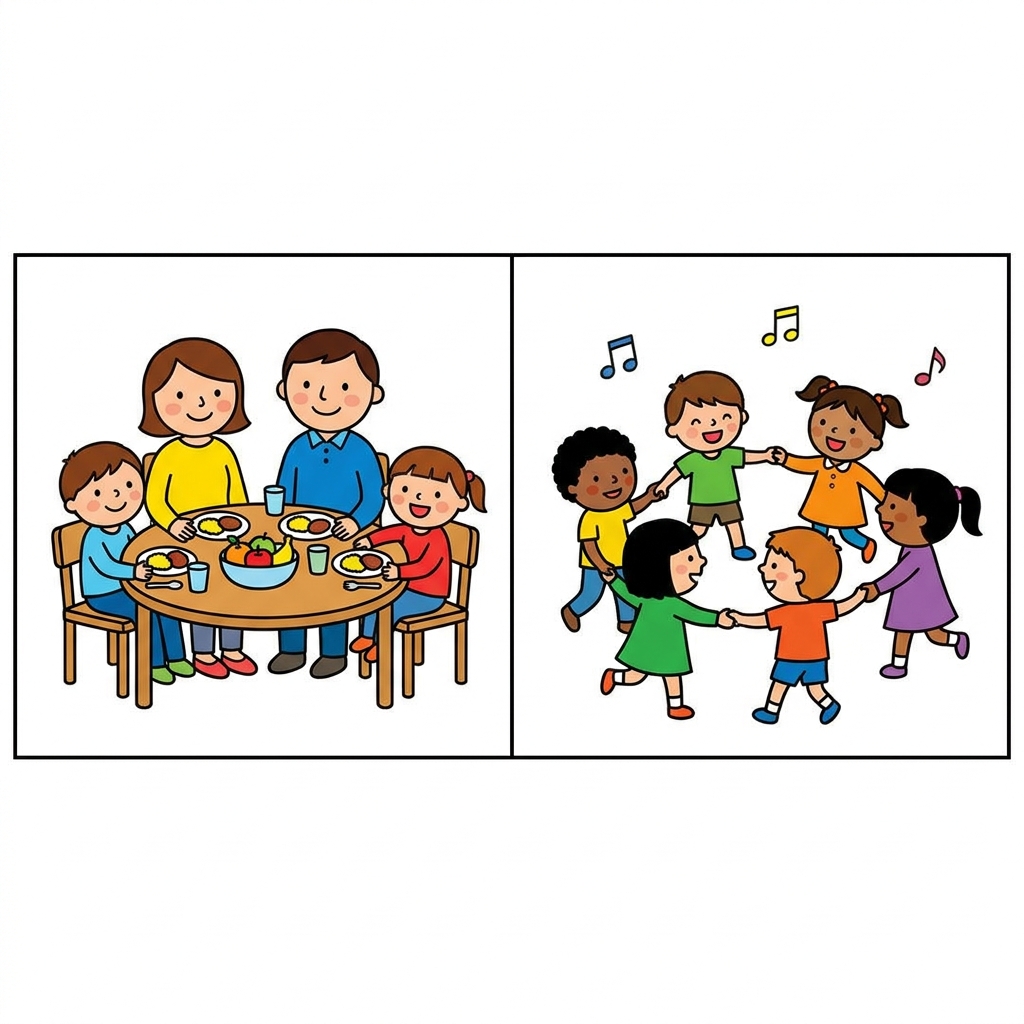
I remember a parent once asking me how I planned to explain to their child that other families might do things differently than they do at home. It is a fair question for any first grade teacher. The lesson Ways We Live approaches this by focusing on the core concept of how families share and exist in their daily lives. It is a straightforward 15-minute activity that nudges students to look outside their own walls and notice that the world is a mosaic of different habits and histories.
What the lesson asks students to do
The main objective is simple: we will learn how different families live and share. Rather than getting bogged down in complex sociological theory, the material keeps things accessible for six and seven year olds. Students examine how families express their beliefs, customs, ceremonies, and traditions. The lesson encourages them to draw on folklore, which is a perfect way to make these abstract concepts feel like a story they are already familiar with. You will find that when you use this 1st grade social studies lesson, the focus is really on helping students categorize and appreciate those human characteristics that make us all unique yet connected.
The standard and the classroom
The primary standard being addressed is CA.HSS-1.5.3. This California-adopted standard asks that students compare the beliefs, customs, ceremonies, traditions, and social practices of the varied cultures by drawing from folklore. It is a fundamental expectation that students in places like Lodi Unified, Capistrano Unified, National Elementary School District, and Walnut Valley Unified are meeting as part of the broader HSS-1.5 cluster. That cluster is all about students describing the human characteristics of familiar places and the varied backgrounds of American citizens and residents in those places. By comparing these practices, children start to build the foundational empathy required for deeper social studies work in the coming years.
I have found that the best way to handle this in a first grade classroom is to move quickly through the definitions so you can spend your time on the comparative aspect of the standard. Students often have strong opinions about what is ‘normal’ based on their own experiences. When they hear a story or see an example of a custom they do not recognize, they might be quick to judge it as weird. I try to redirect that by asking what that family might value instead. The lesson is built to support that shift in perspective.
Where the time goes
You have about 15 minutes of material here, which is just enough time for a focused whole-class assignment or a quick refresher for a student who missed the week. Because the time is so limited, do not get caught in the weeds of explaining every single culture. Instead, stick to the folklore examples provided in the lesson. These serve as the anchor for the entire conversation.
If you are using this for intervention, you might want to print out the folklore sections to have the students annotate them while you talk. For independent study, the prompt is clear enough that most students will be able to work through the comparisons with just a little pre-teaching. I personally think this works best as a discussion-based activity with the whole class because their spontaneous comments about their own families often provide the best evidence of whether they understand the material.
Practical tips for the floor
One caveat: watch out for the moment where students might try to define a ‘tradition’ too narrowly. They tend to think of holidays first. You will need to steer them toward daily customs like eating habits or greeting practices. That is where the real comparison happens. If you are running this on a substitute day, keep the questions simple and encourage them to relate the folklore stories to their own lives as much as possible.
I find that this lesson works well to show that culture is not just a distant thing in a book. It is about how people choose to act, share, and live every single day. If you can keep the tone light and curious, the kids will naturally follow suit. Just remember that their capacity for comparison is still developing, so be ready to provide examples if the room goes quiet. You are helping them see a bigger picture, and that starts with the small, specific stories provided in this lesson.
Related lessons
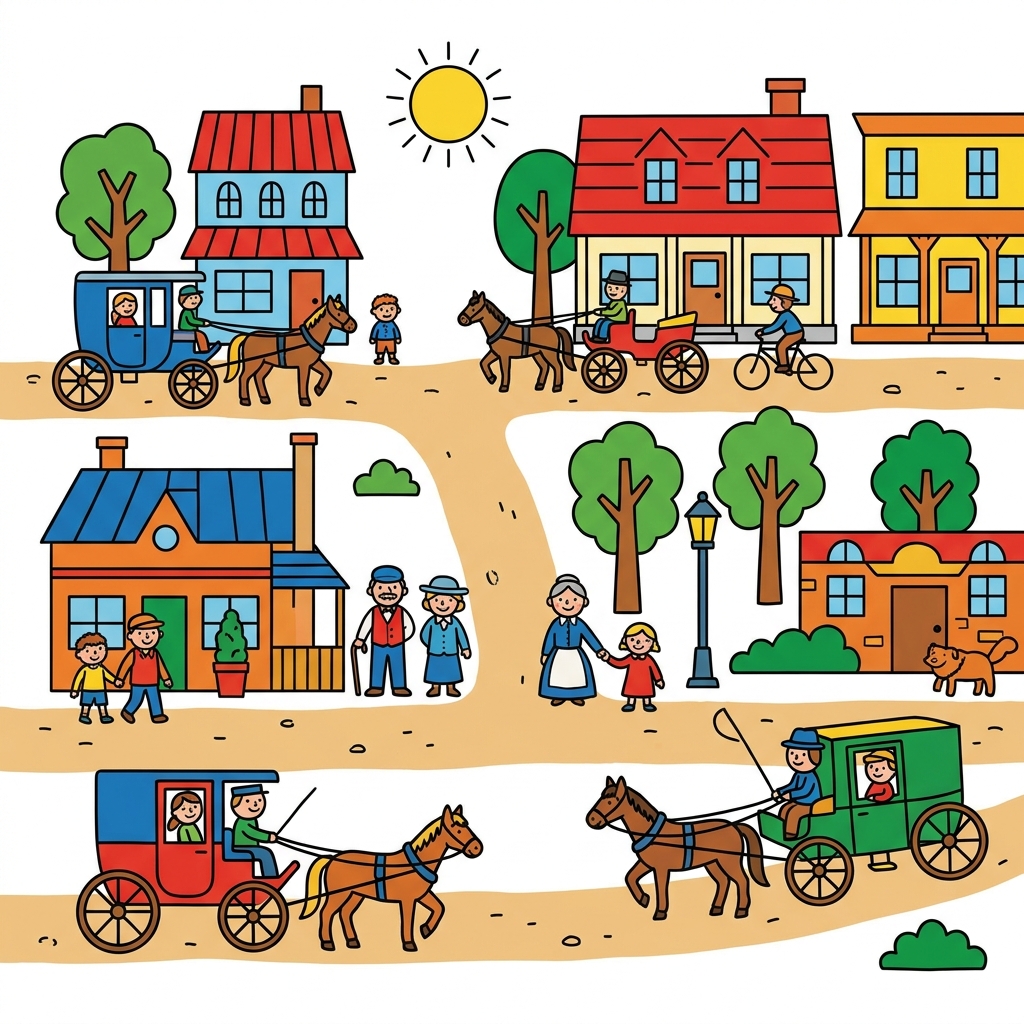
Our Town Long Ago, Students explore how local community life has changed over time
Where We Are, Learning about local geography and personal place in the world

Trading for Treasures, An introduction to basic economic exchange and valuing different goods