

The standard reads, in full: “Conduct an investigation to determine whether the mixing of two or more substances results in new substances.” It looks like one tidy sentence. It is really three separate demands stacked on top of each other, and fifth graders tend to hear only the middle one.
That standard sits behind Mixing Matter: Physical Mixtures and Chemical Changes, a fifth grade science lesson from our physical science course that runs about 45 minutes. Its objective is plain: students decide whether combining substances produces a new material or only a physical mixture. Before describing how the lesson handles that, I want to take the standard’s wording apart, because the wording tells you exactly what to listen for when students explain their thinking.
Reading the standard one phrase at a time
“Conduct an investigation.” This is the phrase that gets skipped. The standard is not asking students to memorize a list of which changes are chemical and which are physical. It asks them to gather evidence and reason from it. A student who can recite the right answer but cannot tell you what they would look for has not met this part.
“To determine whether.” This is a decision with two possible outcomes, and the student has to commit to one. Ten-year-olds love to hedge with “it kind of changed.” The standard wants a claim, and a reason attached to it.
“The mixing of two or more substances.” Every case starts the same way: things get put together. That shared starting point is exactly why the topic confuses kids. Salt in water and food scraps in a compost pile both begin with “we combined some stuff,” so the beginning tells you nothing.
“Results in new substances.” Here is the real content. A new substance has different properties from what you started with. A different appearance is not enough, and an invisible ingredient is not gone.
In the California NGSS, this is 5-PS1-4, in the Physical Science domain under Matter and its Interactions. The lesson page also carries CA.5-PS1-4, the California-adopted version of the same standard, which adds a layer of context rather than a new skill: it asks that the idea be grounded in California Earth systems such as Sierra Nevada snowmelt and the water cycle, in the state’s environmental policies, and in the way matter and energy concepts show up in California industries and communities. One standard, one lesson, with the state framing built in. Fifth graders in Ontario-Montclair School District, West Contra Costa Unified, Cupertino Union School District and San Bruno Park Elementary School District are all working toward this exact standard, because it reads the same in every corner of California.
How the lesson builds the distinction
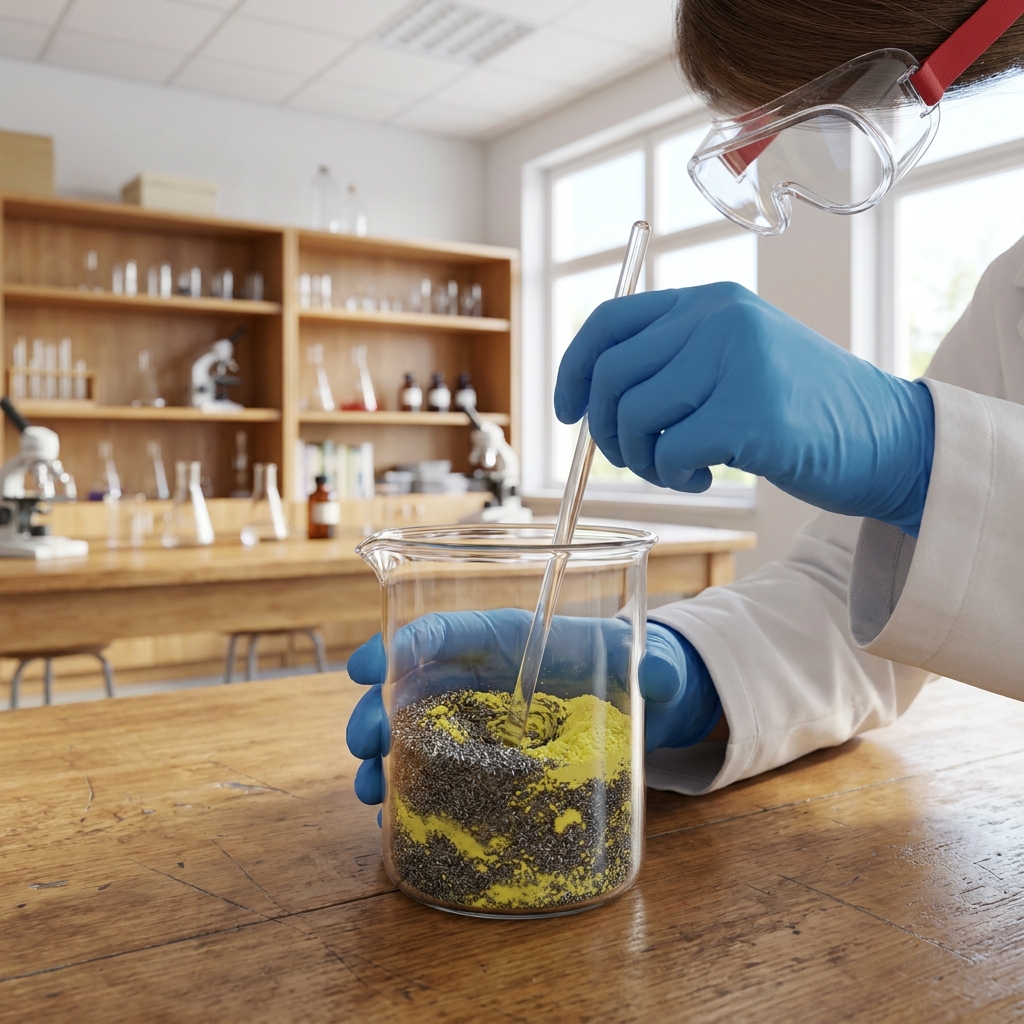
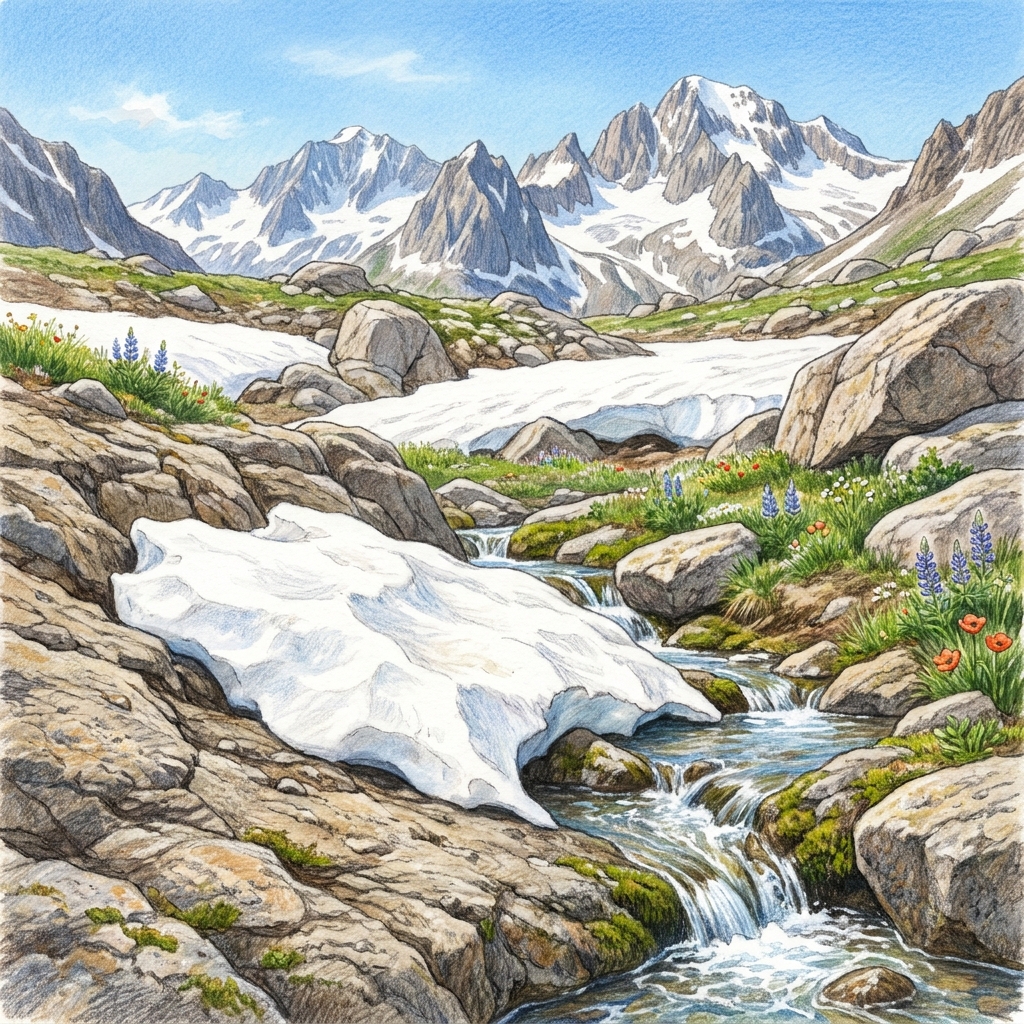
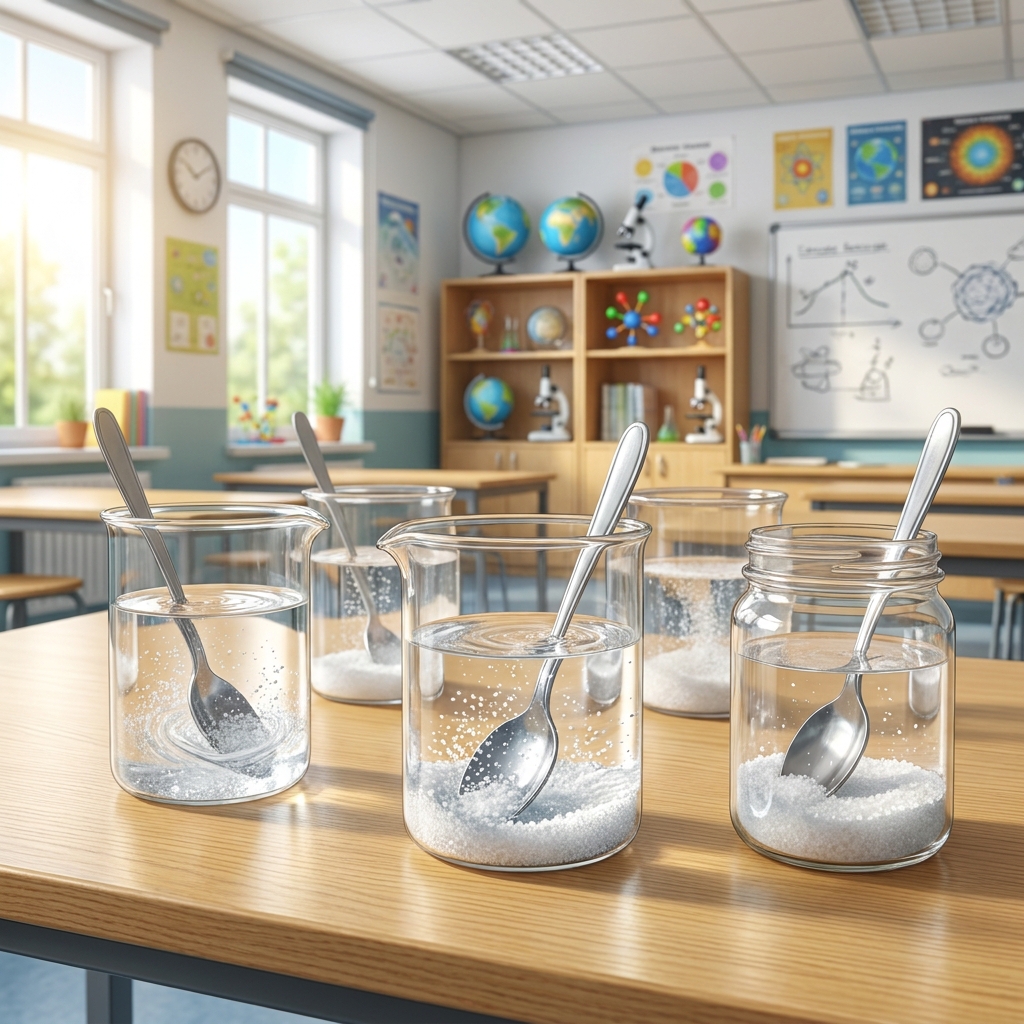
The opener starts with water. Snowmelt from the Sierra Nevada feeds streams and reservoirs, and then the lesson stirs 5 grams of salt into 100 milliliters of water. The crystals seem to vanish. The salt is still there. I like that this comes first, because it goes straight at the misconception that does the most damage: the belief that if you can’t see something anymore, it must have turned into something else.
From there, students get two terms they will lean on for the rest of the period:
- Physical mixture: two or more substances combined, each keeping its own identity, and able to be separated back out.
- Chemical change: substances interacting to form a new substance with properties different from the originals.
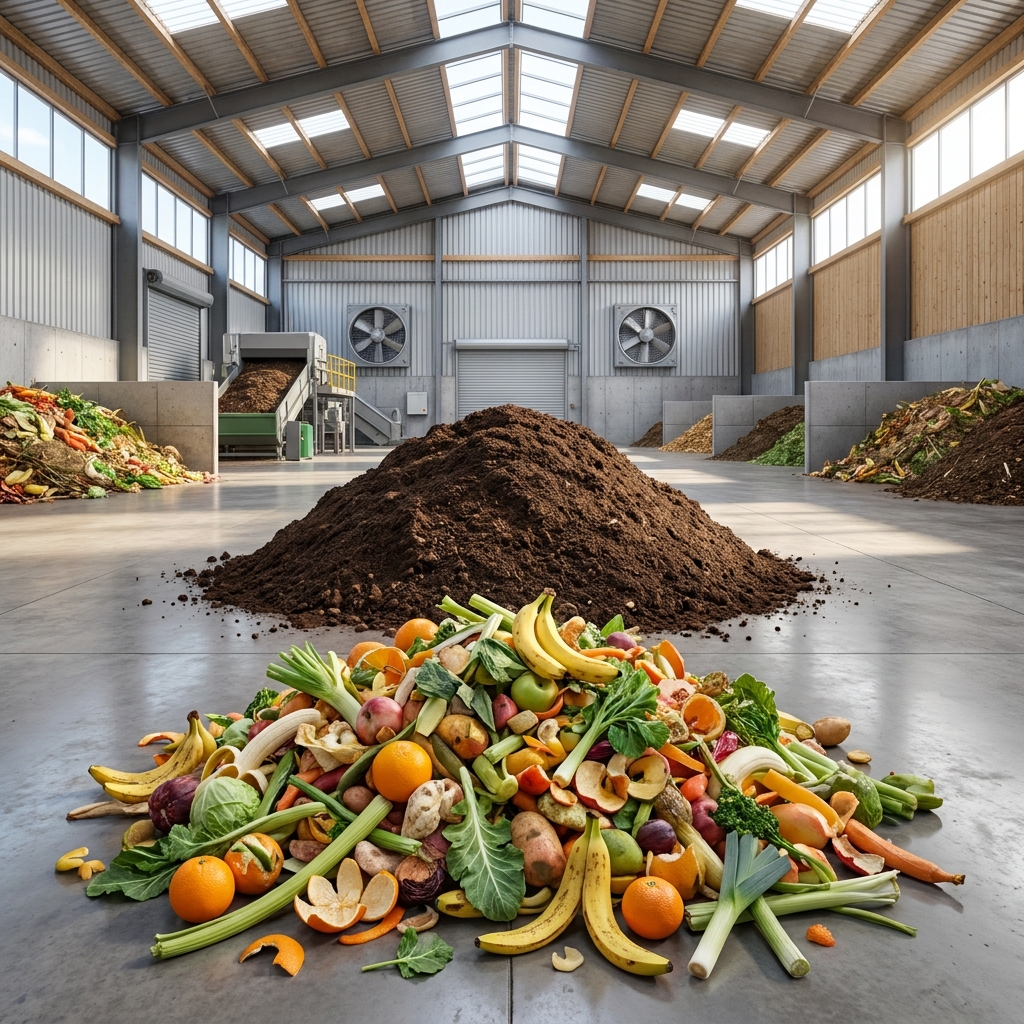
The worked example moves to a California composting facility, where food scraps and leaves break down into nutrient-rich compost. Compost is a new substance, with different properties than the waste that went in. Set next to the salt water, it gives students a clean contrast: in one case you could recover what you started with, and in the other you can’t get the banana peel back.
Guided practice then hands the reasoning to students with a phenomenon of their own to sort out: agricultural fertilizer reacting with soil in a California field. This is where you find out who has the idea and who memorized the compost answer.
The lesson closes on why this matters outside a classroom. California water treatment plants rely on these ideas, operating under state environmental rules that require industries to monitor and manage chemical changes so pollution stays out of ecosystems, and chemical engineers use chemical changes to pull harmful substances out of drinking water. That ties the content back to the snowmelt the lesson opened with, which is a nice loop.
Where fifth graders slip
The salt opener handles the first trap, the “it disappeared so it’s new” reasoning. The opposite trap is just as common. Students assume any dramatic change must be chemical, and any quiet one must be physical. Neither appearance nor drama settles it.
The question I would push students back to, every time, comes right out of the lesson’s own definition: can the original substances be separated back out? If yes, you are looking at a mixture. If the stuff now behaves differently and the starting materials are gone, you have a chemical change. That one question does more work than any chart.
Now the honest caveat. The lesson’s examples are scenarios. Nobody is composting in 45 minutes, and a fertilizer field is not something students can test at their desks. So the lesson builds the concept and the vocabulary well, but by itself it does not fully satisfy that first phrase, “conduct an investigation.” I would pair it with something students can actually do, even something as simple as dissolving salt in water and letting it evaporate to see the crystals return. The lesson gives them the language to explain what they see.
Fitting it into your week
It works best as a whole-class introduction the day before a hands-on lab, so students walk in already knowing what evidence they are hunting for. It also fits a student who missed the week of matter instruction and needs the core distinction without sitting through every lab writeup, and it is a solid substitute-day plan because the sequence from salt water to compost to fertilizer carries itself.
If you are searching for a fifth grade chemical change vs physical mixture lesson that keeps California examples front and center, this is the one I would open first, then follow it with a cup of salt water and a question about getting the salt back.
Related lessons
The Invisible World of Matter, Matter made of particles too small to see

Matter Stays the Same: Conservation of Mass, How total mass stays the same when matter changes
Identifying Materials by Their Properties, Using observable properties to tell different materials apart