

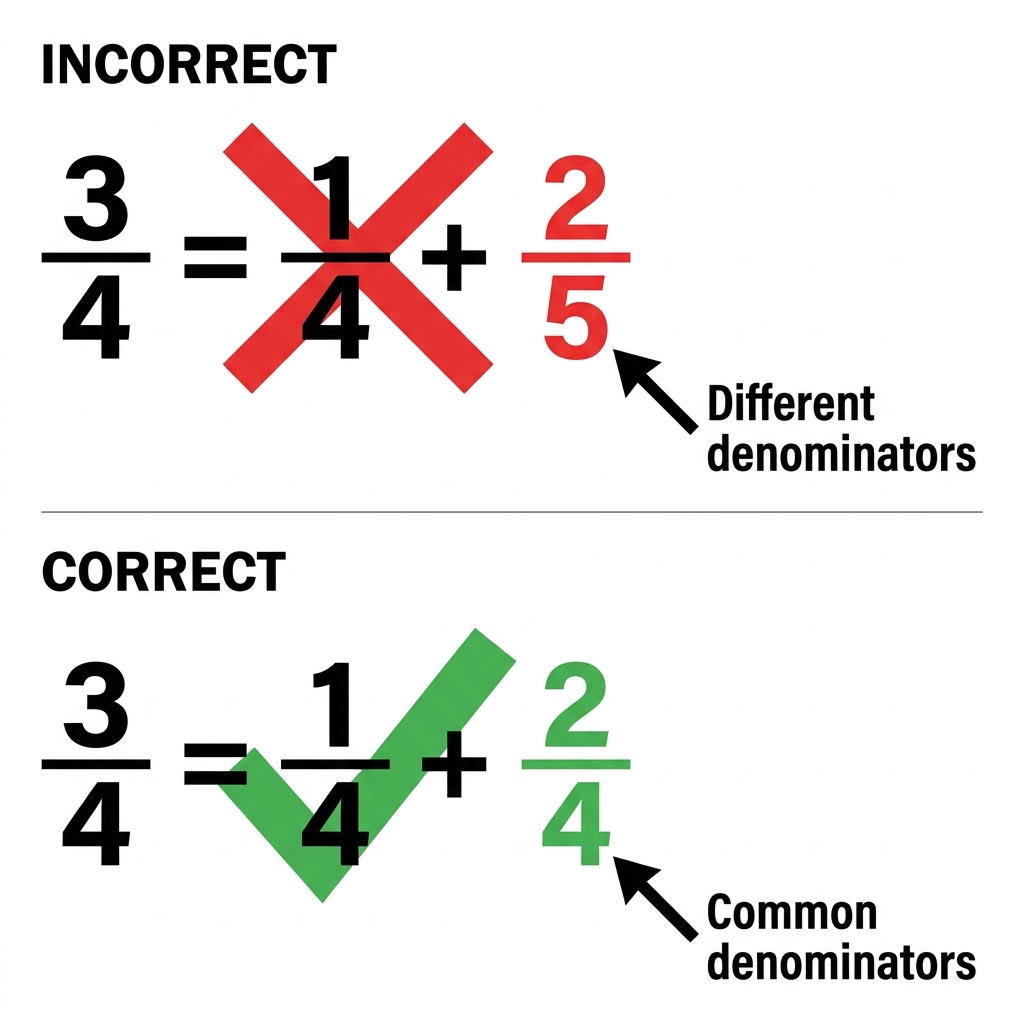
When fourth graders begin to really grapple with fractions, they often trip over the idea that these numbers act like whole numbers just with an extra line involved. They try to add the denominators or treat the numerators as isolated integers. This Building Fractions and Mixed Numbers lesson does not try to force a shortcut or a rule-heavy trick to fix that confusion. Instead, it slows the process down to help students visualize what is happening inside the fraction itself by focusing on composing and decomposing numbers.
This is a 4th grade mathematics resource centered on the number and operations domain. It provides a structured path for students to move beyond the surface level of identifying shapes and into the logic of how numbers are built. Whether you are using this as a whole-class assignment or as a targeted session for students who missed the week of instruction, the material is straightforward and avoids the unnecessary bells and whistles that often distract kids from the math itself. By stripping away complexity, the resource helps maintain a focus on core arithmetic building blocks.
What the lesson actually asks students to do
The lesson begins by establishing that a whole can be divided into equal parts, using the concept of a unit fraction. A unit fraction is defined as a fraction with a numerator of one, like 1/4, which functions as a single part of a whole. By grounding the lesson in this definition, the material sets the stage for the primary objective: breaking fractions into smaller parts and adding mixed numbers by grouping whole numbers and fractions together. This foundational work is critical because it builds confidence before students encounter more complex operations that require common denominators. Teachers often find that spending extra time here saves them from having to reteach core concepts when the curriculum moves toward multiplication of fractions or division involving whole numbers and fractions later in the school year. Consistent practice with these models ensures that students internalize the concept of a whole.
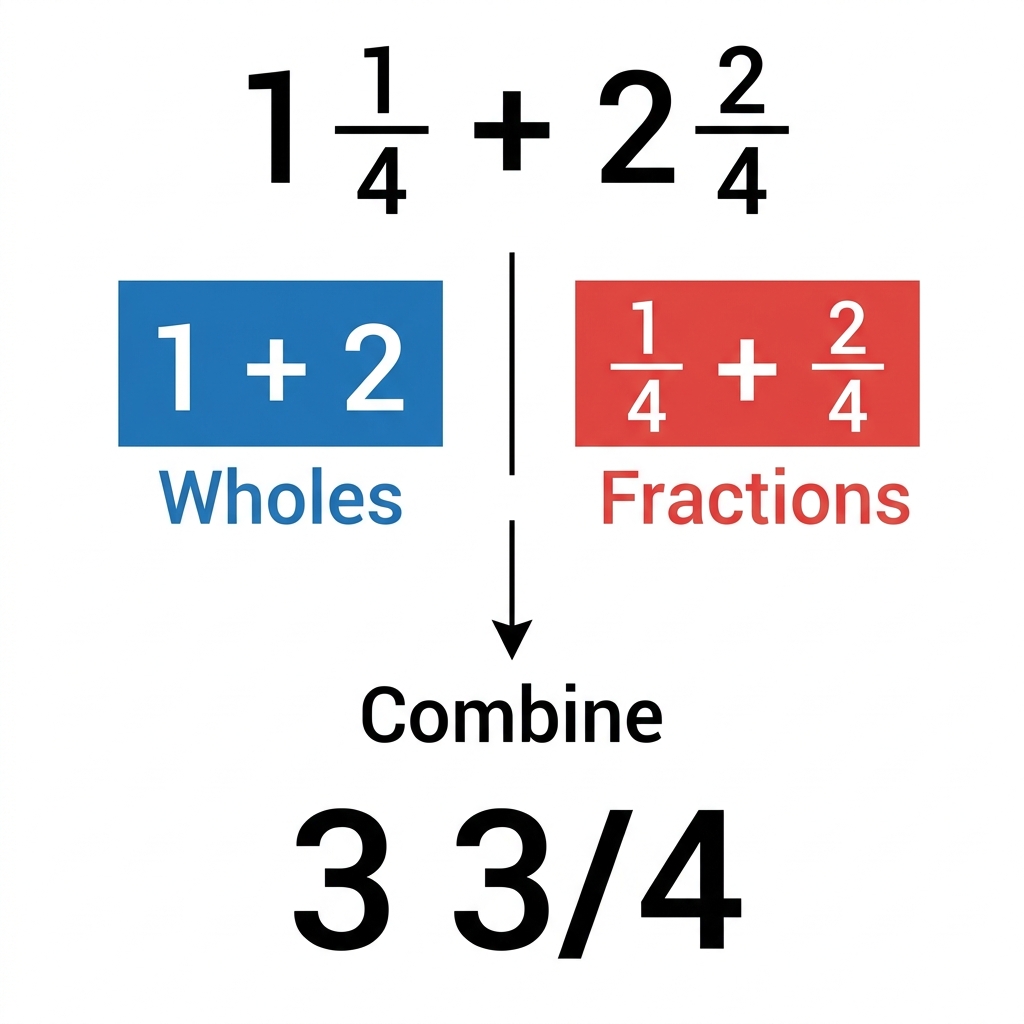
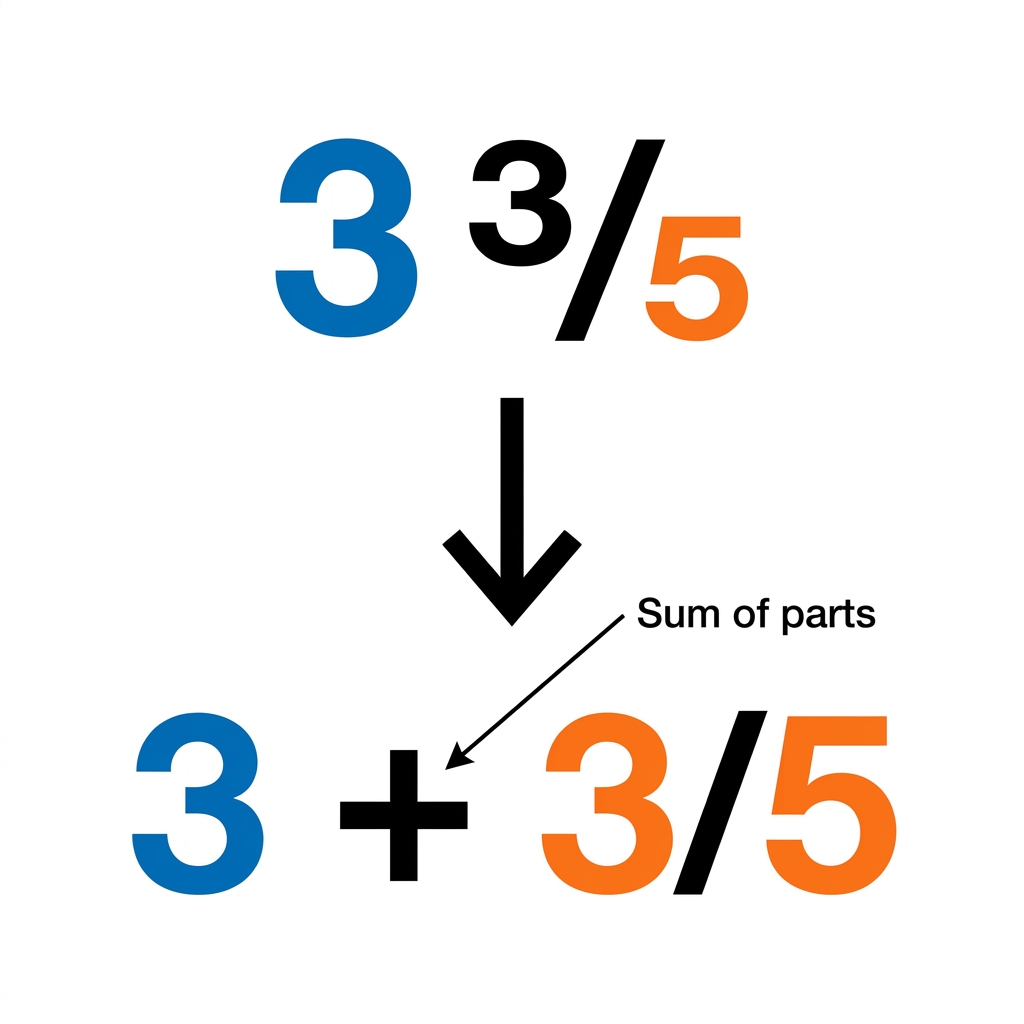
Students look at specific scenarios, such as decomposing 5/6 into 3/6 plus 2/6, or breaking it down further into 1/6 plus 1/6 plus 1/6 plus 1/6 plus 1/6. This is a deliberate way to demonstrate that the total remains the same regardless of how you chunk the parts. Educators in Saddleback Valley Unified, Chula Vista Elementary School District, Desert Sands Unified, and Walnut Valley Unified all teach these same standards to ensure that students across the state share a common foundation in mathematical reasoning. The lesson also introduces the term mixed number, which is a number that combines a whole number and a fraction, such as 1 1/4.
When you have a student who needs to decompose fractions into smaller parts, this lesson provides a clear guided practice. One scenario asks students to help a carpenter measure wood. The carpenter has two pieces, one measured at 2 1/8 feet and another at 1 3/8 feet. By asking students to combine these, the lesson hits the practical requirement of CA.MATH.4.NF.3. This California-adopted standard requires that students understand a fraction a/b with a > 1 as a sum of fractions 1/b. It also asks them to decompose fractions into sums of fractions with the same denominator and to add and subtract mixed numbers with like denominators using properties of operations. The lesson also supports CCSS.MATH.4.NF.B.3, which serves as the framework for understanding fractions as sums of unit fractions. For those who find the visual models helpful, the curriculum includes printable worksheets that feature shaded rectangles and number lines, reinforcing the idea that fractions occupy space on a number line, not just in a textbook problem set.
Where students slip
The most common mistake I see in my classroom is the urge to rush toward adding mixed numbers without first understanding the sum of the unit fractions. Students see the mixed numbers and immediately want to ignore the fraction part entirely or, worse, add the denominators. This lesson is built to head that off by emphasizing precision. The material notes that precision is the reason a carpenter measures wood exactly to make sure it fits, just as a baker needs the correct amount of flour for a cake to rise correctly. When students realize that the fraction is not just a label but a physical quantity, they stop trying to invent their own math rules.
It is worth noting that some students might also struggle with the translation between improper fractions and mixed numbers. The curriculum addresses this by showing how a collection of unit fractions eventually adds up to more than one whole, helping students see the connection visually before they are forced to do the algorithm manually. Encouraging students to draw out these problems rather than solving them mentally is a strategy that pays dividends when they encounter multi-step word problems later on in the semester.
You can find the full breakdown of CA.MATH.4.NF.3 concepts through the provided materials. It works well as an independent study tool because the worked examples clearly illustrate the step-by-step logic. If you have students who are struggling to see how 2 1/8 and 1 3/8 can be broken down to find a sum, the visual focus on unit fractions acts as a safety net. I find that the lesson succeeds because it stays tethered to the idea that fractions are built, piece by piece, rather than just written as a code that needs to be cracked. In a classroom environment, pairing students who are struggling with those who have mastered the concept can further cement the understanding, as explaining the process of decomposing a fraction to a peer often requires a higher level of mastery than simply doing the problem on paper.
Related lessons
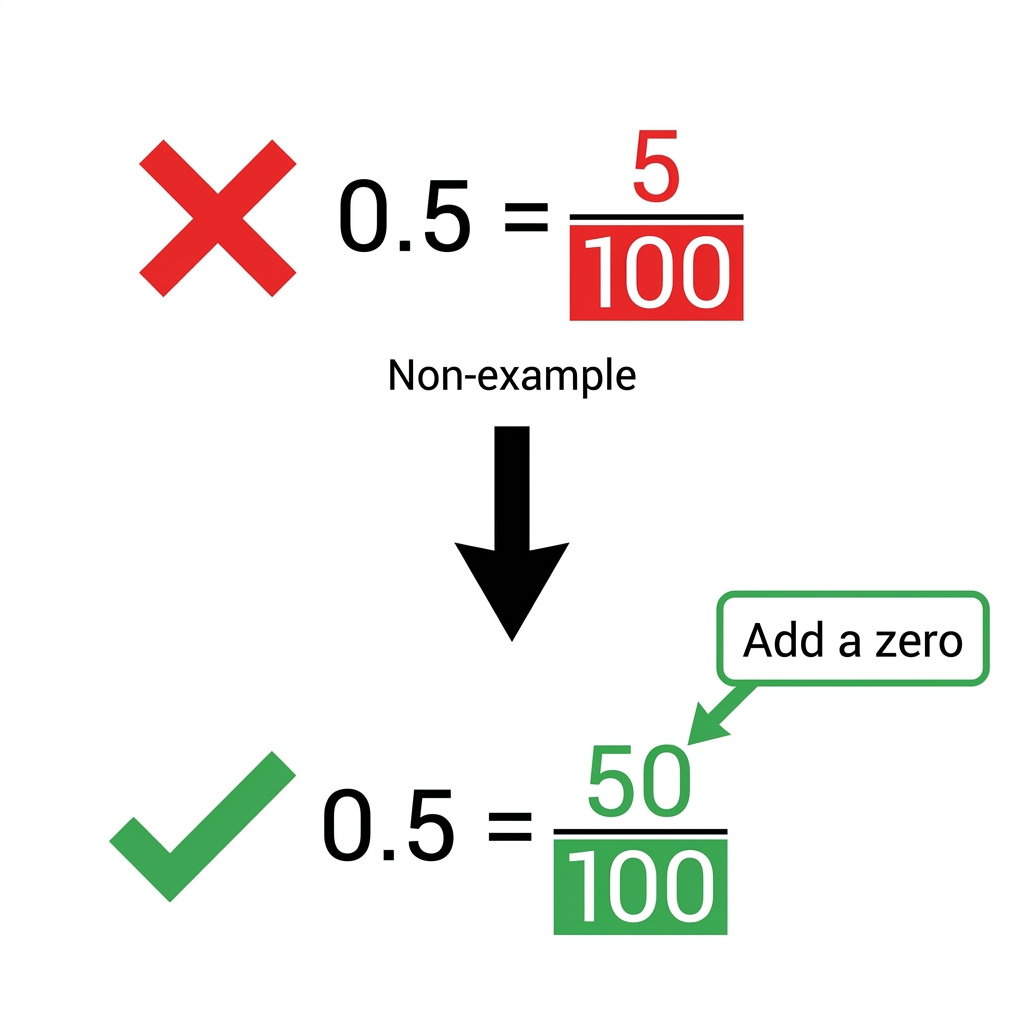
Understanding Decimals and Fractions, Connecting the relationship between decimal values and fractional parts
Adding Tenths and Hundredths, Calculations involving fractions with denominators of ten and one hundred
Comparing Fractions with Different Parts, Strategies for determining the relative size of different fractions