

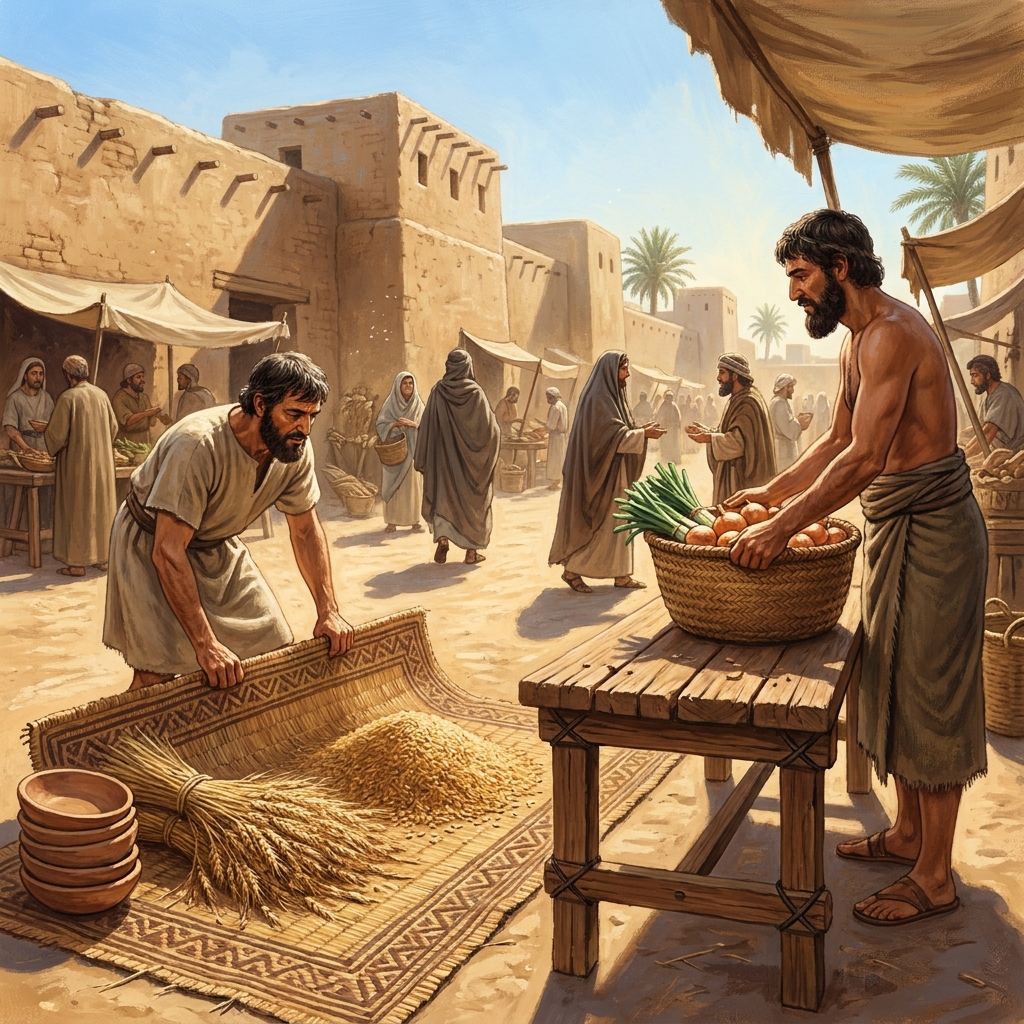
“Understand that some goods are made locally, some elsewhere in the United States, and some abroad.” When you read CA.HSS-3.5.2, it sounds simple enough, but it actually asks our third graders to move beyond just naming items. It demands that they recognize the geographic and economic distance between the things they touch every day and the people who produce them. This standard requires students to classify objects by their origin, helping them build basic economic reasoning skills that serve as a foundation for understanding the regional and global economy.
In Chino Valley Unified, Moreno Valley Unified, Delhi Unified, and Fallbrook Union Elementary School District, teachers use these same expectations to show students that everything has a story. The lesson Where Do Our Things Come From? handles this by grounding abstract economic concepts in the physical environment of a neighborhood. It starts by pointing to something familiar, like a local bakery that bakes bread in town, to illustrate that goods exist on a spectrum of proximity. From there, it expands the student view to the rest of the country and eventually to international borders. By taking these small, concrete steps, the lesson helps students manage the transition from local awareness to global perspectives without overwhelming them with data or complex logistics. The goal is to build a mental framework that connects the student to the wider world through tangible objects found in their daily lives.
Defining origins through vocabulary
The core of this 3rd grade social studies lesson is the categorization of goods. The materials provide three clear definitions for students to master: local, national, and international. Local goods are things grown or crafted within the student’s own community, like produce from a nearby farm. National goods encompass products made elsewhere within the United States. International goods are those produced in countries far away. Getting these terms straight is the heavy lifting of the lesson. Once students have the vocabulary, they can accurately label the shelves of the imaginary grocery store featured in the guided practice section. It is a practical exercise that makes the economic map of the world feel much smaller.

Students often struggle to separate the idea of a store from the idea of production. A key part of the vocabulary work involves distinguishing where an item is purchased from where it is created. This distinction is vital for third graders who are just beginning to understand that their supermarket shelves act as a convergence point for goods from distinct geographic regions. By labeling these goods, students engage with geography not as a flat map, but as a network of production centers. This categorization exercise reinforces the idea that local, national, and international are not just arbitrary labels, but specific economic indicators of how far a product travels before it reaches the hands of the consumer.
Connecting the classroom to the supply chain
I find that students get the most out of this when they realize these categories have real-world implications. The lesson introduces the role of a supply chain manager. This professional is someone who tracks how a product moves from its point of creation to the retail shelf. It is a great way to frame the standard for third graders because it gives them a job title and a mission. It shifts their perspective from being a passive consumer to an observant analyst who thinks about the movement of an object. While it is just a forty-five-minute block, this lesson does a good job of showing that geography is not just about states and capitals, but about trade and logistics too.
By introducing the role of a supply chain manager, the lesson effectively personalizes the vast concept of trade. Students begin to see that behind every object on a shelf, there is a process and a series of decisions. They learn that the distance between a factory and a grocery store is a logistical reality that affects cost, availability, and selection. This insight transforms the way they view the classroom and their home. They start asking questions about tags on their clothing or the stickers on their fruit. These questions are evidence that the lesson has successfully bridged the gap between the classroom and the economic systems that define our modern world. Understanding supply chain logistics at a foundational level prepares students to better comprehend future units on economics and world history.
Classroom implementation
This is a solid choice for a whole-class assignment or for a student who missed the week and needs to get back on track with the unit on continuity and change. You might also find it works well as an independent study module for a student who is ready to move a bit faster than the rest of the group. One caveat: watch for students who think that every single item at a grocery store is local. They often assume that if it is in their town, it must have been made in their town. You will need to prompt them to check packaging or consider that a grocery store is just a hub for goods from all over the planet. Aside from that, the structure is clean and keeps the focus exactly where it needs to be: identifying where our things originate.
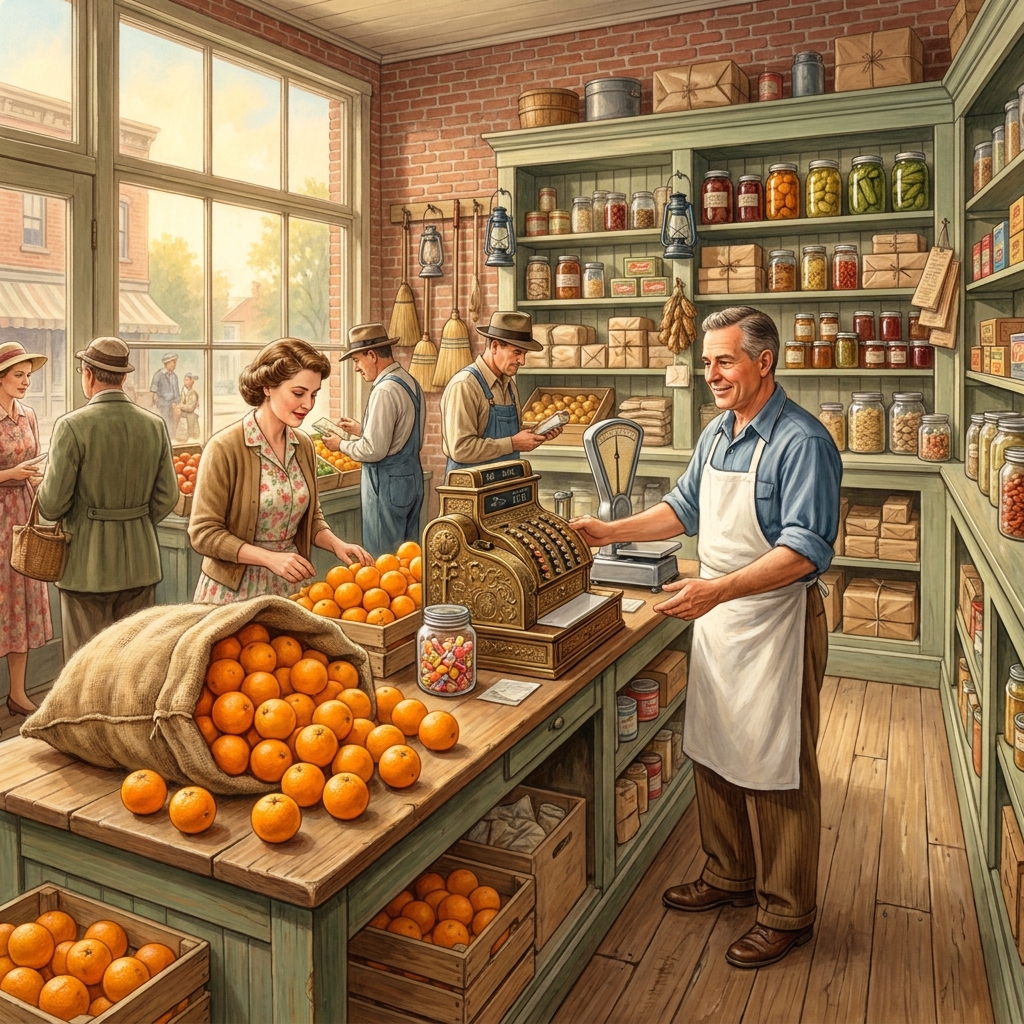
The flexibility of the lesson allows for various classroom configurations. If you have a small class, the guided practice works well in pairs, allowing students to compare their findings and debate the origins of specific goods. In larger settings, you can model the classification process on the whiteboard, using actual items brought from home to demonstrate how to read labels. By checking the “Made In” tags, students gain firsthand experience in sourcing, which demystifies the supply chain. Ensuring that every student can identify the difference between local, national, and international origins is the primary indicator of success for this lesson. Through repeated exposure to these definitions and consistent practice with real-world examples, students build a durable understanding of geography and economics that will support them as they move into higher grade levels.
Related lessons
Making Choices: Costs and Benefits, Understanding how to weigh costs and benefits for economic decisions
Rules, Laws, and Our Community, Explaining the purpose of community rules and government laws
Exploring Our Diverse Region, Examining cultural diversity and characteristics of our local region