

The study of the Byzantine Empire offers a window into the transition from a unified Roman world to two distinct civilizations. By examining the shifting administrative structures and the divergence of religious authority, students can grasp how historical events shaped modern governance and belief systems.
Breaking down the division of the Roman Empire
The standard CA.HSS-7.1.3 asks students to describe the establishment by Constantine of the new capital in Constantinople and the development of the Byzantine Empire, with an emphasis on the consequences of the development of two distinct European civilizations, Eastern Orthodox and Roman Catholic, and their two distinct views on church-state relations. It is a dense set of expectations. Teachers in Sacramento City Unified, Moreno Valley Unified, Redding Elementary School District, and Hueneme Elementary School District all use this framework to guide students through the complex transition from a single empire to two fractured political and religious entities.
When you start The Great Divide: Rome’s Split and the Rise of Two Churches, you will notice the material starts with a straightforward premise. The Roman Empire simply grew too large for one leader to manage. By splitting the territory into East and West, each with its own administrative center, the empire created two paths for the future. The lesson does a good job of grounding this abstract political shift in the actual geography students are studying in their seventh grade social studies class.
Analyzing church and state power
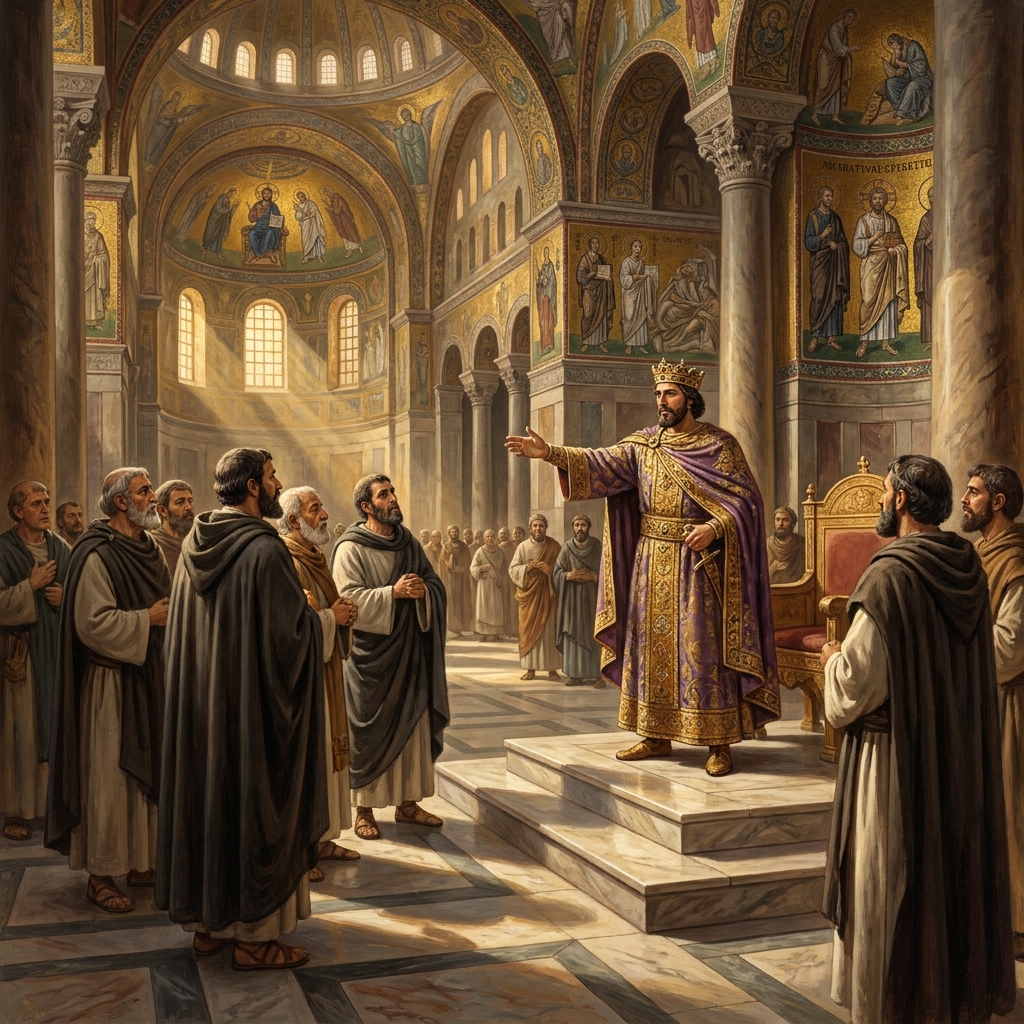
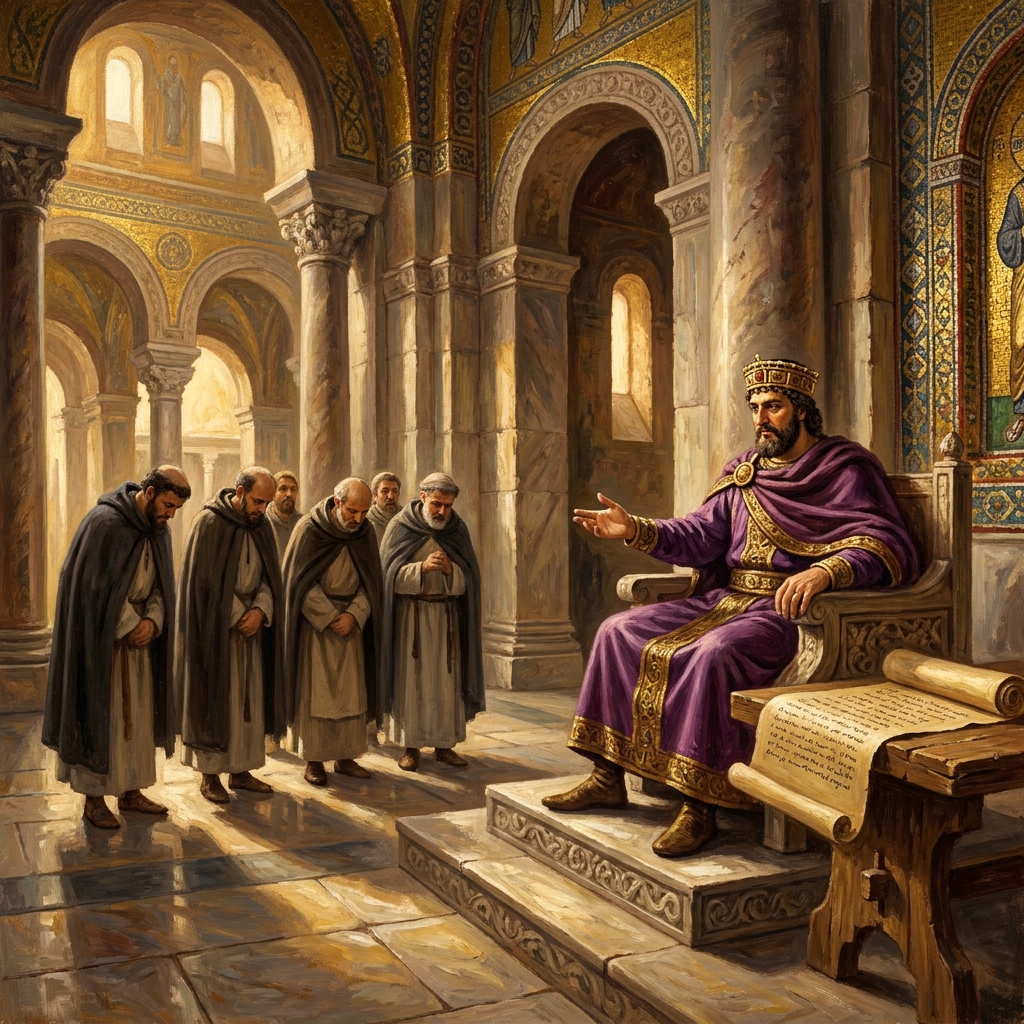
The core of the lesson focuses on the concept of Caesaropapism. This is where the lesson shines because it moves past dates and names into actual political theory. It explains how the Byzantine Emperor presided over church councils and held authority to decide religious doctrine. Because the Emperor served as the supreme political leader and the head of the church, the state effectively exerted power over the church. It is a jarring concept for many students who are used to the idea of a separation between religious and governmental authority.
This is where the lesson pushes students to think deeper about their own government. After exploring the Byzantine model, the guided practice asks students to evaluate a scenario involving a Western king and a local bishop. This forces a comparison that makes the distinction between the two civilizations clear. You will find that your students often have strong opinions once they realize that different laws regarding religion exist precisely because of these historical power dynamics. The lesson points out that this legacy continues to shape the political landscape of modern Europe, which helps students see history as a living influence rather than just a set of events from the past.
Practical ways to use this material
If you are looking for a solid 7th grade social studies lesson on the Byzantine Empire, this hits the mark because it stays focused on the primary objective. It is well-suited for a whole-class assignment where you want to facilitate a discussion about power, or even for independent study if a student needs to catch up on a week they missed. The 45-minute structure is realistic for a standard period, giving you enough time to move from the lecture-style background information into the guided analysis of the Eastern versus Western power dynamics.
One caveat is that the concept of Caesaropapism can be confusing at first. You might need to spend a few extra minutes checking for understanding during the guided practice. Some students tend to assume that all ancient leaders had total control over religion, so clarifying that this was a specific choice made within the Byzantine system is helpful. By the time students reach the end of the activity, they should be able to articulate why the split between Rome and Constantinople was not just a geographic change, but a fundamental shift in how people viewed the relationship between their government and their spiritual life.
Related lessons
Foundations of Democracy in Medieval England, Discusses the origins of democratic principles within medieval English governance structures
The Evolution of Japanese Buddhism, Traces how Buddhism changed and adapted within ancient Japanese society
Protestant Self-Governance and Democratic Ideas, Examines the relationship between religious self-governance and the growth of democracy