


By this time in the calendar, the pacing guide often feels like a suggestion rather than a rule.
As a second grade teacher, you know that finding time for explicit grammar instruction in English Language Arts feels impossible when reading blocks are constantly being sacrificed for other priorities or interventions. When you are feeling the pressure of the mid-year squeeze, having a self-contained resource for your second grade descriptive language lesson helps you keep your students on track without adding more prep to your evening.
What the lesson actually asks students to do
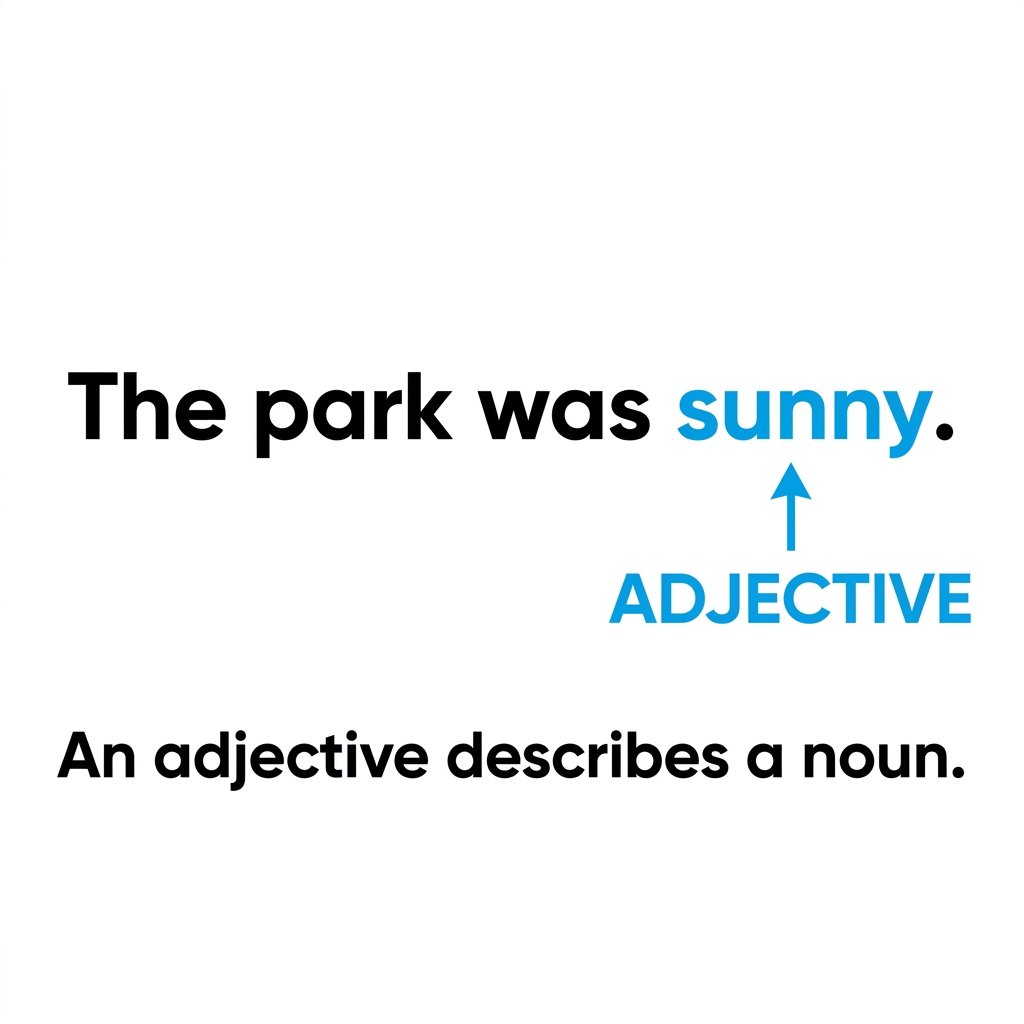
This lesson centers on the idea that descriptive language is not just a grammar exercise, but a way to make sure a listener or reader understands exactly what happened in a story. It introduces the vocabulary clearly: an adjective tells us more about a noun, while an adverb tells us more about a verb. The lesson walks students through the difference between these two parts of speech by using simple, grounded scenarios. For example, the materials explain that if the sun is shining, the sun is the noun and bright is the adjective that describes it. If the sun shines brightly, then brightly is the adverb because it describes the action of the sun shining. Students practice identifying these words in passages, focusing on how a kind friend might share toys or how they might wait patiently for their turn. The goal is for them to use these specific types of words to describe their own feelings and personal experiences during their daily interactions. When students practice these patterns, they learn to move beyond basic sentences. They begin to see that a sentence like he runs becomes more interesting when they add the adverb quickly. By using these descriptive words to tell a story, they learn to paint a clearer picture in the mind of the reader. This process helps them move from simple identification of parts of speech to applying them in their own writing and speaking tasks. Teachers often find that when students understand adjectives and adverbs, their own descriptive writing improves significantly because they have more tools to choose from when constructing their sentences. The exercises included in the lesson break this down into manageable chunks so that the students do not feel overwhelmed by the task of learning two new concepts at the same time.
Understanding the standard and your context
The core objective here aligns with CA.ELA.L.2.6. This is the California-adopted standard for language, specifically in the vocabulary acquisition and use cluster. It asks students to take words and phrases they have acquired through listening, reading, and conversations and put them into practice by using adjectives and adverbs to describe things. Teachers in districts like Saddleback Valley Unified, San Bernardino City Unified, Santa Maria-Bonita School District, and Cambrian School District are teaching this exact standard across the state right now. It is a fundamental building block that prepares them for more complex sentence structures later on. When teachers prioritize this standard, they are setting a foundation for better communication skills throughout the grade level. Using adjectives and adverbs correctly allows students to express themselves with more precision. This standard focuses on practical usage rather than abstract memorization of definitions. By encouraging students to use the words they have heard in class or seen in their reading, you reinforce the idea that vocabulary is a tool for expression. As students work through the activities, they realize that adjectives and adverbs provide the texture and detail that makes their own writing engaging. This is essential for students in California classrooms, where clear communication is a priority. The alignment with CA.ELA.L.2.6 ensures that the time you spend on this lesson is time spent meeting the specific requirements of your curriculum. Because it focuses on words and phrases students have already acquired, it reinforces learning rather than simply adding to the list of concepts to memorize. This makes the standard easier to reach for students who might otherwise struggle with complex grammatical terms.
One caveat: you might notice some students struggle with the transition from identifying the adjective to applying the adverb. They often recognize an adjective easily, but the concept of an adverb as a descriptor for an action word sometimes requires a bit more modeling. I suggest pairing this lesson with a brief classroom discussion where you ask students to act out a verb and then have the class describe that action with an adverb, like walking slowly or speaking quietly. You can also have students identify the adjective and adverb in sentences they write themselves. By asking them to find the noun first, then the adjective, then the verb, and finally the adverb, you create a step by step process that reduces confusion. This approach allows you to model the correct usage in real time, making the concepts tangible and easier to grasp. If students can see how the adjective relates to a noun they can touch or see, and how the adverb relates to a movement they can perform, they are much more likely to retain the information. This tactile way of learning supports the goal of CA.ELA.L.2.6 and helps students move toward mastery.
When to fit this into your day
This Using Descriptive Words to Tell a Story lesson runs about 45 minutes, which makes it perfect for a few different classroom situations. If you have a student who missed the week of instruction on vocabulary, this is an excellent module for them to work through during a makeup period or as independent study. It is also a solid choice for a substitute teacher day because the instructions are self-explanatory and do not require the sub to have a deep background in your specific curriculum to keep the class moving forward. It also works as an intervention for students who need a fresh, clear look at the material without the overhead of a whole-class lecture. Using it this way lets you reclaim some of your own time while ensuring your students still get the direct practice they need to meet the standard. Whether you are using this as a primary lesson, a review for struggling students, or a task for a sub, the material remains consistent. You can trust that the definitions and examples for adjectives and adverbs will remain the same. This consistency helps students feel confident in what they are learning. For a busy second grade teacher, finding resources that can perform double duty as both instruction and intervention is helpful. When you have a lesson that can stand on its own, you save the time you would have spent prepping for multiple small group sessions. This lesson gives you the flexibility to adapt your instruction based on the needs of your current class. It allows you to address the standard in a way that respects your time and your students’ learning needs, which is a rare balance to find during the academic year.

Related lessons

Understanding Story Structure, Identifies components like beginning, middle, and end of stories

How Characters Respond to Challenges, Explains how characters react when facing difficult situations

Finding the Main Idea and Lesson, Teaches readers how to identify the central message