

You know that moment at the desk when a student stares at a blank screen or a clean sheet of paper for twenty minutes. They have plenty to say about the topic, but the ideas are floating around like dust motes in a shaft of sunlight. Getting those ideas into a coherent shape is the central challenge of fourth grade English language arts. This is when we stop expecting creative lists and start asking for structured paragraphs. It is a big leap for many ten-year-olds.
Teachers often feel the squeeze of the academic calendar when trying to get to this transition. Between testing windows and the endless parade of school events, consistent writing practice can easily slide off the schedule. That is where a self-contained digital resource becomes a lifesaver. Whether you are dealing with a student who missed the week while out sick, or you are looking for a focused intervention activity to run during small group time, having a structured path for students to follow is necessary. The same standard is taught across the state in places like Capistrano Unified, Newport-Mesa Unified, Rosedale Union Elementary School District, and San Ysidro Elementary School District.
What this lesson actually asks students to do
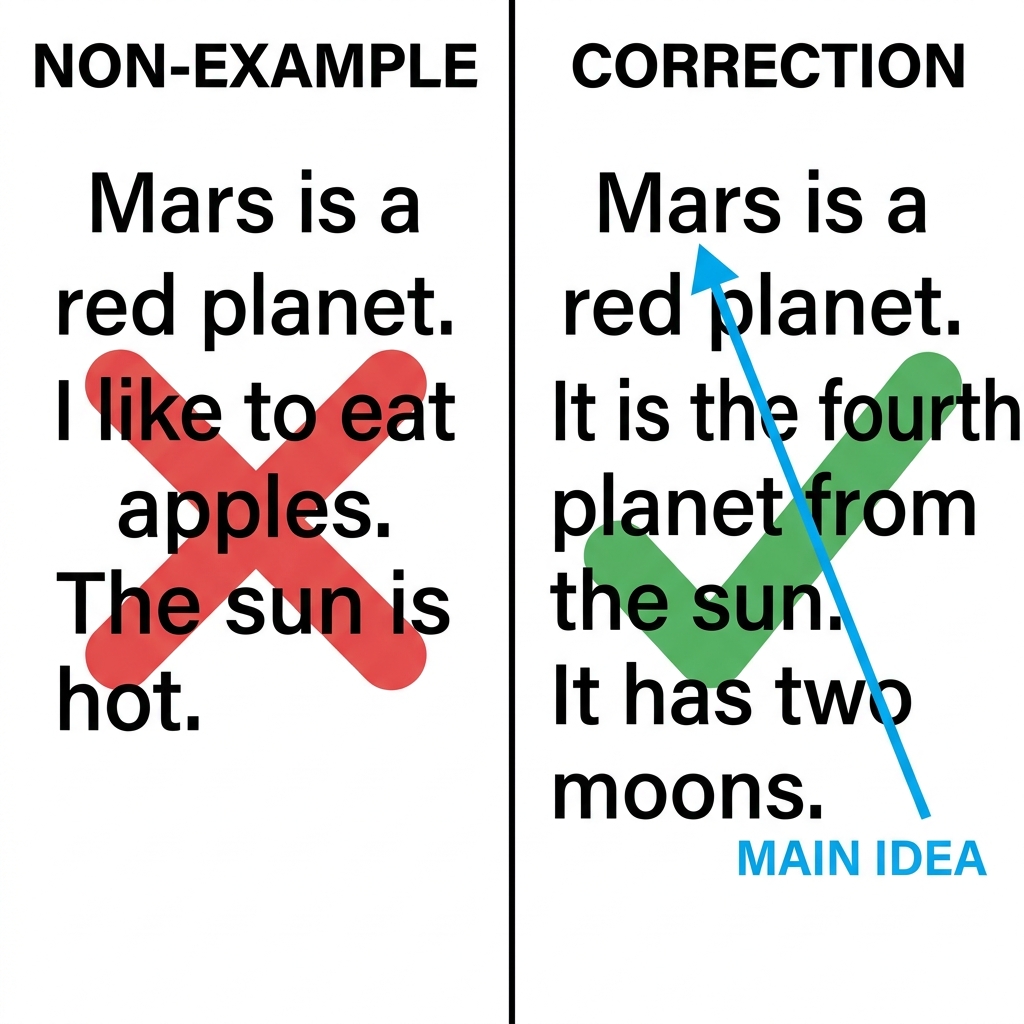
The lesson Building Clear Informative Texts aims to move students from writing random facts to crafting a purposeful explanation. The objective is simple: organize writing into clear paragraphs that share facts about a topic. To get there, the lesson uses a very practical approach to defining what a paragraph should look like. It emphasizes that a topic sentence is a sentence at the beginning of a paragraph that tells the reader exactly what the whole paragraph is about. Once that anchor is set, the student learns to flesh it out with supporting details, which are facts or pieces of information that explain and add more detail to the main idea.
This lesson is built to support CA.ELA.W.4.2, which is the California-adopted standard asking students to write informative or explanatory texts to examine a topic and convey ideas clearly. This includes the related CCSS.ELA-LITERACY.W.4.2, which serves as the framework for introducing a topic, grouping related information, and using precise language. The standard expects students to develop the topic with facts, definitions, concrete details, and quotations, while also including a solid concluding statement. It is a lot to ask of a nine or ten-year-old, but the lesson breaks it down into manageable chunks.
Where students slip when writing informatively
In my experience, the biggest hurdle for students is the tendency to dump every fact they know into one big paragraph. They often treat their writing like a grab bag rather than a guided tour for the reader. This lesson uses a clear example about the inner planets to show how headings can help organize information. By explaining that a section titled The Inner Planets signals to the reader that everything below will be about Mercury and Venus, it gives the student a concrete model for grouping their own research.
I appreciate that the lesson does not just talk at the student. It provides a guided practice setup using the water cycle. The water cycle is the way water moves around the Earth. The task requires the student to put facts into a logical order. This is where you see who truly understands the concept of an informative text, which the lesson defines as writing that gives facts and explains a topic clearly to the reader. If they cannot order the facts, they probably have not grasped the topic sentence yet.
Using this for intervention or a substitute day
When you have a substitute in the room, finding an activity that is both meaningful and manageable is a chore. This is a great candidate for a sub day because it does not require a pile of supplementary materials or a deep knowledge of the specific unit you are teaching. The instructions are self-explanatory. It is also an excellent fit for independent study if you have a student who is working away from the classroom for a few days and needs to keep pace with the rest of the class.

If you are using this as a fourth grade writing organization lesson during your own instruction, try to have a quick check-in after they finish. The lesson touches on the concept of using quotations to add authority to writing. It asks the student to think of one person, like a scientist, who might be quoted to support their informative writing. This is a great opportunity to talk about voice and sources, even if it is just a brief conversation while you circulate.
Bringing it all together
These foundational skills are what prevent the frustration of writing later in middle and high school. If we can get them to see their writing as a system of parts, topic sentences, supporting details, and conclusions, the blank page becomes much less intimidating. It is worth remembering that not every student will master this the first time they look at the material.
That is why I keep these resources tucked away for later use. When you see a student struggling to bridge the gap between their research and their draft, pointing them toward CA.ELA.W.4.2 gives them a fresh way to approach the task without you having to re-teach the entire concept from scratch. It is just one more tool to help them feel capable when the writing gets hard.
Related lessons

Writing and Collaborating with Digital Tools, Using technology to write and share work with others
Researching the California Gold Rush, Finding and evaluating facts about the Gold Rush history

Strengthening Your Writing, Editing and refining writing to make ideas more clear