

Introducing variables into a sixth grade math lesson often marks the first time students truly have to slow down and look at the anatomy of an equation rather than just chasing a solution.
When we move from simple arithmetic into the abstract, the shift can be jarring for many students who are accustomed to just finding a single number as an answer. This is where Understanding Algebraic Expressions provides a needed bridge. The lesson moves away from the habit of just solving for x and instead asks students to define what they are looking at by breaking down phrases into their constituent parts. It focuses on the language of mathematics, specifically how to identify and interpret terms, coefficients, and factors within an expression. By forcing students to categorize these pieces, they start to see that an expression is a structure rather than just a jumble of characters.
The primary goal here is to satisfy CA.MATH.6.EE.2b. This standard is foundational for middle school, as it requires students to write, read, and evaluate expressions where letters act as stand-ins for numbers. It also mandates that students identify specific parts of an expression, like the sum, term, product, factor, quotient, and coefficient, and learn how to view groups as a single entity. Educators from San Ramon Valley Unified, San Bernardino City Unified, Buckeye Union Elementary School District, and Southern Kern Unified all rely on these common goals when they prepare students to meet this requirement in their daily math curriculum. The lesson takes this standard seriously by providing clear vocabulary definitions: a term is a single number or a variable separated by operations, a coefficient is the multiplier of a variable, and a factor is any part of a product.
What the lesson actually asks students to do
In this 6th grade algebraic expressions lesson, the work begins with a focus on structural identification. Instead of jumping straight into long equations, the lesson uses a manageable prior-knowledge opener. It reminds the class that variables are just unknown numbers, like x, and that we must understand the parts to understand the whole. For example, if you have 3x + 5, you have to recognize that 3x is a term and 5 is another term.

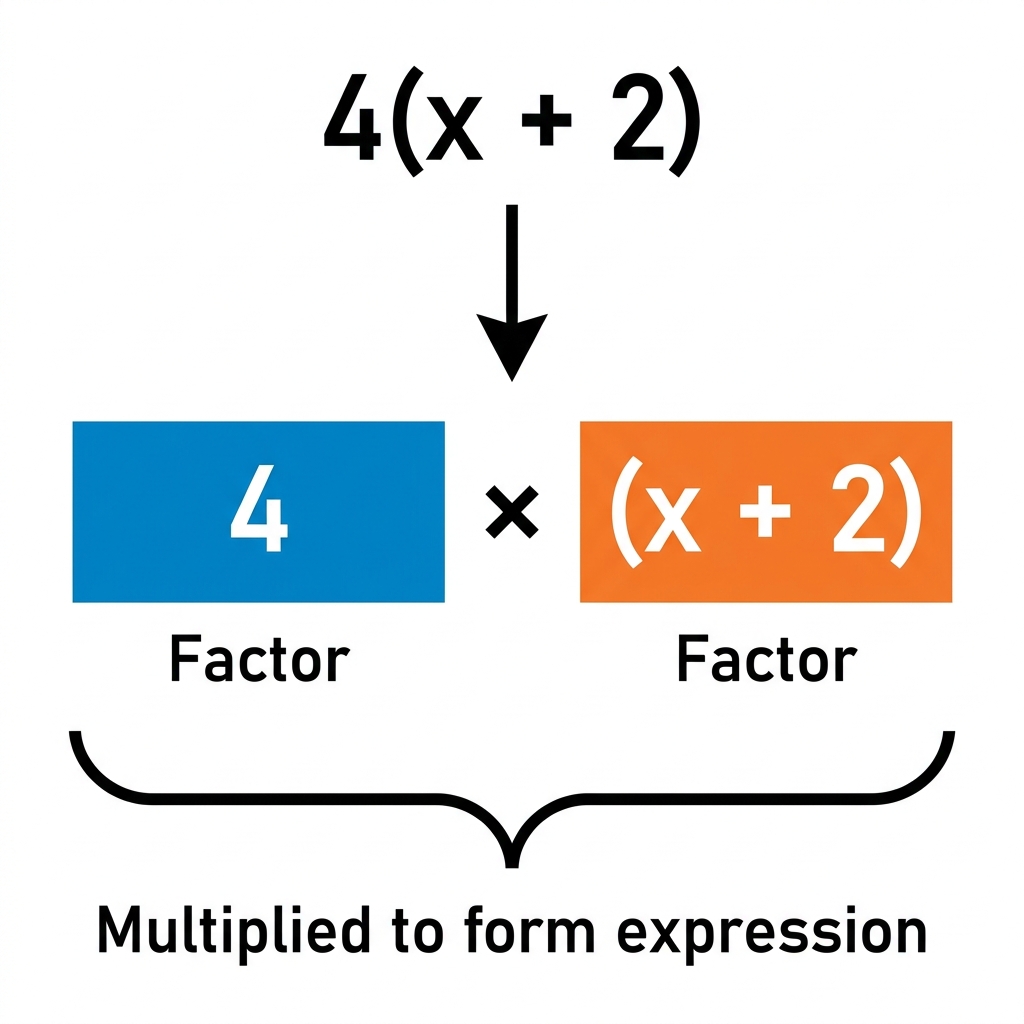
One of the strongest parts of this lesson is how it handles the concept of grouping. It introduces the idea that parts can be viewed as single entities. For example, looking at an expression like 4(x + 2), the lesson points out that the number 4 is a factor, and the group (x + 2) is also a factor. This changes the way students think about parentheses. They stop seeing them as just symbols and start seeing them as containers that represent a single value or quantity. The lesson defines an expression as a mathematical phrase that combines numbers and variables using operations such as addition, subtraction, multiplication, or division. This is straightforward but essential language for students who are prone to mixing up terms and expressions.
I find the connection to real-world application to be useful here, especially the why-it-matters section. It links these abstract groupings to engineering. Engineers use these expressions to track budgets for things like building bridges or roads. They group material and labor costs into single units to manage their projections. By providing this context, the lesson gives students a reason to care about the notation beyond just completing a worksheet. It is a solid choice for a whole-class assignment, but I have also used this successfully for a student who missed the week or as a structured independent study module for those who need to brush up on their algebra basics before moving on to more complex work.
Where students slip
Every year, I watch my sixth graders struggle with the distinction between a term and a factor. During the guided practice in this lesson, the scenario involves buying packs at a store with a price p and a 2 dollar shipping fee. Students often get hung up on the phrasing, specifically how to represent the total cost per pack and how to group those costs. It is easy for them to write the variable down, but harder to articulate why the parentheses are necessary in a way that shows they understand the shipping fee applies to the entire pack.
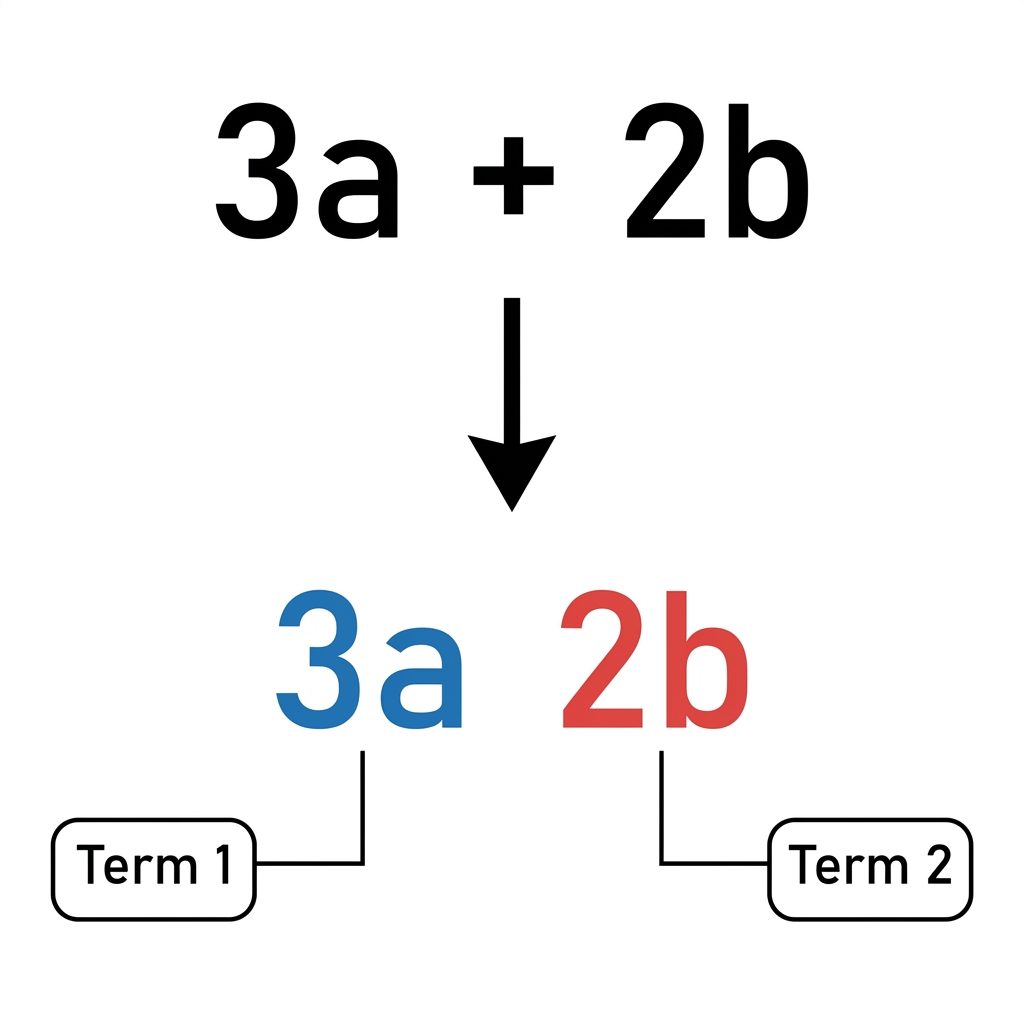
You will need to watch the class during this specific practice. Some students will distribute the number outside the parentheses too early without understanding why, while others will struggle to identify the coefficients correctly. Remind them that the coefficient is the specific number attached to the variable, and the factors are the components that, when multiplied, form the entire product. Do not be surprised if they need to draw the expression out a few times to label each part. That extra writing is where the learning happens. I often have them use different colored pens to box in the terms or underline the coefficients. It makes the abstract parts feel more concrete, especially for students who are working on this as part of an intervention or attendance recovery session. It is a straightforward lesson, but it requires that the teacher move around the room and ask students to name the parts aloud. If they can say it, they generally understand the structure.
Related lessons
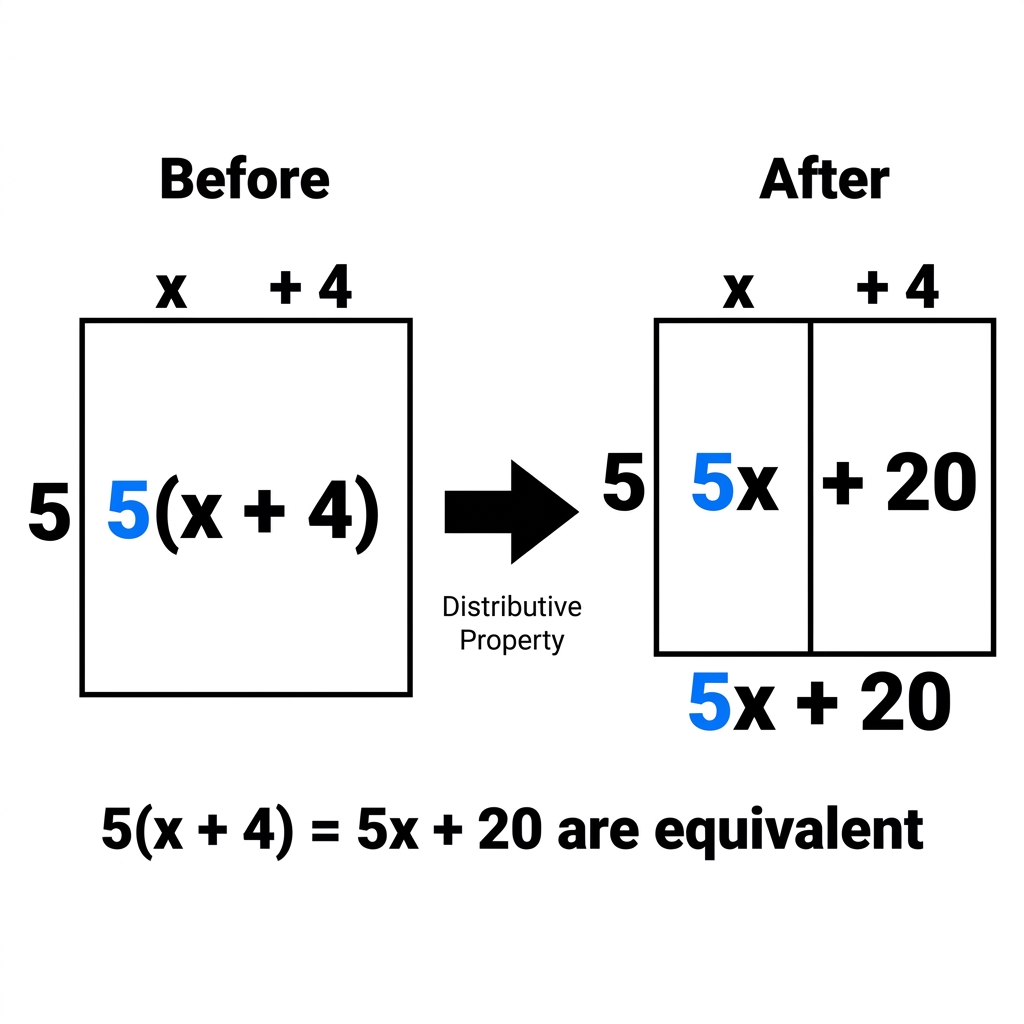
Understanding Equivalent Expressions, how to rewrite expressions to find equal mathematical phrases
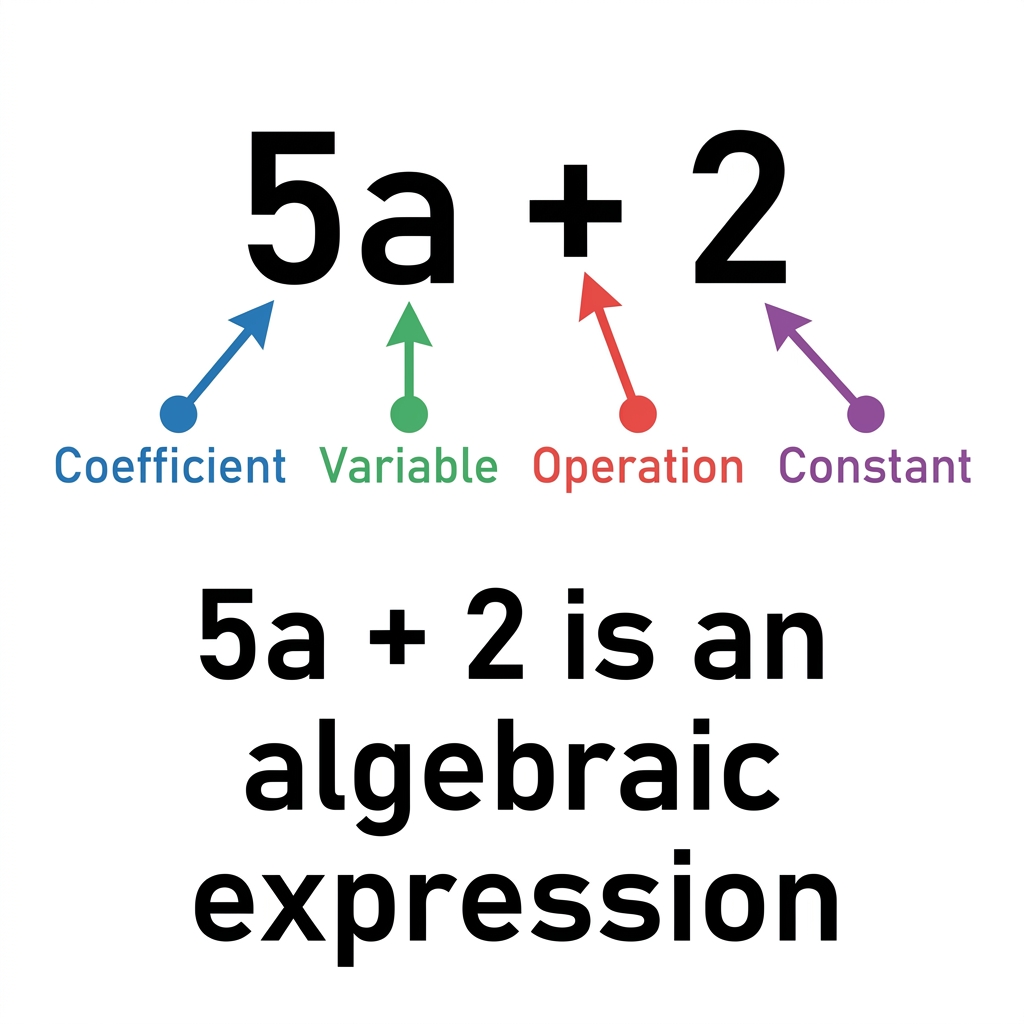
Understanding Algebraic Expressions, identifying the components and structure of mathematical phrases
Understanding Inequalities, how to compare values using less than or greater than