

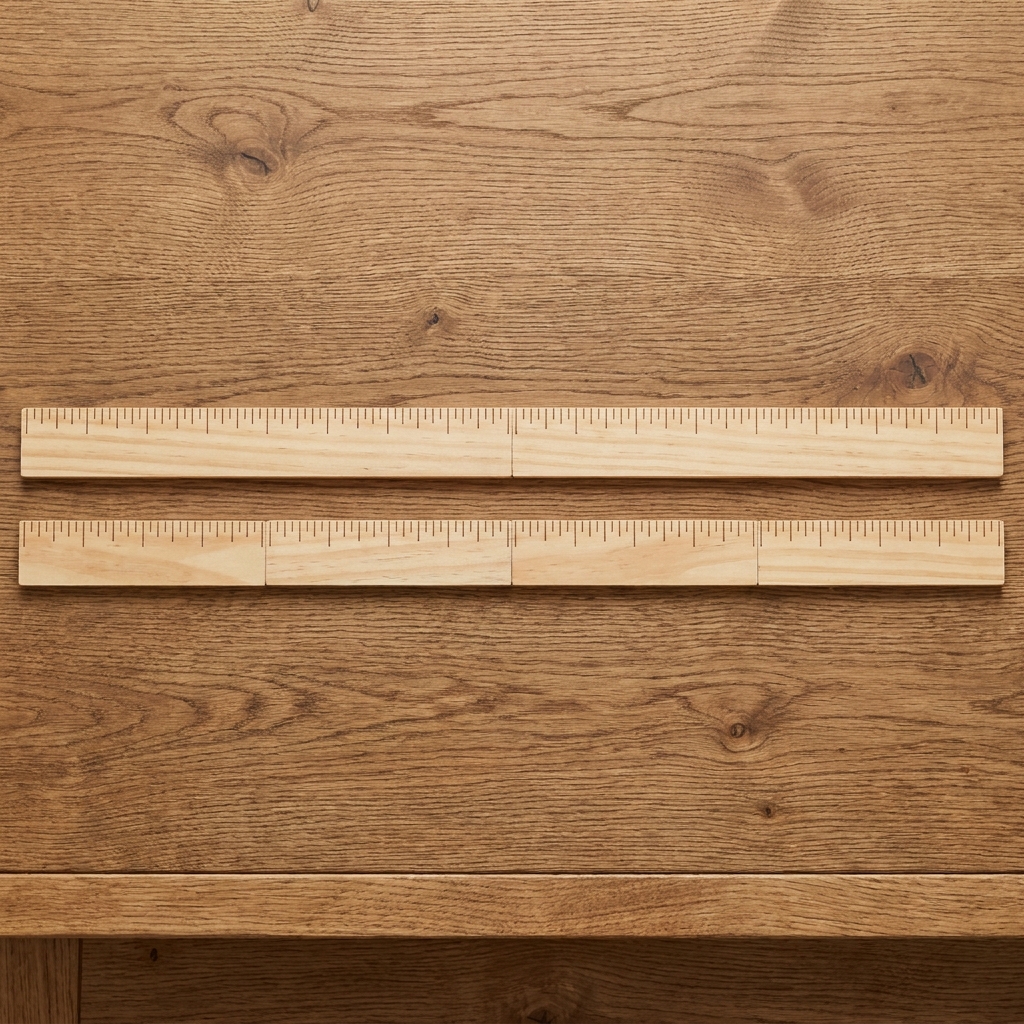
You have likely seen it happen in your classroom before. A student carefully measures the width of their desk using a giant classroom eraser and then turns around to measure the same desk with a small paperclip. They look at you, completely baffled, because they have a high number of paperclips and a very low number of erasers. They start to wonder if they messed up the process. This is the exact moment where the core concept of unit size becomes a real classroom challenge.
This Measuring with Different Units lesson for 2nd grade math is designed to address that confusion head-on. It moves students past simple counting and into the logic of why the number changes. If your students are solid on the idea that length is simply how long an object is from one end to the other, they are ready for this.
The logic behind changing units
The lesson starts by establishing that a measurement unit is a standard amount or object used to find the length of something. From there, it walks the class through a scenario using a standard desk. It points out that if you measure that desk with a long 12-inch ruler, you might only need 2 of them to reach the end, but if you switch to a shorter 6-inch ruler, you will suddenly find yourself needing 4 rulers to cover the same distance. The lesson makes it clear that because the 6-inch ruler is smaller, you naturally need more of them to span the same length.
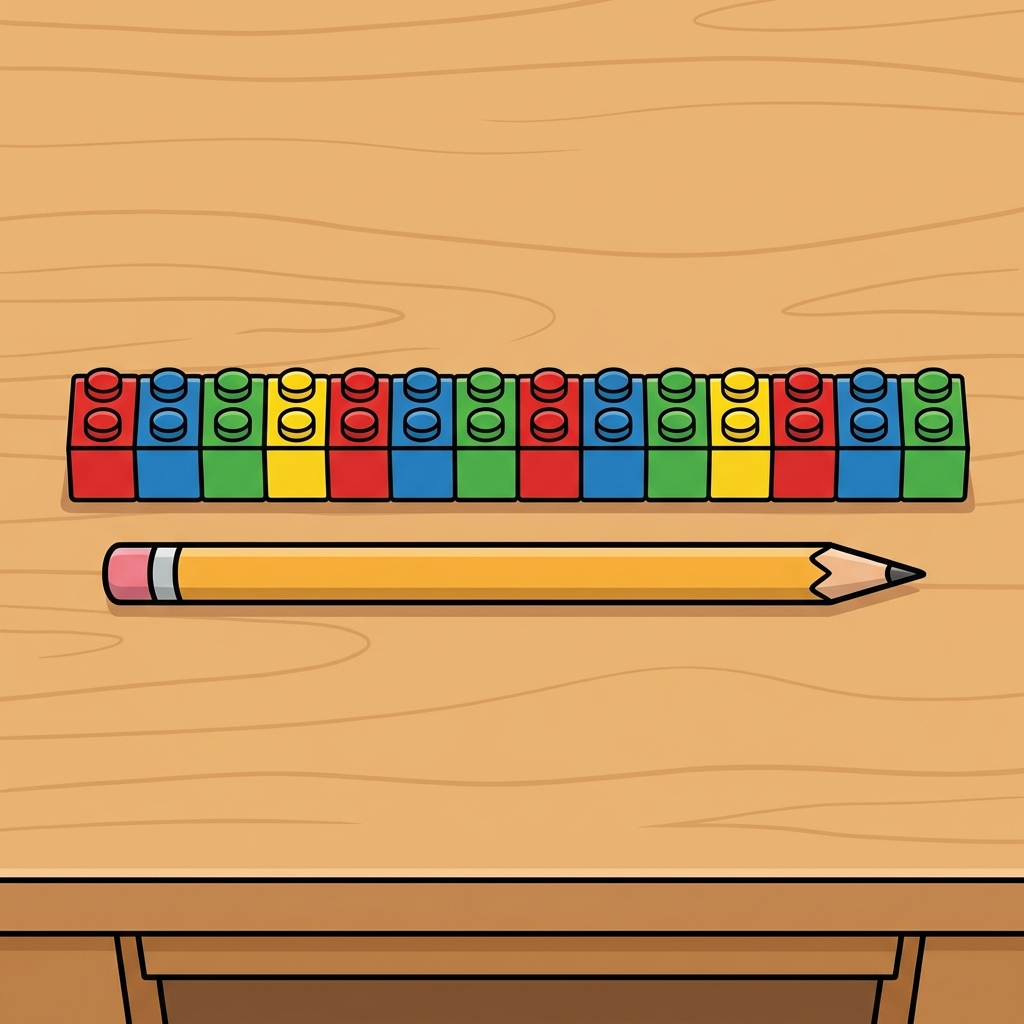
This is exactly the type of foundational work that students in San Diego Unified, Sacramento City Unified, National Elementary School District, and Black Oak Mine Unified all engage with to ensure they understand spatial relationships. It is the same standard across the state. This second grade measurement lesson provides a clear guided practice where students apply this logic to a science project box, using large wooden blocks alongside small plastic cubes. It is a simple, tangible way to force that comparison between unit size and total count.
The standard at play here is CA.MATH.2.MD.2. The California-adopted standard asks students to measure the same object twice using different lengths and, most importantly, to explain why the two measurements relate to the size of the unit they chose. It is not just about getting the right number; it is about describing the inverse relationship between the size of the tool and the quantity of the tool needed.
Expanding student understanding
To truly cement these concepts, teachers often need to extend the learning experience beyond just a few quick examples. When students engage with measurement, the repetition of the process matters. If they measure a pencil, then a textbook, then the length of the carpet using both large steps and small heel-to-toe steps, they begin to internalize the pattern. The act of measuring repeatedly with non-standard units builds a strong mental model before they ever touch a ruler. By having them predict which count will be higher, you turn a passive worksheet into an active hypothesis-testing activity. This builds critical thinking skills that serve them well in all science and math subjects as they move into higher grades.
Why this matters for later learning
I always find that students who struggle with this lesson have a much harder time when they hit later concepts involving standard units like centimeters and meters. If they do not grasp that smaller units lead to higher numbers, they tend to guess arbitrarily on assessments rather than thinking about the scale of the object. For a student who missed the week or for a small group needing intervention, this is a perfect way to rebuild that intuition. This foundational knowledge supports their future ability to convert measurements, understand area, and analyze data in graphical formats later in their academic careers.
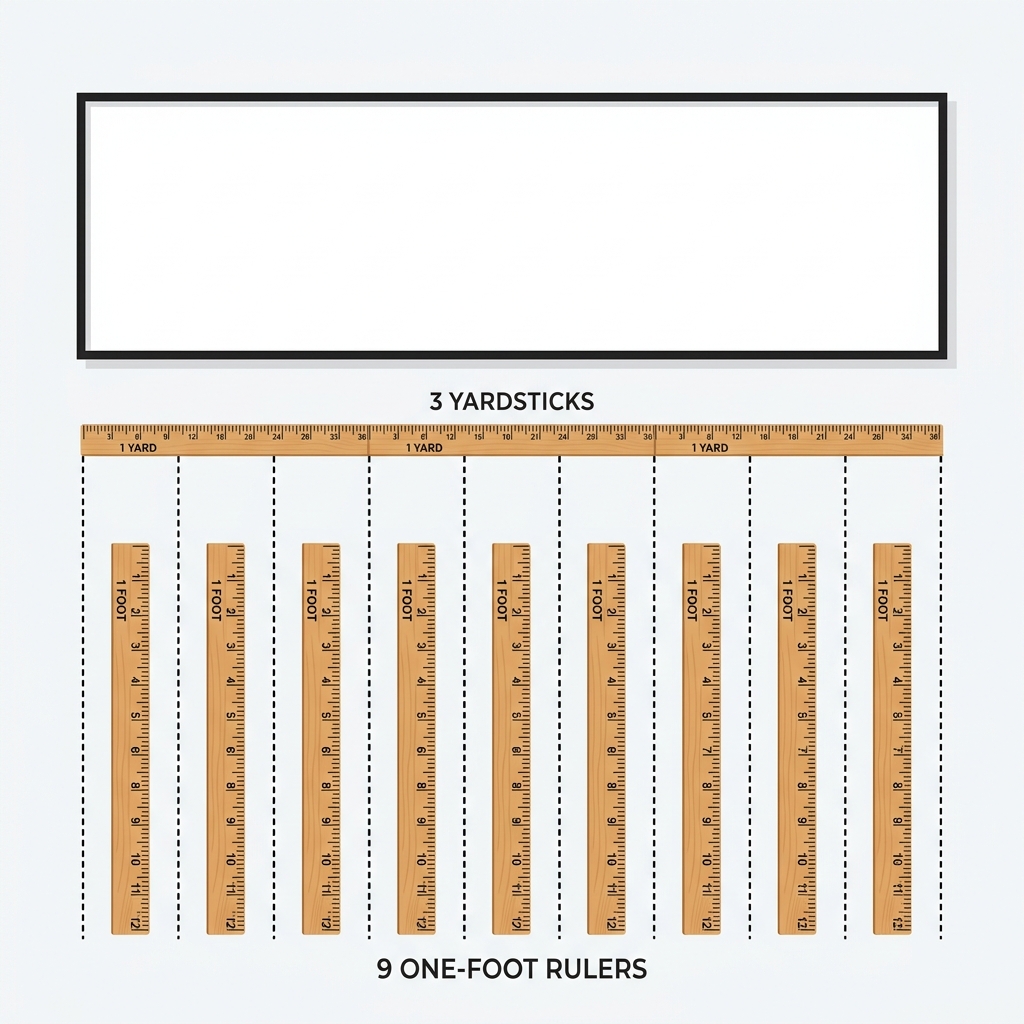
The lesson also does a good job of grounding this in real-world application. It mentions how carpenters have to keep these differences in mind when they measure wood for houses. It is a good reminder to the class that math is not just about keeping a pencil steady; it is about having a consistent way to describe the world. When a carpenter decides to switch their tool, they know exactly how the math must shift to account for that change in size. Connecting these abstract math problems to professions like carpentry, architecture, or even sewing helps students realize that measurement is a universal skill used by adults every day. The more we can relate these concepts to real jobs, the more engaged our students will become in the process.
I recommend this for a whole-class assignment or for a substitute day where you want to keep the momentum going without needing a massive amount of prep work. It is clean, specific, and does not waste time on fluff. The vocabulary is minimal but precise, and the shift from rulers to blocks to cubes keeps the focus on the actual mechanics of measuring. My only caveat is that you should have some physical objects on hand if you want to push this further than the screen; let them hold the blocks and the cubes so they can feel the size difference. If you just leave them to look at the screen, they might miss the physical reality of what it means to need “more” of something that is “smaller.” Keep it tactile whenever you can.
Related lessons
Measuring Length with Tools, Practicing the use of various tools to determine object length
Measuring Lengths with Benchmarks, Using established benchmarks to estimate and determine object lengths
Telling Time to the Nearest Five Minutes, Learning to read clocks by intervals of five minutes