

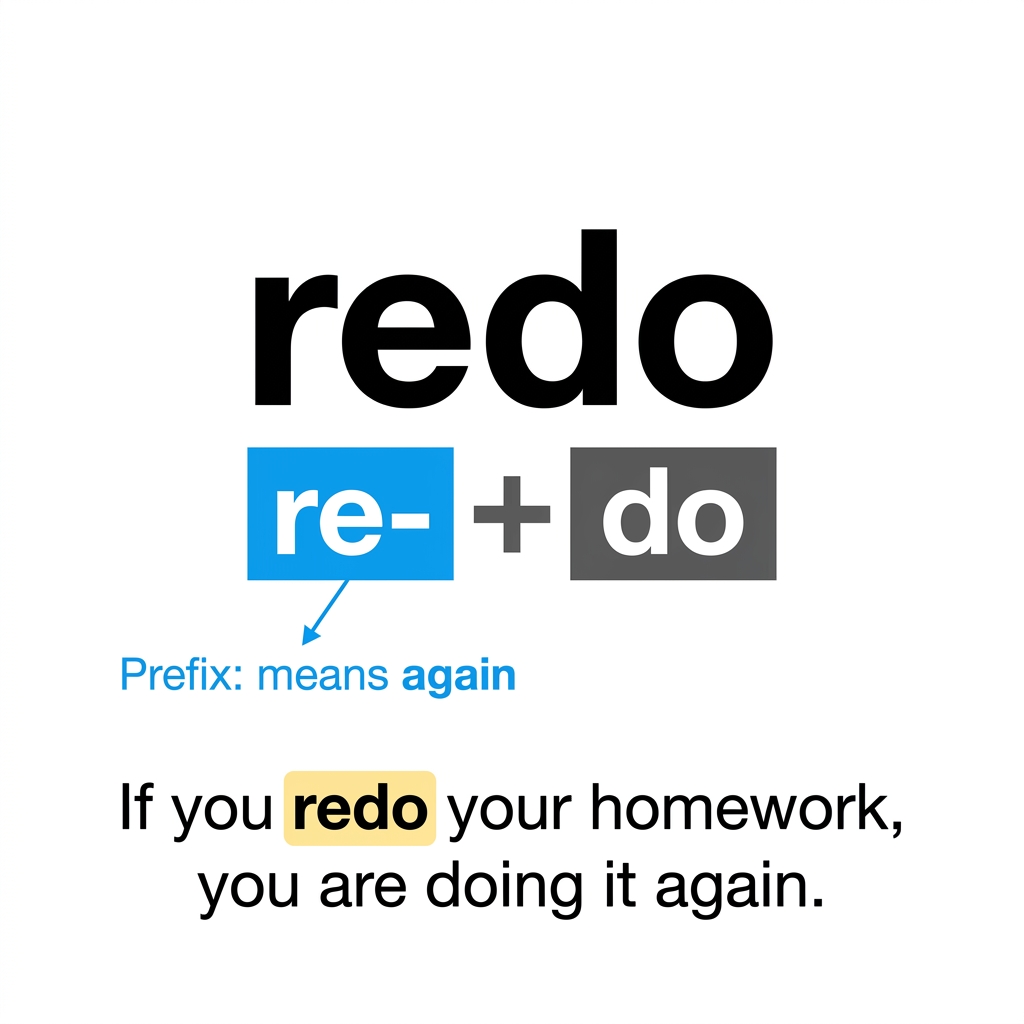
A parent once asked me why their student seemed to stop cold whenever they hit a word they did not recognize in a novel. It is a common frustration for teachers too. In a 4th grade English Language Arts class, we spend a lot of time trying to build that automaticity, but the real work happens when they learn to figure out words on their own. Decoding Words with Context and Word Parts is a straightforward way to handle this transition.
This lesson is designed to help students stop stalling and start analyzing. It hits the ground running with the idea that when we see a word we do not know, we look at the words around it for hints. It defines a context clue as a word or phrase near an unknown word that gives hints about its meaning. The lesson then breaks down how word parts, specifically affixes like prefixes, act as building blocks to change the meaning of a root word. For instance, it uses the example of building a house again to explain the prefix re- as something happening a second time.
What the lesson actually asks students to do
The lesson focuses on the California-adopted standard CA.ELA.L.4.4. This standard asks students to determine or clarify the meaning of unknown and multiple-meaning words and phrases, which is a foundational skill that is taught the same way across the state in districts like San Bernardino City Unified, Sacramento City Unified, Huntington Beach City Elementary School District, and Center Joint Unified. The standard asks that students choose flexibly from a range of strategies, specifically using context clues, Greek and Latin affixes, and root words as detectives to decode meaning.

Students work through a passage about birds and machines during the guided practice. This is where you will see if they are truly looking for those hints or just guessing based on the first letter of the word. It is a solid fourth grade context clue lesson for a whole-class assignment, though it also works well for a student who missed the week or needs an intervention session to catch up.
Where students slip
The biggest hurdle I see with this material is the tendency for students to treat context clues as optional. They often prefer to ask for the definition rather than do the mental heavy lifting required to infer it. The lesson does a good job of showing that these skills are used to understand stories, news, and even instructions, which helps make the logic feel less like a school task and more like a tool for reading. Keep an eye on how they interact with the root word definition. If they do not grasp that the root carries the main meaning, the prefix part becomes confusing quickly.
Tips for your classroom
If you are using this for a substitute day, make sure your students have access to a dictionary or a glossary if they get stuck on the specific root words in the bird and machine passage. Some students will feel frustrated if they do not know what the root means to begin with. You might want to spend five minutes before starting the lesson identifying a few common prefixes together on the whiteboard. When students see these patterns, their confidence grows, and they stop treating every new word like a brick wall. It is a simple shift, but it changes how they approach their independent reading time for the rest of the year.

Related lessons

Using Figurative Language and Precise Words, Practicing use of figures of speech and descriptive language
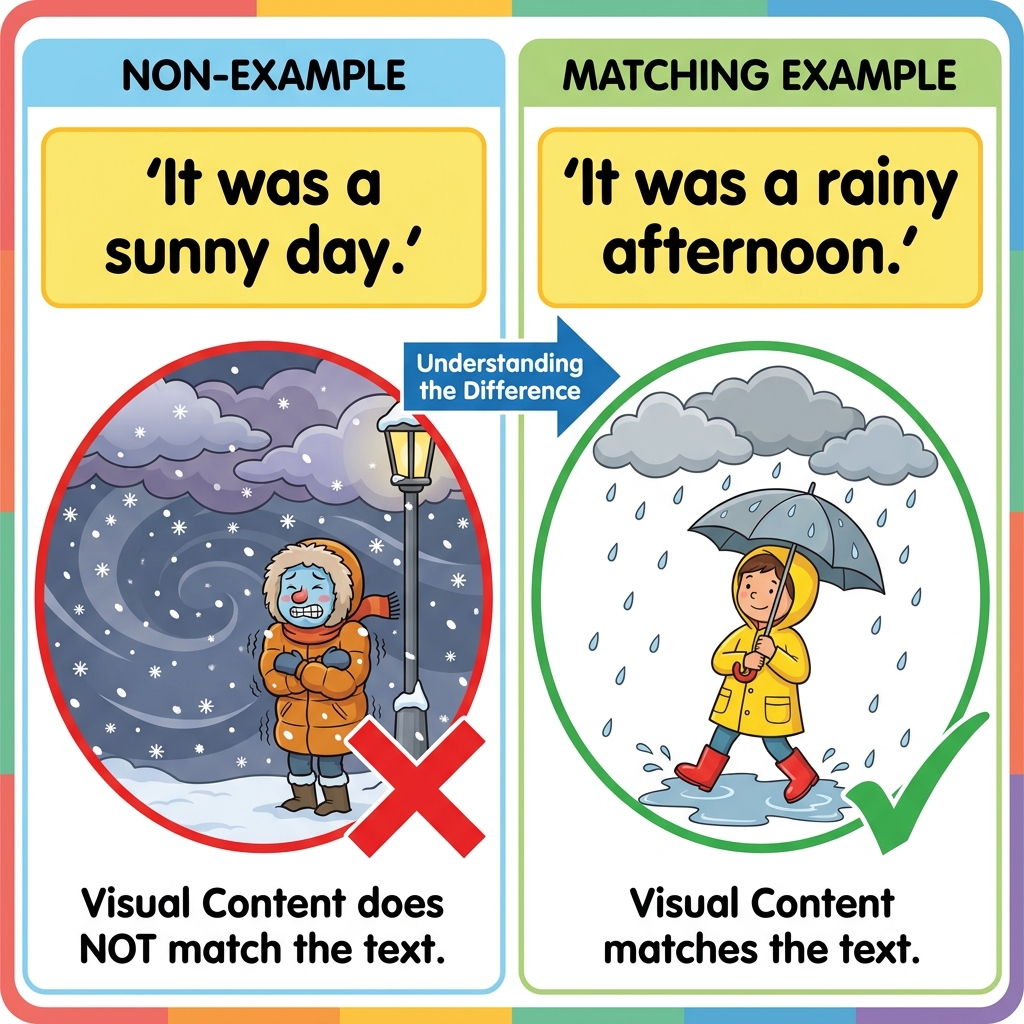
Connecting Stories to Visuals and Sounds, Linking narrative details to images and auditory descriptions

Finding Meaning in Stories, Analyzing short texts to identify core themes and messages