

We all know that mid-year point in 7th grade English Language Arts where the honeymoon phase of the school year fades and students really need to start producing work that moves beyond simple opinion. They have plenty of opinions about characters or themes, but getting them to anchor those thoughts in the text itself is often the hardest part of the curriculum. This is where Using Textual Evidence in Writing becomes a staple in my planning folder. It provides a simple 45-minute structure that forces students to stop guessing and start showing.
This 7th grade English Language Arts lesson centers on the skill of pulling direct quotes and facts to back up an argument. It acknowledges the common struggle where kids see a story, notice why a character acts in a certain way, but then fail to prove it on paper. The lesson does not just tell them to cite sources, it shows them how to connect their own claims to specific textual moments. When you assign this 7th grade textual evidence lesson, you are helping them build a habit of using the text as their primary witness.
The mechanics of evidentiary writing
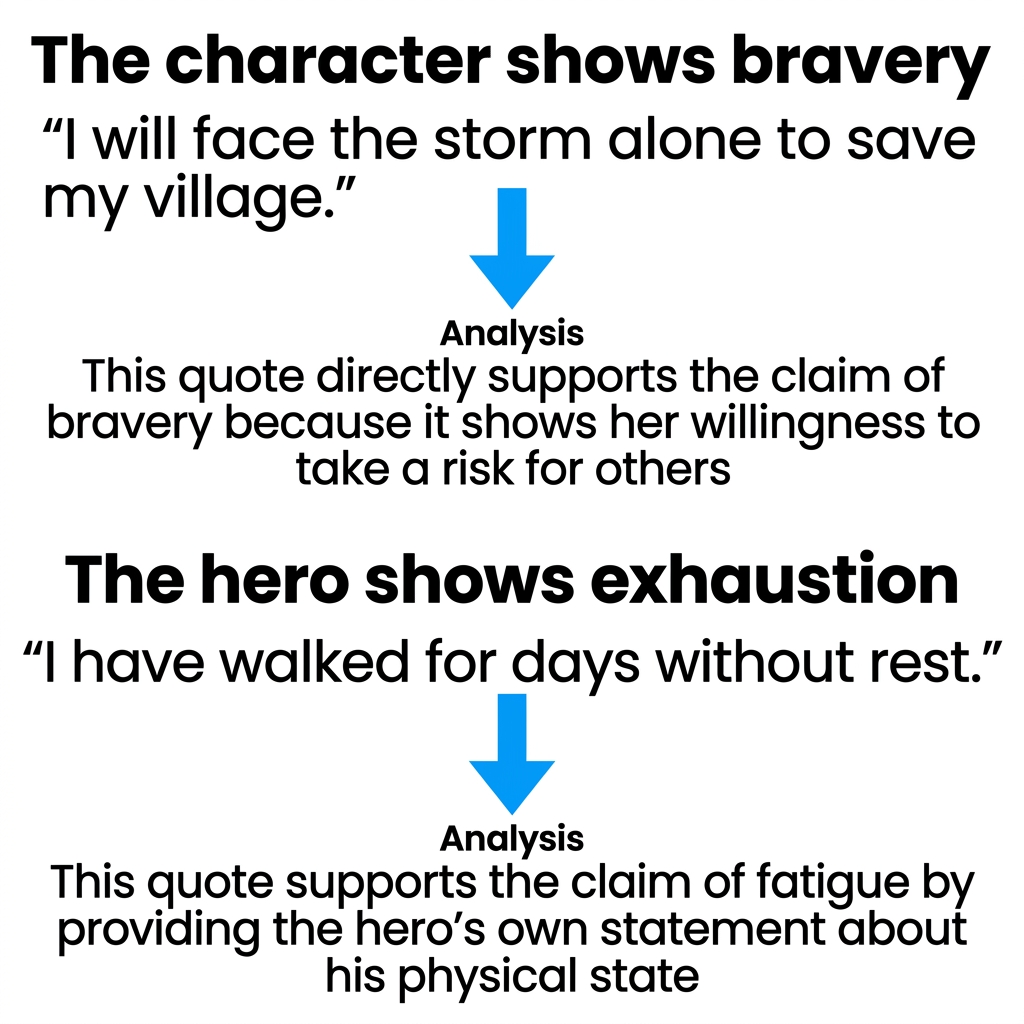
The core objective here is simple: students must use direct quotes and facts from a text to support their ideas. The lesson provides concrete examples that are easy for kids to grasp. One example involves a hero who is tired. If a student claims the character is exhausted, the lesson teaches them to look for the quote: I have walked for days without rest. This demonstrates how a quote supports a claim by providing the character’s own statement about their physical state. Another scenario shows a brave character facing a storm. The lesson explains that this quote works because it shows the character’s willingness to take a risk for others. I find these examples helpful because they prevent the circular logic that students often fall into, where they simply restate their own opinion instead of providing the required proof.

This material is designed to meet CA.ELA.W.7.9. This standard asks students to draw evidence from literary or informational texts to support their analysis, reflection, and research. It also incorporates CCSS.ELA-LITERACY.W.7.9, which sets the foundation for applying reading standards to both literature and nonfiction to ensure students are grounded in facts. These expectations are the same for students across the state, including in Corona-Norco Unified, Desert Sands Unified, Golden Valley Unified, and Hacienda la Puente Unified. By holding students to these criteria, we move them toward a more professional style of argumentation that will serve them well in later grades.
Where the classroom time goes
The lesson takes about 45 minutes, which is just enough time for a single-period activity if you keep the pace moving. I usually spend the first ten minutes on the prior-knowledge opener. The lesson invites students to think about a small farming village near a river and a young farmer preparing for the planting season. This setup helps students visualize the text, which is an effective bridge for those who struggle to find character motivation. The rest of the time belongs to the guided practice. This is where you see who actually gets it and who is just copy-pasting sentences without understanding how they function as evidence.
The guided practice uses a fable about a tortoise and a hare to reinforce the concept of patience. I prefer using fables for this because the moral is usually clear, which allows students to focus entirely on the mechanics of their quotes rather than spending all their mental energy trying to decode a complex plot. Watch your students closely as they select their quotes. They often pick the most obvious line that repeats their own opinion. Push them to find lines that show the motivation or the consequence of an action instead.
Refining the research mindset
The lesson includes a why-it-matters section that pushes students toward broader research habits. It defines research as a systematic investigation meant to establish facts and reach new conclusions. I appreciate that the lesson takes a moment to address credible information. It tells students that when they look for sources, they should look for authors who are experts in their field and publications known for accuracy. This is a tough concept for 12-year-olds who think the first result on a search page is always the gospel truth. Getting them to ask if an author is an expert is a minor shift in their daily work, but it is a major win for their long-term research skills.

This lesson is quite flexible when it comes to class usage. It works well as a whole-class assignment when you are first introducing the concept of evidence. If you have a student who missed the week or a student struggling with an essay draft, this provides an effective intervention. It is also an excellent choice for a substitute day because the instructions are clear enough for a student to work through independently while still gaining the necessary skills. I keep this one on hand for those odd weeks when we lose a day to a school assembly or a late start schedule.
Managing the common pitfalls
The main trap I see in my classroom is the dropped quote. Students will often drop a quote into a paragraph without explaining how it connects to their claim. The lesson examples are good because they teach students that the quote is the support, not the argument itself. When you circulate during the guided practice, look for students who just put quotation marks around a sentence and stop there. Ask them what that quote proves about their character or their topic. If they cannot answer, they have not yet mastered the standard. The goal is for them to feel the weight of the quote as the backbone of their writing. It takes practice, but this lesson gives you the perfect starting point to teach that specific skill.
Related lessons
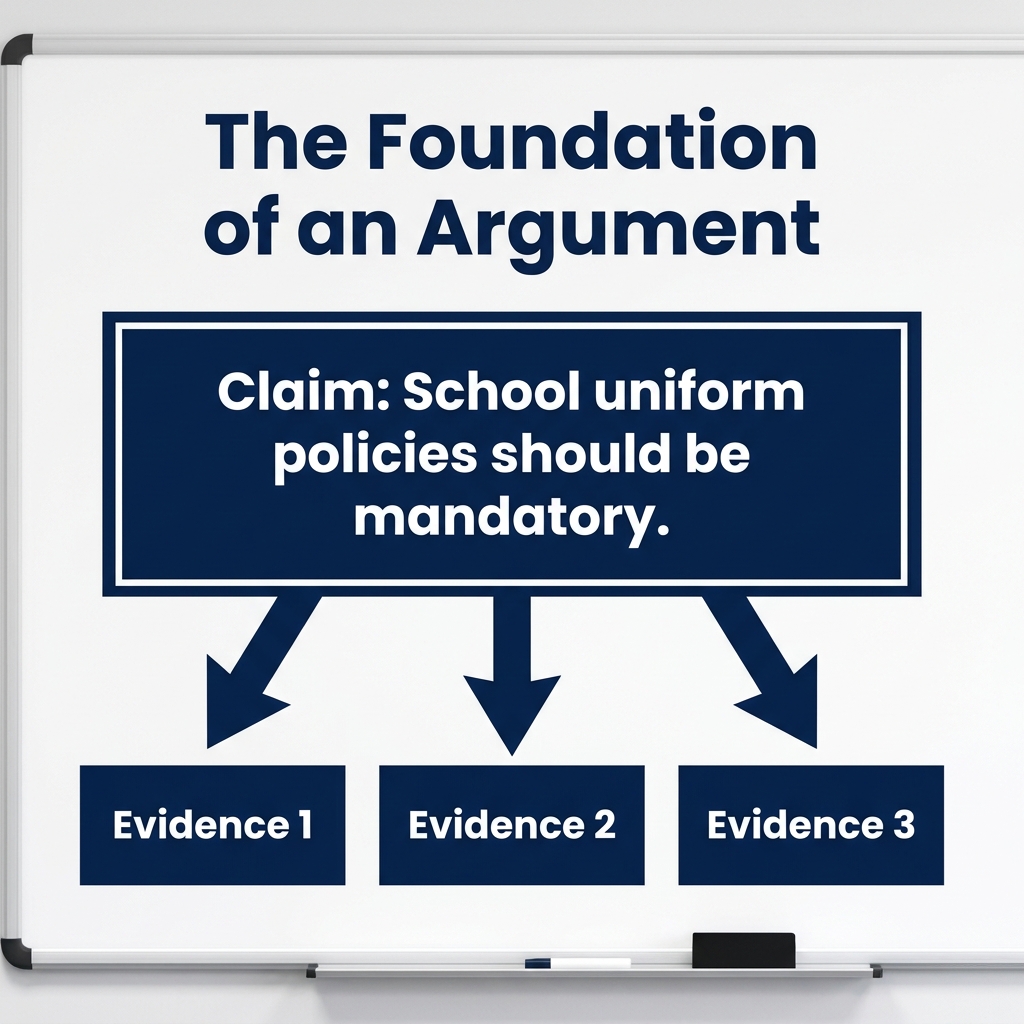
Building Strong Arguments, Drafting effective arguments using logic and supporting points

Writing for Your Audience and Purpose, Tailoring written content to meet specific reader expectations
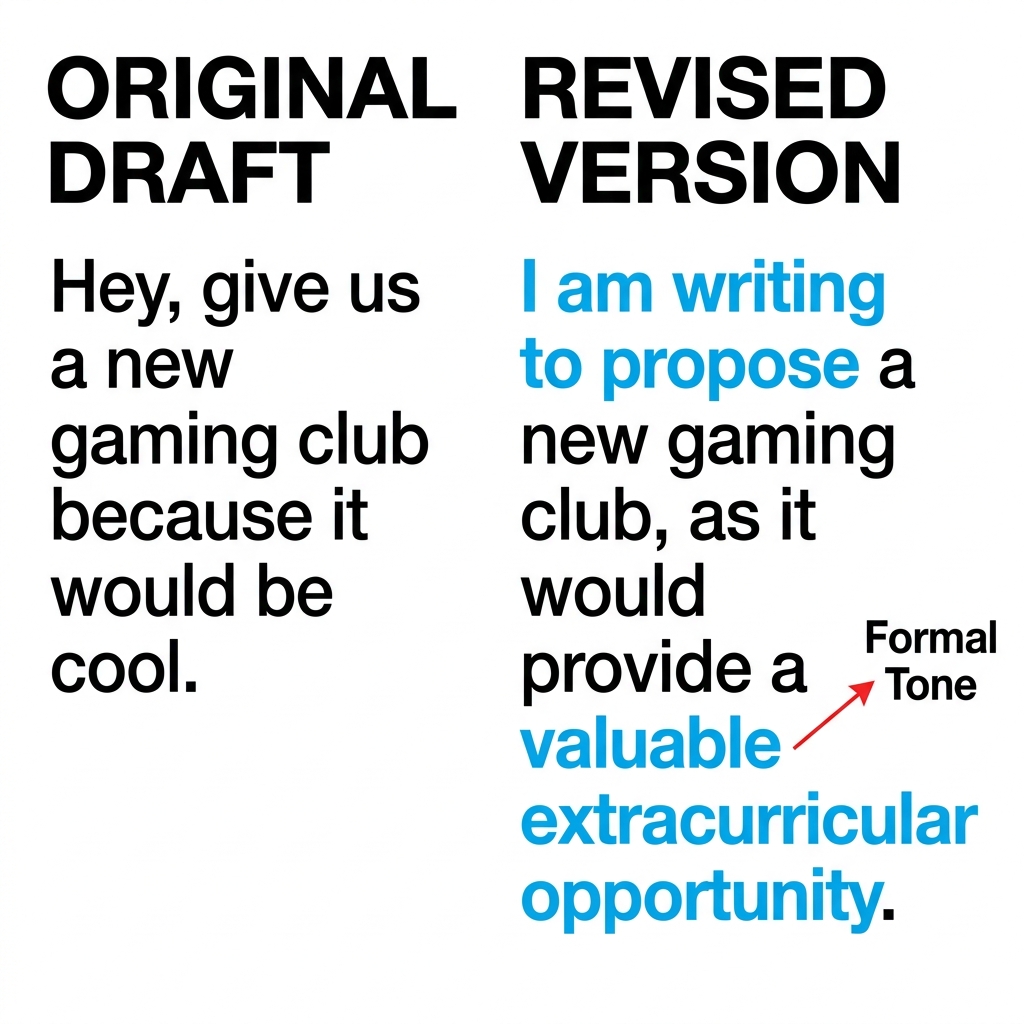
Strengthening Your Writing for Your Audience, Improving writing clarity and tone for intended readers