

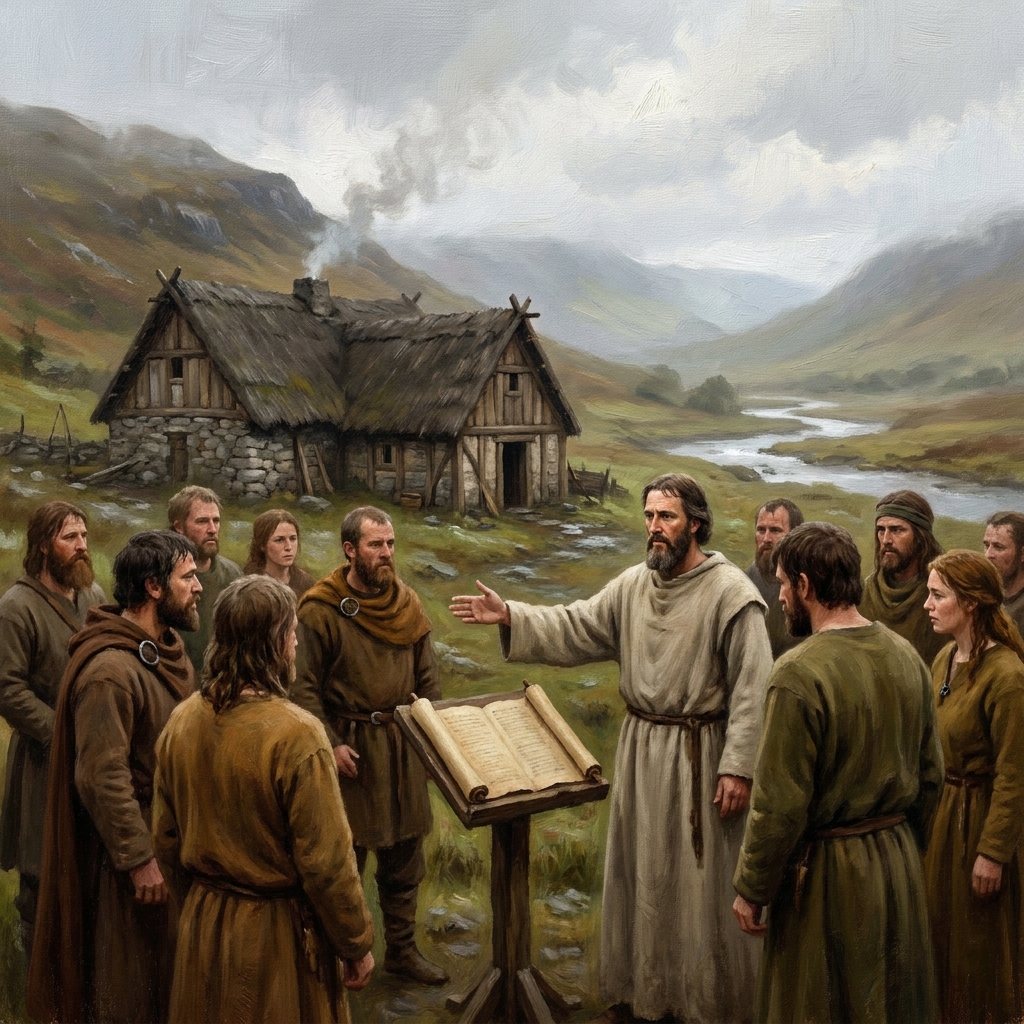
A parent once asked me why the Church was the only thing left standing in Europe after the Roman Empire collapsed. That question is the perfect starting point for any 7th grade social studies lesson on the medieval era. It forces students to look past simple dates and think about how societies function when the central government disappears. This is exactly what The Spread of Christianity in Medieval Europe does for your students.
This lesson is designed to help students analyze the shift in power during the post-Roman period. It centers on the concept of diffusion, which is the process by which ideas, beliefs, or practices spread from one place to another over time. By defining the term early on, the lesson allows students to track how specific cultural shifts occurred across Northern Europe. This seventh grade social studies lesson is ideal for a whole-class assignment or for a student who missed the week and needs to catch up on foundational concepts.
Understanding the state standard
The core of this material is the California-adopted CA.HSS-7.6.2. This standard asks students to describe the spread of Christianity north of the Alps and the roles played by the early church and by monasteries in its diffusion after the fall of the western half of the Roman Empire. You will find that teachers in Desert Sands Unified, Ontario-Montclair School District, San Luis Coastal Unified, and Vacaville Unified are all teaching this same standard because it is a key piece of the state framework for seventh grade history. The standard breaks down into three distinct tasks: tracking the geographic movement of beliefs, explaining how the early Church replaced the Roman administration, and defining how monasteries operated as centers of influence.
The role of the Church after Rome
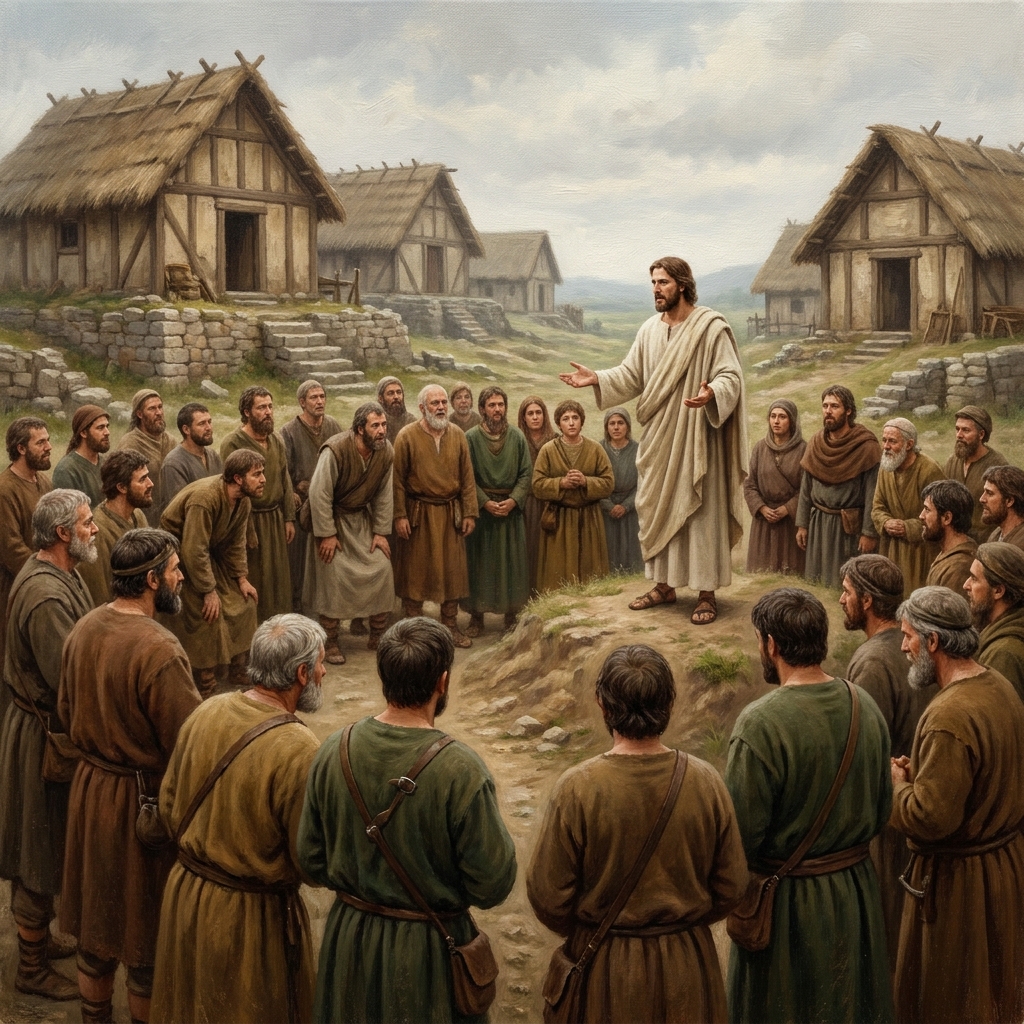
The lesson starts by setting the scene. It explains that after the western Roman Empire collapsed, the central government disappeared. Local communities had to rely on the Church to provide order and leadership. The material uses the decline of Roman roads and the rise of local bishoprics to show how the Church filled this gap by serving as a new center for community life. A bishopric is defined here as the area or district under the care and leadership of a bishop in the Christian Church.
I find this approach helpful because it gives students a concrete reason for the rise of church power. It is not just about religion. It is about administrative necessity. When you explain it this way, students begin to see why the Church was able to reach into rural areas where the Roman government previously failed.
Monasteries and the mechanism of change
The second half of the lesson focuses on the monastery, which is a building or collection of buildings where monks live, work, and pray away from the rest of society. The lesson uses the example of St. Patrick traveling to Ireland to share his faith. He established a monastery, which became a place where people learned new ideas. This is a perfect example of diffusion because a belief moved from one region to another through his work.
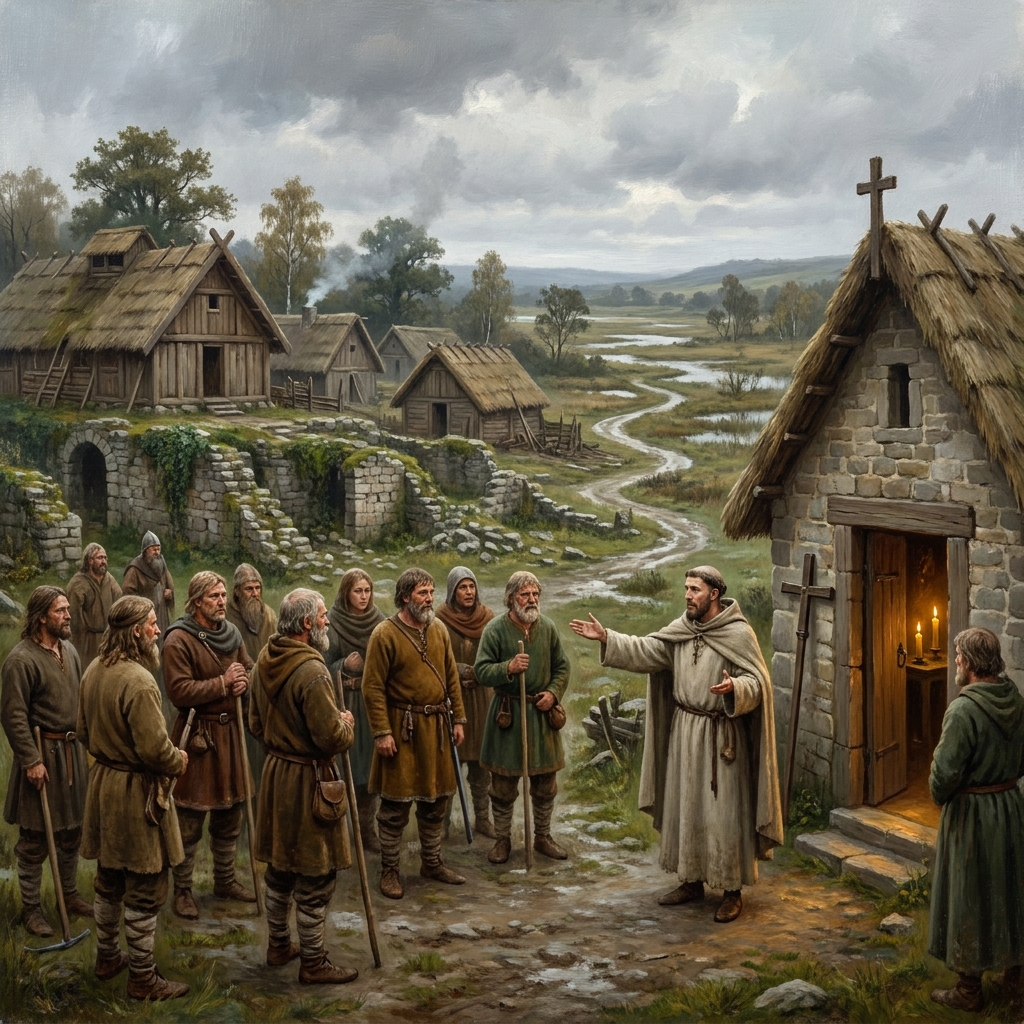
What I appreciate about this section is the guided practice. It moves students from looking at figures like St. Patrick to observing how monasteries influenced local leaders. The lesson mentions that a local chieftain often watched how monks worked on their farms before deciding to change his own ways. This gives students a clear picture of how cultural change happened in small, daily increments rather than overnight mandates.
Why this matters for your classroom
The lesson concludes by connecting these medieval events to the present. The why-it-matters statement notes that understanding diffusion helps us see how our world is connected. Just as monks preserved knowledge that eventually led to modern schools, the ideas we share today shape the future of our communities. This is a good way to help students realize that history is not just a list of names and dates. It is the study of how information moves.
One caveat: ensure you have enough time for the guided practice portion. If you are using this for a substitute day or an independent study session, you might want to clarify the definition of a monastery early on so students do not get stuck on the terminology. Otherwise, the lesson is straightforward and provides a clear narrative for students to follow.
Related lessons
The Counter-Reformation: Reforming the Catholic Church, Examining the Catholic Church response to internal reform challenges
From Mercantilism to Market Economies, Tracing the transition from mercantilist practices to modern markets
Prince Shotoku and the Transformation of Japan, Analyzing the cultural and political shifts in early Japan