

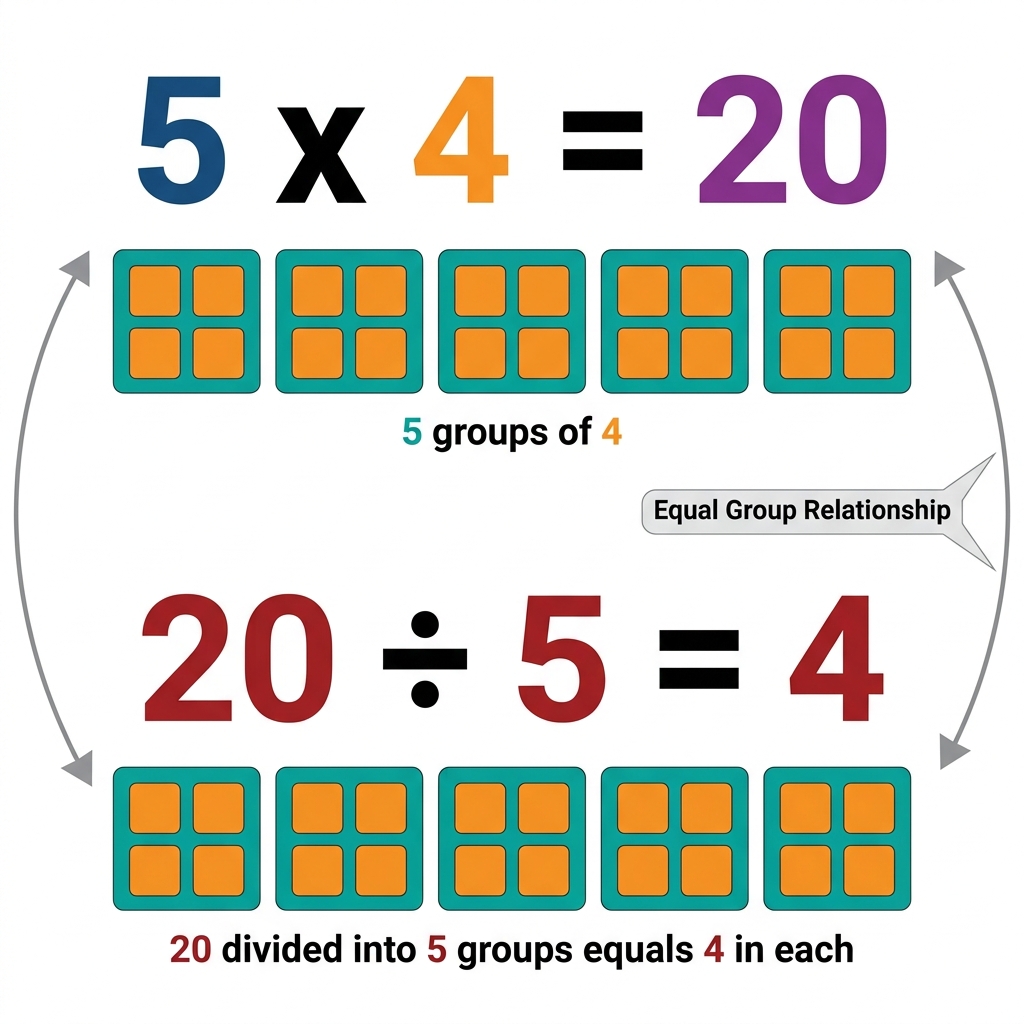
It is common to watch a third grade student sit at a desk and tap every single item in a set to find a total. We have all seen that careful, slow approach. While it works for small numbers, it turns into a nightmare when the quantities grow. In Solving Math Problems with Groups and Arrays, the core objective is to move students away from that one-by-one counting habit. The lesson introduces multiplication and division as the faster, more logical way to handle equal groups, arrays, and measurement quantities. By the time students reach this point in third grade mathematics, they need to see that 20 pencils in 4 cups is not just a pile of pencils, but a division situation waiting to be solved.
How students approach group problems
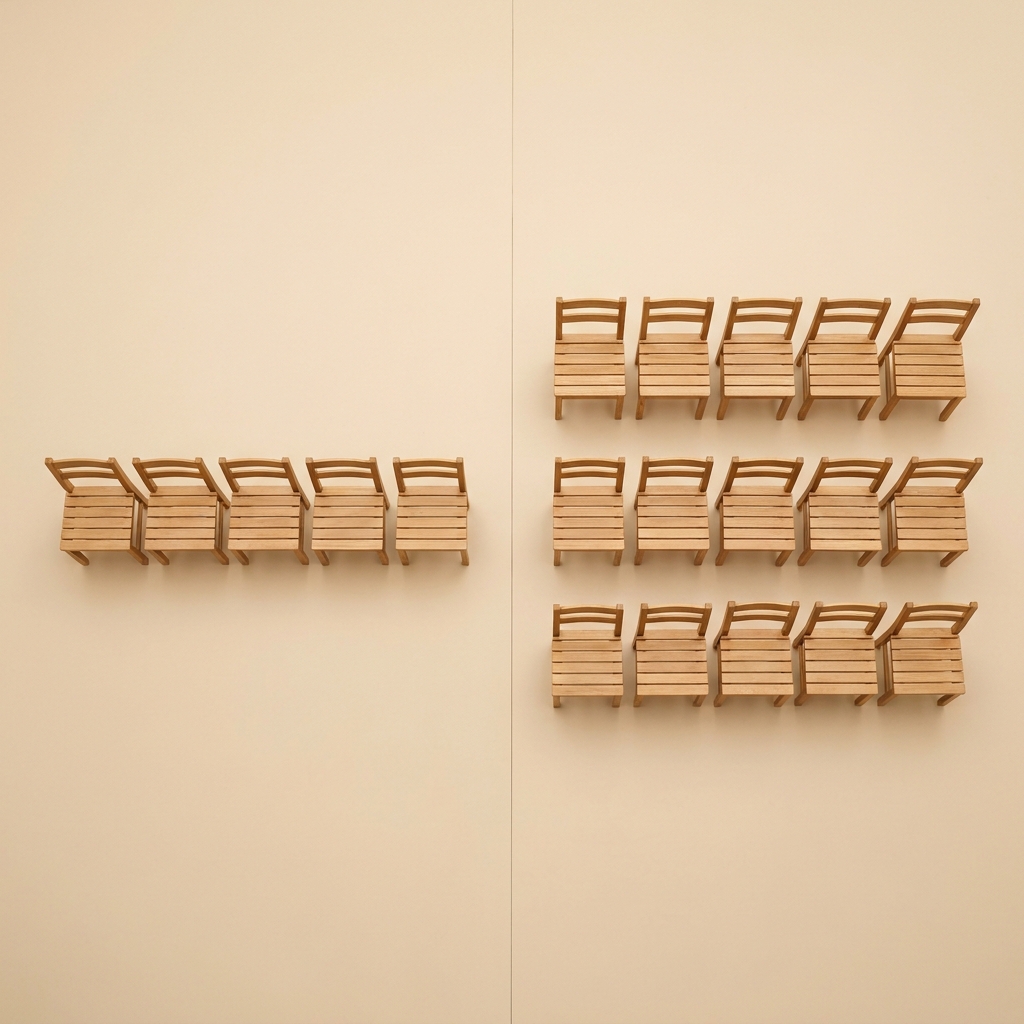
The lesson starts by acknowledging that counting is a fine way to begin, but it quickly pivots to why multiplication is necessary for speed and accuracy. It uses the visual of an array to prove the point. A garden scenario shows 4 rows of 5 tomato plants. The lesson describes this array as a set of objects arranged in equal rows and columns to show 20 plants total. It is a simple, concrete example that clicks for most children because they can see the rows and columns clearly. If they see the pattern of the array, they stop counting the plants and start multiplying the rows by the columns.
Connecting arrays to real math
This work is central to the California-adopted standard CA.MATH.3.OA.3. This standard requires students to use multiplication and division within 100 to solve word problems involving equal groups and arrays. It also includes the California addition which tasks students with solving one-step and two-step word problems. Teachers in Newport-Mesa Unified, Visalia Unified, Sylvan Union Elementary School District, and Vista Unified all use this same standard to build their math blocks. By asking students to identify the operation rather than just finding the answer, the lesson forces them to think about how numbers interact in a group.
Tackling the two-step challenge
The most difficult part for my students has always been the transition to two-step problems. The lesson handles this by using a chef scenario. A chef has 3 trays with 8 cookies each, then eats 4 of them. The lesson walks the class through the math: first multiply 3 times 8 to get 24, then subtract 4 to get 20. This is exactly what the related standard CCSS.MATH.3.OA.A.3 expects of them. It asks for more than just calculating a product. It asks for a student to hold a number in their head, perform one operation, and then use that result for a second operation. It is a big mental leap for a third grader.
Using this in your daily schedule
This third grade multiplication word problems lesson is built for about 45 minutes of work. It fits perfectly as a whole-class assignment when you are introducing the concept. I also find it useful for independent study or as a way to catch up a student who missed the week of initial instruction. Because the vocabulary is clear and the scenarios are easy to visualize, it works well when a substitute teacher takes the room. The definitions for multiplication, division, and arrays are straightforward and provide the necessary support for students to complete the guided practice, which asks them to arrange chairs for a school assembly. It is a solid, focused lesson that does not get distracted by fluff.
Related lessons
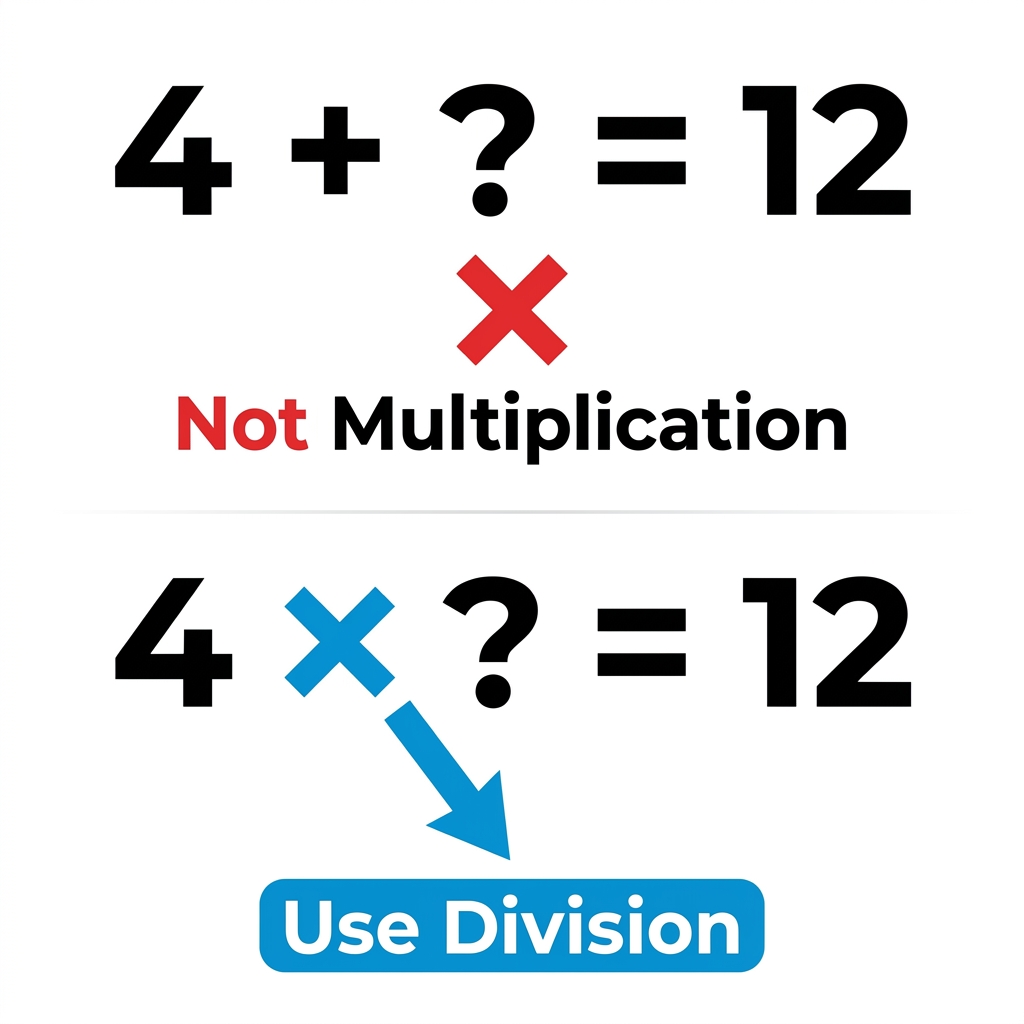
Finding Missing Numbers in Math Equations, identifying unknown values within basic multiplication and division equations
Multiplication and Division Fact Families, understanding the inverse relationship between multiplication and division
Solving Division with Missing Factors, calculating missing factors using division and multiplication knowledge