


This is not a drill meant to fill an hour of time with busy work. It is a concentrated, 15-minute activity for 1st grade math students who are stumbling over subtraction. Instead of just memorizing facts, Finding the Missing Part shifts the mental model of a student from simple subtraction to the logic of addition.
When you have a student who struggles to calculate ten minus eight, showing them the standard way to cross out items can sometimes feel rote. This lesson asks them to think differently. By focusing on the objective: I can find the missing part to finish a group, students look at the total and ask what piece is needed to complete the set. It turns a subtraction problem into a search for a missing addend. This is exactly what the first grade missing addend approach intends to do. It grounds the child in the reality that addition and subtraction are two sides of the same coin.
Understanding the relationship between addition and subtraction
The core of this lesson is straightforward. It is designed to meet CA.MATH.1.OA.4, which asks students to treat subtraction as an unknown-addend problem. This is a significant pivot point in the California Common Core state standards. When a teacher at a school in Twin Rivers Unified, San Diego Unified, Montebello Unified, or Paso Robles Joint Unified introduces this concept, they are using the same framework to help students visualize equations through fact families. The standard asks students to connect the two operations, so they learn that if they know what to add to eight to get ten, they already know the answer to ten minus eight.
You will find that this material is perfect for a student who missed the week of instruction or a child who needs a brief intervention session. Because it takes about 15 minutes to complete, it does not overwhelm a student who is already feeling behind. It is clean, focused, and gets right to the point. The examples provided are clear and help the student visualize the groups they need to complete. This is not about long-form word problems or complex diagrams. It is about the fundamental logic that holds the rest of their arithmetic education together.
How this fits into your classroom routine
I find that many 1st graders slip when they see subtraction because they get stuck on the idea of taking items away, rather than identifying the distance between two numbers. This lesson forces that change in perspective. If you are a counselor or an independent-study coordinator, you want materials that provide immediate feedback. This is a great choice because it gives the student a defined objective that they can master in a single sitting. You can see their progress immediately, and it provides a clear baseline for what they understand about algebraic thinking at this early stage.
One limitation to keep in mind is that some students might still want to count on their fingers for every single problem. You will need to monitor them to ensure they are using the conceptual understanding of the unknown addend rather than just relying on counting. If they have mastered the concept, they should be able to articulate why the missing part is what it is. The simplicity of the layout is the best part. There are no distractions or unnecessary bells and whistles. The screen provides the grouping, the numbers, and the prompt, and the student provides the solution. When they are finished, the result is captured, giving you the necessary insight to decide if they are ready for the next level or if they need a follow-up conversation about fact families. Using this for a quick substitute day or as an independent-study activity provides consistent coverage of the standard without adding extra stress to your day or to the student. It is one of those rare resources that respects the time of both the educator and the learner.
Related lessons
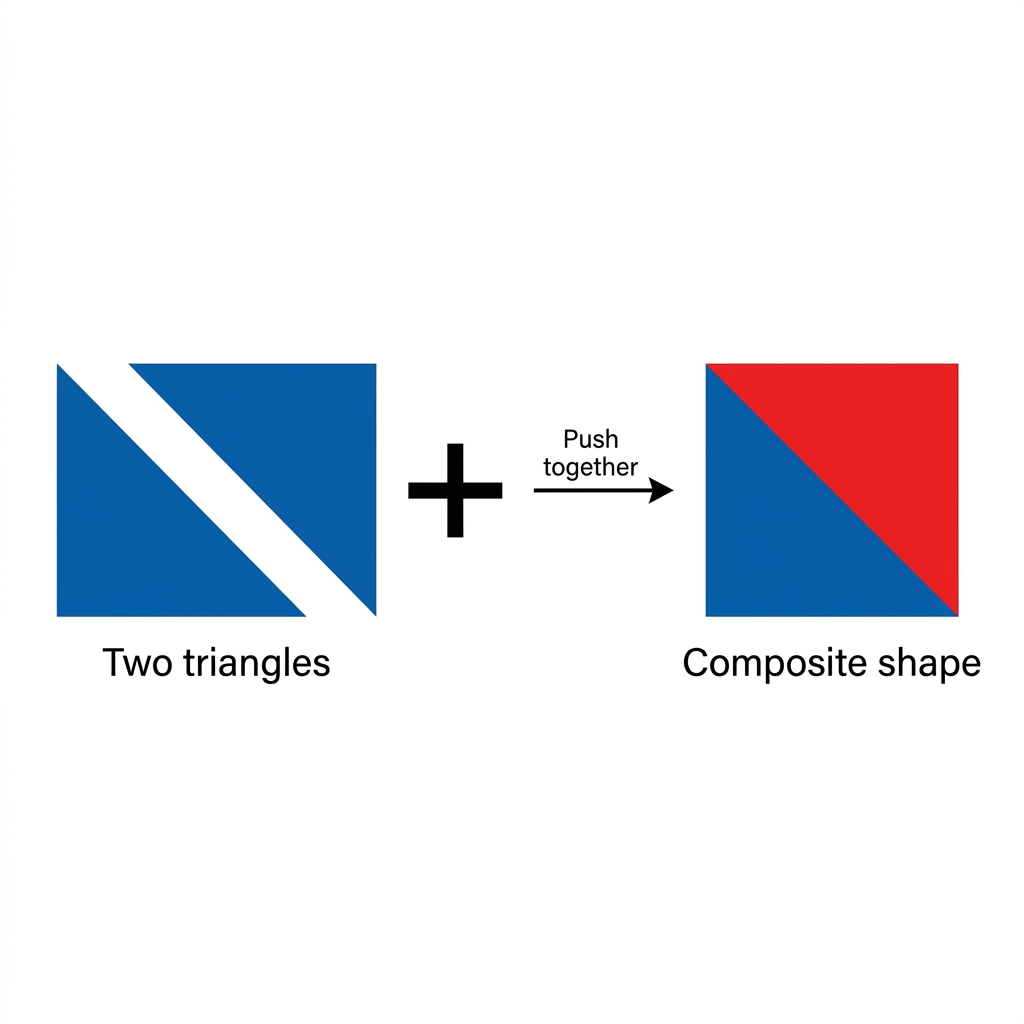
Building New Shapes, Students compose new geometric shapes from smaller, simpler components

Sorting and Counting Our Things, Practice organizing sets of items by category and total count
Counting Groups of Ten, Building number sense through counting by tens and ones