

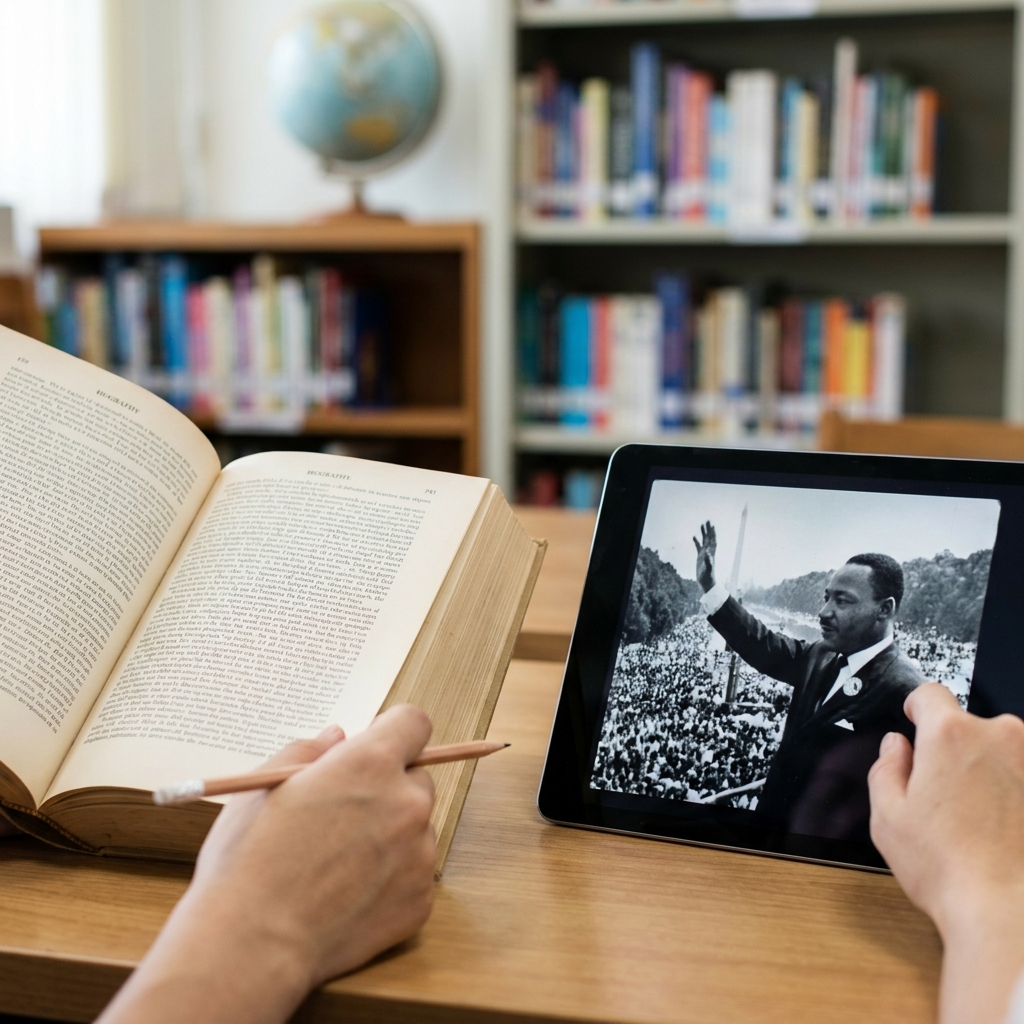
A parent once asked me if it really mattered whether a student read the transcript of a historical speech or listened to the original audio recording. I told them that the medium provides the context, and in seventh grade ELA, teaching students to spot those differences is a core expectation. The Comparing Media: Text, Audio, and Video lesson is designed to help your students understand that the format is not just a delivery system but an active part of the message itself. This 45-minute lesson offers a clean, straightforward way to introduce those concepts without cluttering the class period with unnecessary fluff.
Breaking down the media analysis requirement
When you use this seventh grade media analysis lesson, you are guiding your class through the technical and emotional differences between reading a text and experiencing it through audio or video. The objective is clear: students compare how these formats shape their understanding of the same information. The lesson uses the example of a historical speech to illustrate this point, noting that while a transcript provides a record of what was said, the audio captures the speaker’s tone, volume, and pauses. Those sensory details change how a student interprets the message, and getting them to articulate that change is where the real work happens.
Aligning with state standards
The lesson focuses on the California-adopted CA.ELA.RI.7.7, which asks students to compare and contrast a text to an audio, video, or multimedia version of the text, while analyzing how each medium portrays the subject. This standard also includes a California-specific addition requiring students to integrate visual information with other information in print and digital texts. Teachers in Sacramento City Unified, San Juan Unified, Stanislaus Union Elementary School District, and Carmel Unified are all teaching this same standard as part of their district curriculum. The lesson also supports CCSS.ELA-LITERACY.RI.7.7, which serves as the national foundation for this work by asking students to contrast different media versions of a subject to see how the medium itself affects the portrayal.
I find that my students sometimes struggle to look past the content to notice the form. To bridge that gap, the lesson uses a worked example that contrasts a biography in print with a documentary film clip. It explains that the print version uses detailed sentences to convey a life story, whereas the documentary provides a direct, visual connection to that history through archival footage. It is a solid, relatable comparison. I try to point out to my students that the footage does not just add decoration; it creates an emotional proximity that the written word might handle differently. This helps them move toward the lesson goal of identifying how different formats influence their interpretation of the primary message.
Guided practice and classroom application
One challenge I often face with this topic is that students want to jump straight to the conclusion without doing the analysis. The guided practice in this lesson helps keep them on track by having them work through a passage about a national park. It forces them to stop and consider the specific elements of a travel blog post, such as how the descriptive language functions compared to how a video might represent the same park. This part of the lesson provides a perfect opportunity to move around the room and check in on students as they write down their observations.

I recommend this lesson for a few specific classroom needs. It works well as a whole-class introduction to media literacy, but it is also an excellent resource for a student who missed the week and needs a quick way to catch up on the skill of comparing informational media. It is also well-suited for independent study or a substitute day when you need students to work through a structured, high-quality lesson that requires them to think critically. One minor caveat: prepare your students to talk about tone and pacing. They will need a little encouragement to articulate why a speaker’s pause or a filmmaker’s choice of footage matters to their understanding of the content. Once they start seeing these choices as deliberate, they become much more observant as information consumers.
The why-it-matters statement in the material is spot on. We are surrounded by information, and whether a student is reading a news article, watching a video, or listening to a podcast, the format is always doing some of the work for them. Learning to identify the influence of that format is a lifelong skill. If you use this in your classroom, keep an eye on the guided practice session; that is where the students usually have their best breakthroughs regarding how audio and video can change the impact of written words.
Related lessons

Understanding Author's Purpose and Perspective, Teaches students to identify and analyze the author's primary intended purpose
Analyzing Connections in Historical Texts, Focuses on identifying relationships and connections within complex historical informational texts

Understanding How Authors Organize Information, Examines structural choices authors use to organize ideas and informational content