

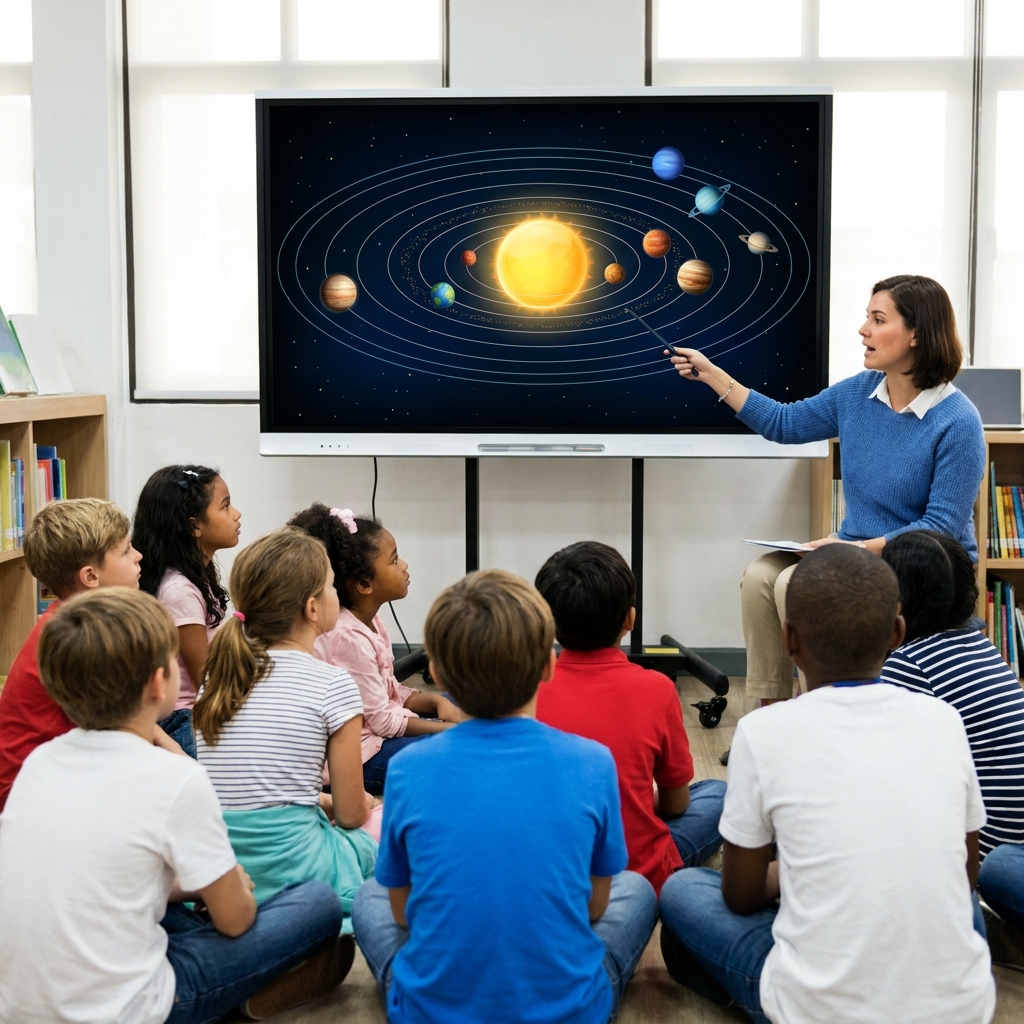
When I watch my third grade students prepare for a class presentation, I often notice a common habit. They get excited about a topic, stand in front of their peers, and immediately start listing every single thing they know. They confuse their classmates by jumping from one interesting thought to another without any plan. A student might talk about the sun, then immediately jump to their favorite snack, and then wander back to the planets. Sharing Facts and Details in Presentations is built to curb this wandering narrative by forcing students to slow down and pick the best bits of information before they start talking. It is a necessary exercise for any teacher who wants to stop the rambling and get students to communicate with intent.
This third grade English Language Arts lesson takes about 45 minutes to finish. It functions well as a whole-class assignment for the middle of a unit, though I have also used it for students who missed the week or as a structured independent study module when we have a student returning after an absence. The core concept is simple: selecting relevant facts and speaking with clarity. The lesson defines an informative presentation as a talk where you share facts and details about a topic to help others learn. It then introduces the difference between relevant facts and just any old thing that comes to mind. Relevant facts are defined as true pieces of information that directly relate to your main topic. The material provides a clear example: a passage about the sun being at the center of the solar system. The speaker tells us that the sun is at the center of our solar system and all the planets move around it. That is a solid, focused fact. In contrast, the lesson warns against adding random opinions that don’t teach the audience anything new. If you need a third grade speaking and listening lesson, this one hits the mark by keeping things grounded in practice.
What the lesson actually asks students to do
The lesson starts with an opener about the monarch butterfly. It lists four stages of life, from egg to caterpillar, then chrysalis, and finally a butterfly. Students study this information to practice separating the essential life-cycle facts from filler content. Then, the lesson moves to guided practice where the class has to figure out how to make a sandwich. This is surprisingly effective because students know how to make a sandwich, but they usually explain it in a disorganized rush. The lesson asks them to pick only the facts that explain what a sandwich is. This helps students realize that talking for a long time is not the same as talking with purpose. The lesson also introduces descriptive details as a tool to paint a picture in the listener’s mind by explaining what something looks, feels, or acts like. When you are teaching this, remind the class that a good presenter should think like a tour guide. The lesson uses the museum tour guide analogy to explain why this work matters. If a tour guide just talks about random thoughts instead of the historical objects, the visitors learn nothing. When the guide speaks clearly at a good pace and focuses on facts, the museum becomes a place of learning. This is how we should treat our classroom presentations.

How this serves the California standards
The lesson is designed around CA.ELA.SL.3.4, which asks students to report on a topic or text, tell a story, or recount an experience with appropriate facts and relevant, descriptive details, while speaking clearly at an understandable pace. This standard is exactly the same for students in Mt. Diablo Unified, Chino Valley Unified, Modesto City Elementary School District, and Moreland School District. Every district expects the same level of focus and clarity. The standard also requires students to plan and deliver an informative or explanatory presentation. The lesson breaks this down into two distinct parts: the planning of the facts and the act of delivering the presentation to an audience. The standard demands that the facts chosen be relevant, and the lesson enforces this by making students select only those pieces of information that support the main topic. When a student recounts an experience, the standard requires them to tell a story about something that happened to them in chronological order. The lesson explains this by highlighting the importance of the who, the what, the where, and the when. By hitting these four points, a student is much less likely to lose their way while speaking. I find that this structure is the most helpful part of the lesson because it gives students a skeleton for their thoughts.
Where students slip
My biggest concern with this type of lesson is that students often think the descriptive details are just extra words. Sometimes they add adjectives that don’t actually describe the experience, like saying a day was simply great. The lesson helps fix this by insisting that details should explain what something looks, feels, or acts like. If a student says the butterfly is pretty, they haven’t used a descriptive detail. If they say the caterpillar is fuzzy and has black, white, and yellow stripes, they have succeeded. You have to push them to be specific. The limitation here is that the lesson is a bit quick, so you might find that your students need a second pass or a chance to practice in pairs before they stand up in front of the whole group. Do not rush the guided practice. When they talk about making a sandwich, let them argue about what makes a sandwich a sandwich. That debate is where the real learning happens. It forces them to sort through which facts belong in their presentation and which ones are just noise. I have found that if I spend an extra fifteen minutes on the sandwich exercise, the actual final presentations are much sharper and easier for the rest of the class to understand. When we teach them to be precise, we are not just teaching them to present; we are teaching them to value the time of the people listening to them.

Related lessons
Working Together in Class, Learning to collaborate with classmates on academic group projects