


A busy classroom schedule often leaves little time for foundational skills, but effective instruction in reading fluency can be both concise and impactful. Teachers frequently look for targeted ways to help fifth graders improve reading accuracy, manage an appropriate rate, and develop an expressive voice without overhauling their existing curriculum.
How reading aloud helps students make sense of text
Imagine a student reading about the stars twinkling in the velvet night. If they just rattle off the words like a grocery list, the poetry vanishes. But if they slow down, maybe soften their voice to match that dreamy, peaceful imagery, the text actually turns into a picture. This is the core of Reading with Fluency and Expression, a lesson designed for 5th grade English Language Arts. It takes about 45 minutes, which is often exactly the amount of time a busy teacher can spare when the calendar starts to feel tight.
We all know how it goes in a typical classroom. You hit the middle of the school year and the curriculum demands pile up. Suddenly, foundational skills that were solid in 4th grade need a quick, sharp refresher to keep pace with the tougher novels and informational texts our students are tackling. Whether it is in San Juan Unified, Ontario-Montclair School District, Hanford Elementary School District, or Selma Unified, educators across the state face the same pressure to balance the heavy lifting of analysis with the quiet work of reading proficiency. Teachers in these districts follow CA.ELA.RF.5.4 to ensure their students can handle complex grade-level texts with confidence. This lesson handles that requirement directly by teaching students how to read with accuracy, appropriate speed, and that necessary expressive tone.
Understanding the fluency standard
The standard CA.ELA.RF.5.4 is one of those foundational markers that determines how much a student gains from their reading time. It asks for three distinct things. First, part (a) expects students to read on-level text with purpose and understanding. Second, part (b) focuses on accuracy, rate, and expression in both prose and poetry. Finally, part (c) requires students to use context to self-correct their own recognition of words, building the habit of rereading when something does not make sense. It is the California-adopted standard for ensuring that reading is not just about decoding symbols on a page but about conveying meaning.
Fluency is not just about speed. I have seen plenty of students race through a paragraph only to realize at the end that they have no idea what they just read. True fluency, as this lesson breaks it down, means reading at a natural speed while using voice to reflect the mood or feelings of the characters. The lesson uses specific vocabulary to help students internalize this. It defines Fluency as the ability to read accurately and at a natural speed with expression. It defines Expression as changing your voice to show mood or character feelings. Finally, it defines Accuracy as reading words correctly and using context to self-correct misread words so that the original meaning remains intact.
Where this lesson fits into your week
Finding the right moment for a dedicated fluency lesson can be tricky. Because this material is built as a self-contained digital module, it works well as a whole-class assignment when you have a day where you need to get back to basics. It also shines for a student who missed the week, as they can log on and work through the concepts of accuracy and expression without needing you to stop the rest of the class to explain it all again. It is also quite effective for independent study or as a backup for a substitute day.

I find that students respond well to the way the lesson connects to real-world communication. The lesson brings up the example of news anchors. We have all heard a news anchor read with a flat, boring voice, and we know that we stop listening. If that person does not use expression, we lose the sense of why the news matters. This is a simple but effective way to show a 5th grader that reading well is not just a school task. It is a way to communicate significance to an audience.
Getting students to practice and self-correct
The guided practice in this lesson is straightforward. It moves away from the abstract and asks students to work on a story about a character who finds a hidden treasure inside an old chest. By taking a narrative text and forcing the student to consider how that character feels about finding a treasure, the lesson encourages the student to adjust their pace and tone. If they are reading too fast, they might miss the excitement of the discovery. If they are reading too flatly, the wonder of the treasure is lost.
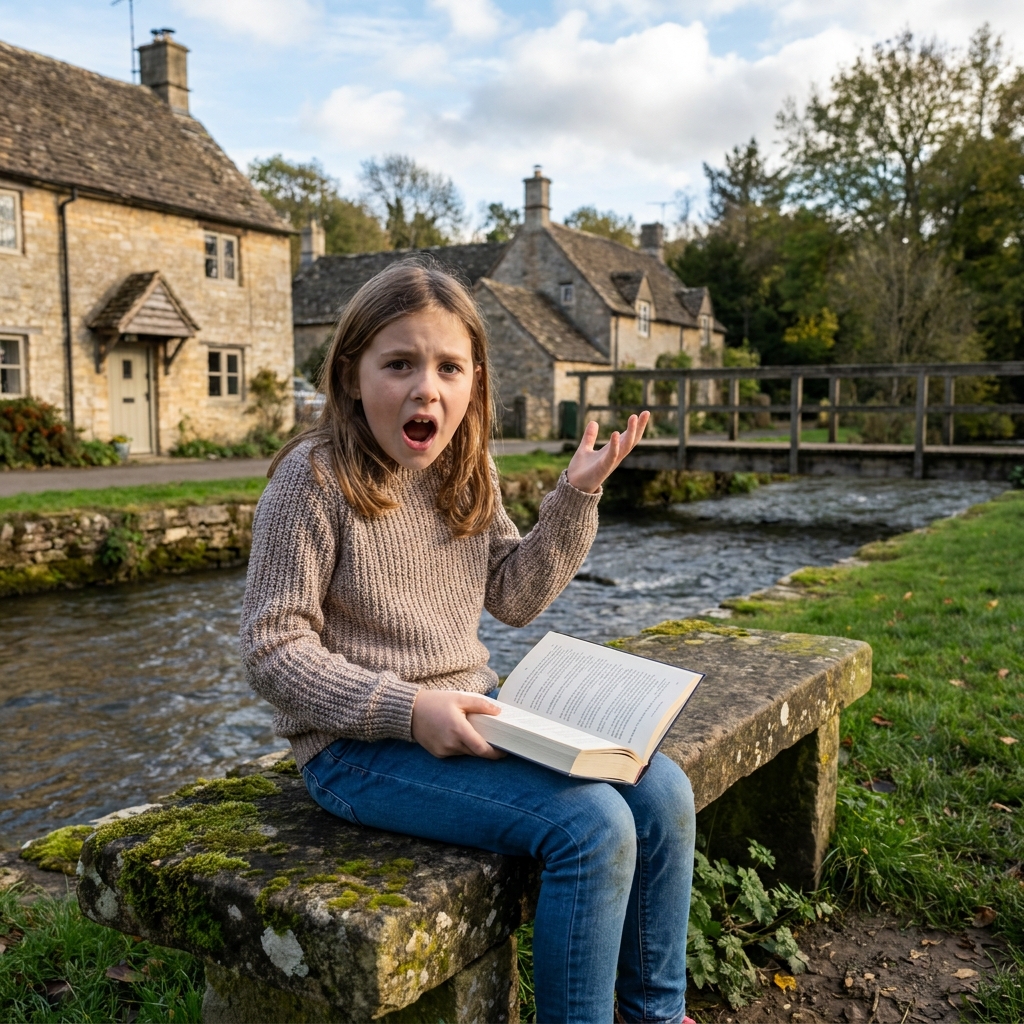
One caveat I always share about fluency work is that some students will be self-conscious about reading aloud. Even by 5th grade, performing for a digital tool or for the class can trigger anxiety. I usually suggest that students practice this at their desks, perhaps whispering to themselves first, before they try to record themselves or read to a peer. The lesson itself suggests that good readers pay attention to how they sound, using their own voices to make a story come alive, like the example of the mystery story set in a village by a river. The goal is not a perfect theatrical performance. The goal is to reach that stage where the mechanical act of reading becomes automatic enough that the brain can focus entirely on the meaning of the words. When you see a student finally realize that they can control the story with their voice, the shift in their comprehension is usually immediate and permanent.
Related lessons
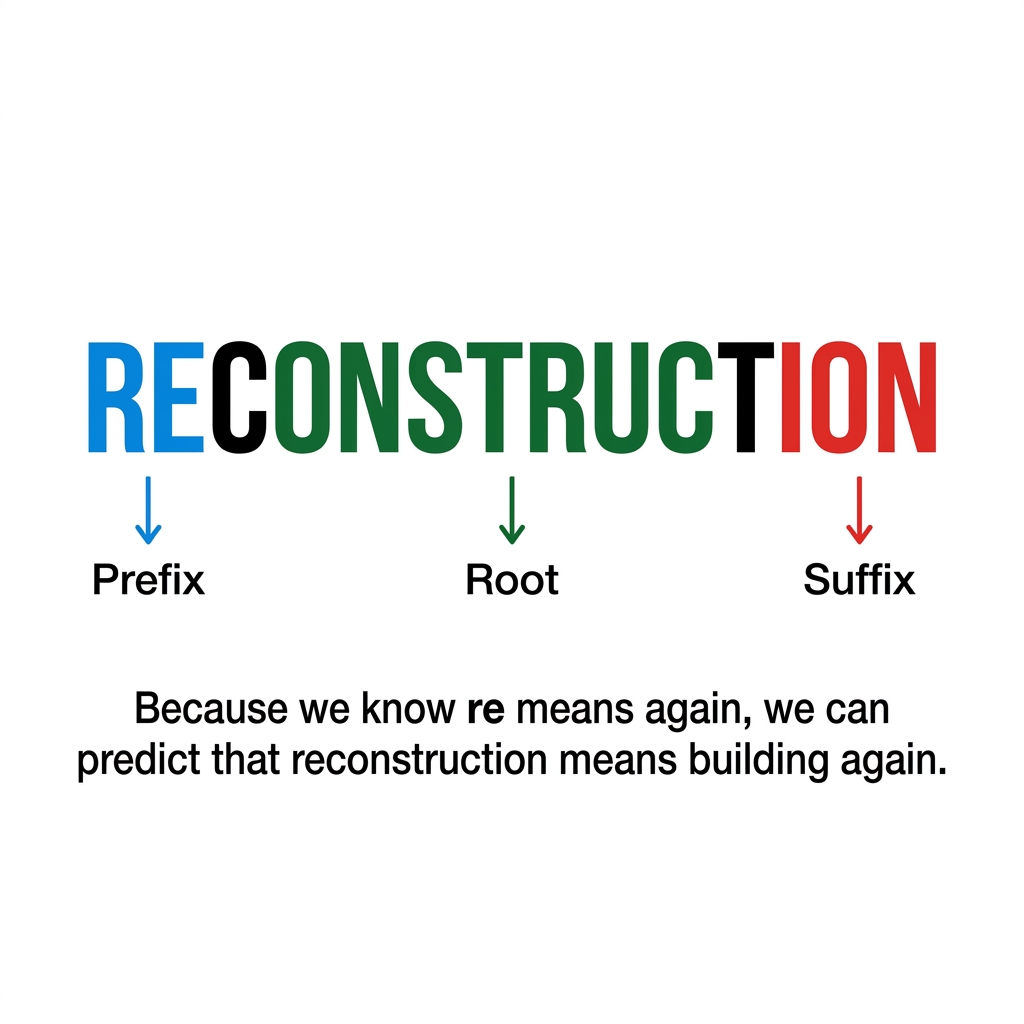
Decoding Complex Words with Morphology, Teaches students how to break down complex words using morphology