


High school government teachers understand the difficulty of teaching students to parse news sources in a digital age. By the time students reach their twelfth grade year, they are constantly bombarded with information, yet they often struggle to distinguish between a verified report and a viral opinion piece. Finding the right tools to address this is essential for a senior civics course where teachers need to move beyond theory and talk about how the sausage of public perception is made.
Setting the stage for political literacy
I have been looking at Media Influence in American Democracy, a social studies resource that actually addresses this head-on. It is a solid choice for any high school government instructor. This is exactly the type of challenge educators face across the state, from the Grossmont Union High School District to the Kern High School District, and from Tulelake Basin Joint Unified to the South Pasadena Unified. Every one of these districts is working toward the same goal under the California-adopted CA.HSS-PoAD.12.8 standard. This standard asks that your students evaluate, take, and defend positions on how the media influences American political life. It is not just about identifying bias; it is about recognizing the power structures behind the screen. When students understand these power structures, they are better equipped to handle the media environment they will encounter as adults.

How the lesson builds critical thinking
The lesson starts with a reality check on agenda-setting. It gives the perfect example of a local news station choosing to report on a city council infrastructure project costing 5 million dollars. By highlighting that specific expenditure, the media is deciding what is important for the public to care about. I find this approach effective because it shifts the focus from the content of the news to the choice of the news. Students need to see that journalists are not just passive observers, but active agents who curate the political landscape. When they understand agenda-setting, they start to ask why certain issues surface at certain times. It forces them to look at the process of selection rather than just the final news product.
From there, the media influence lesson plan introduces the concept of framing. This is where the lesson shines. It distinguishes between the neutral reporting of an investigative journalist exposing government corruption, which the material rightly labels as a watchdog role, and the persuasive, often manipulative, nature of political campaign ads. The distinction is stark and helps students grasp why media influence is not inherently malicious, but certainly necessitates a critical eye. They explore the vocabulary of framing, which is defined as the way media emphasizes specific details to push an audience toward a particular interpretation. It is a powerful concept to give to a senior who is about to vote. Understanding framing helps students see how two different sources can report on the same event while emphasizing completely different details.
Applying the concepts to modern social media
The guided practice moves into the thornier territory of social media. The lesson asks students to examine how short videos can be stripped of context to disparage a candidate. In a world of constant information saturation, this is where many of my students get tripped up. The lesson acknowledges that our current landscape makes it tough for citizens to separate opinion-based talk shows from objective reporting. I appreciate that it does not just tell them what to think; it asks them to defend their position on whether this complex environment is a net benefit or harm to our democracy. That is exactly the kind of cognitive heavy lifting they should be doing at this age. They must learn to apply the principles of agenda-setting and framing to the content they encounter on their own social media feeds every day.
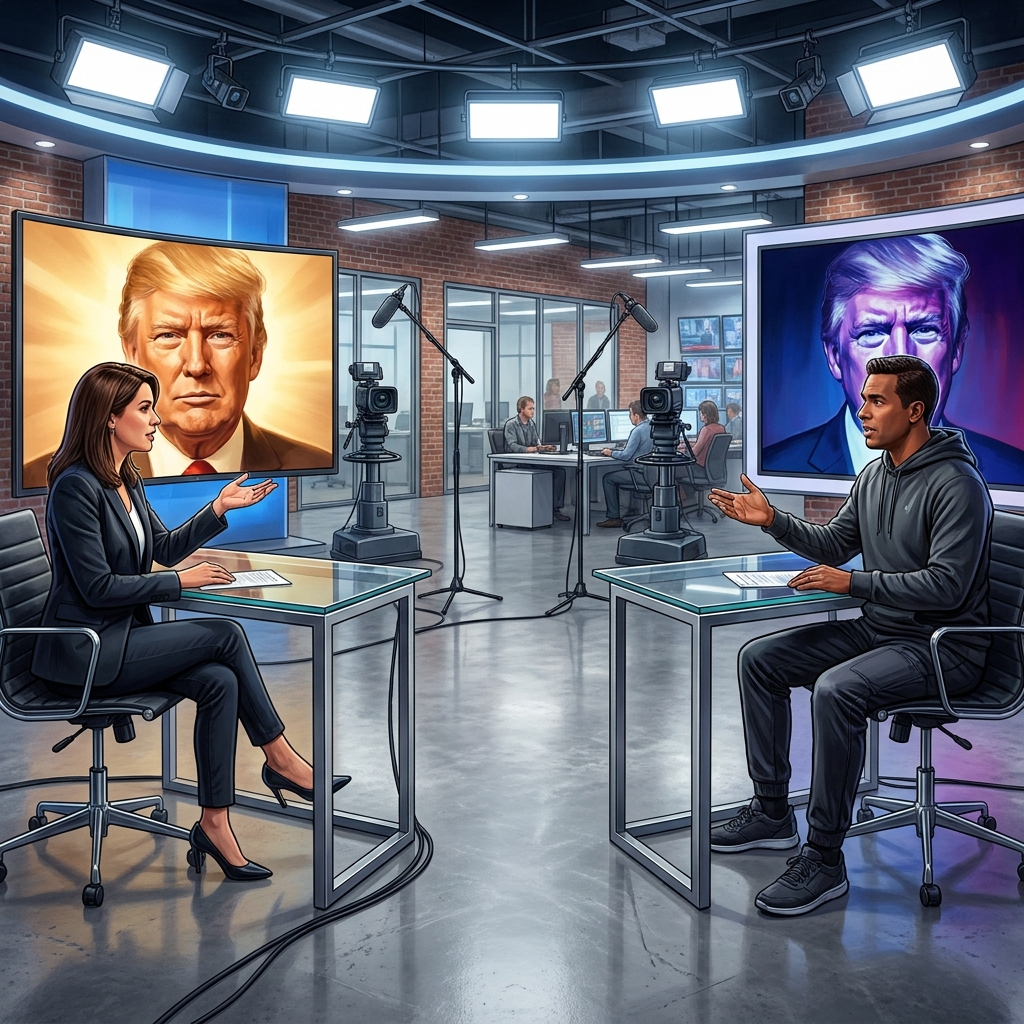
Partisanship is the final hurdle addressed in the text. By defining partisanship as a strong loyalty to a political party that often leads to favoring one side, the lesson gives students a tool to spot when their own information sources are leaning too far in one direction. It makes it clear that being an informed citizen requires the proactive verification of political claims. If you are prepping for a unit on political communication, this lesson is a great fit for a whole-class assignment. It also works beautifully for a student who missed the week and needs to catch up on the core competencies of the unit, or even as a structured independent study module. Just be prepared for some spirited debate when they reach the final task of defending their own positions on media influence. It is this type of active engagement with the CA.HSS-PoAD.12.8 standard that ensures students are prepared to participate in the democratic process with a clear and analytical mind.
Related lessons
The Amendment Process: Changing the U.S. Constitution, Covers the formal process of modifying the United States Constitution
Courts and Jurisdictions: The American Judicial System, Explains the hierarchy and roles within the American judicial system
Evaluating Election Campaigns, Examines the strategies and mechanics of modern American election campaigns