


I look at a draft from one of my first grade English language arts students. It reads: “I went to the park. It was fun.” My heart sinks just a little because I know they have so much more to say, but they do not know how to pull it out of their heads and onto the page. They think the story is finished because they wrote a sentence. This is the common hurdle we face in first grade when we want students to move beyond the bare bones of a narrative. They lack the habit of looking back at their own words.
The lesson Adding Details to Our Writing addresses this exact issue. It provides a structured way for students to think about their own work differently. The core concept here is that a writer can add specific details to make a story better and more interesting for the reader. It is simple, but for a six-year-old, it is a significant shift in thinking. The material forces them to pause and consider if they have told the whole truth of their experience or just the summary of it.
How students learn to expand their ideas
The lesson focuses on the objective: “I can add details to make my story better.” Instead of just writing that a day was fun, the material prompts students to consider why it was fun. Did they slide down a fast slide? Was the grass soft? Did they eat a cold popsicle? The lesson guides them to look at their initial sentences and ask what might be missing. This first grade writing practice is helpful because it frames revision as an act of discovery rather than a correction of a mistake.
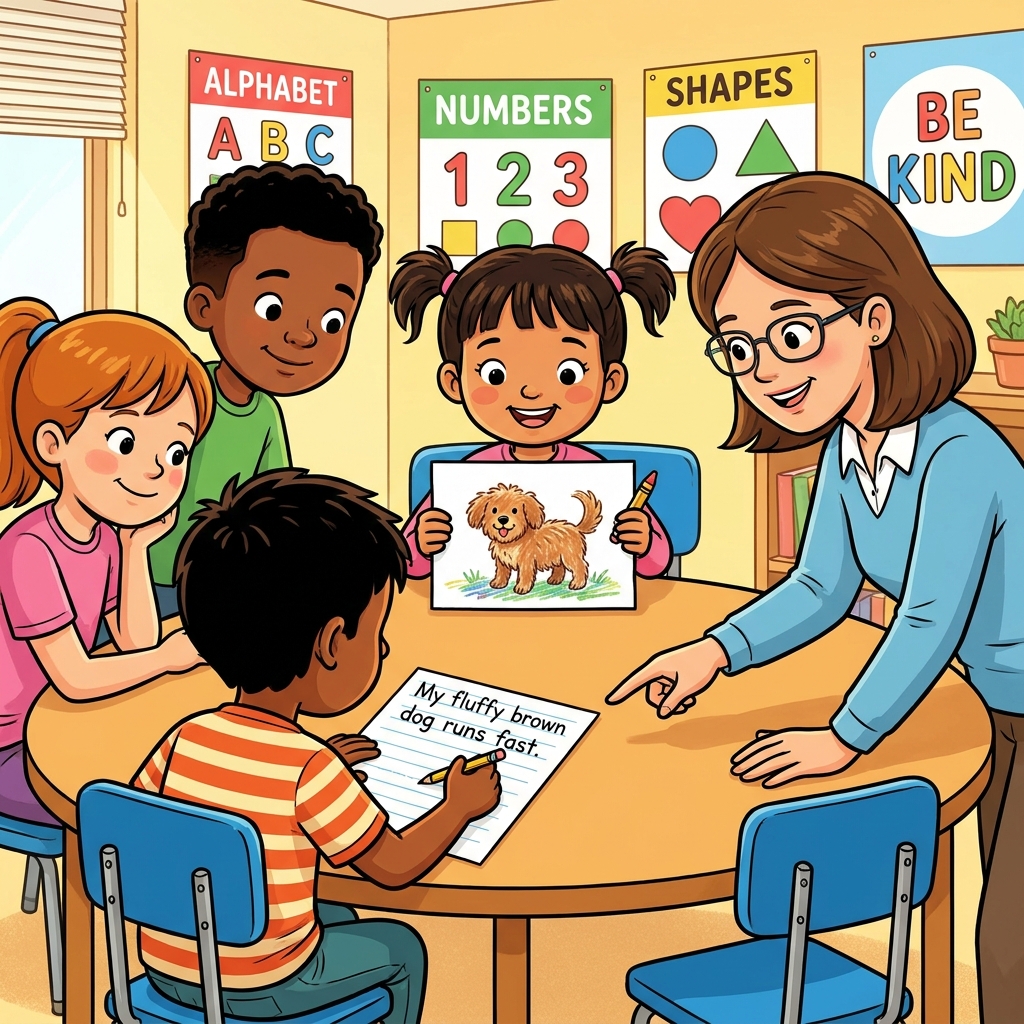
This approach falls under the standard CA.ELA.W.1.5, which is a California Common Core standard for writing. It asks students to work with guidance and support from an adult to focus on a single topic, respond to questions or suggestions from their peers, and add details to strengthen their writing. The standard is designed to ensure students understand that writing is a process of editing and refinement. The guidance part is essential because students often feel like their first draft is a sacred, unchangeable text. When we show them that even a teacher adds details, it makes the process feel much more natural. This is the same standard taught in classrooms from Pomona Unified to Los Angeles Unified, and throughout the Merced City Elementary School District and Hayward Unified.
Why this lesson fits your classroom
I find this lesson works best when you are working on a whole-class assignment to get everyone to the same starting point. It is also a solid resource for an independent study session or a student who missed the week and needs a quick way to catch up on the writing mechanics we covered. The material is short, about 15 minutes, which is perfect for maintaining the attention of a six-year-old. You can run this in a small group or project it for the whole class to see and discuss.
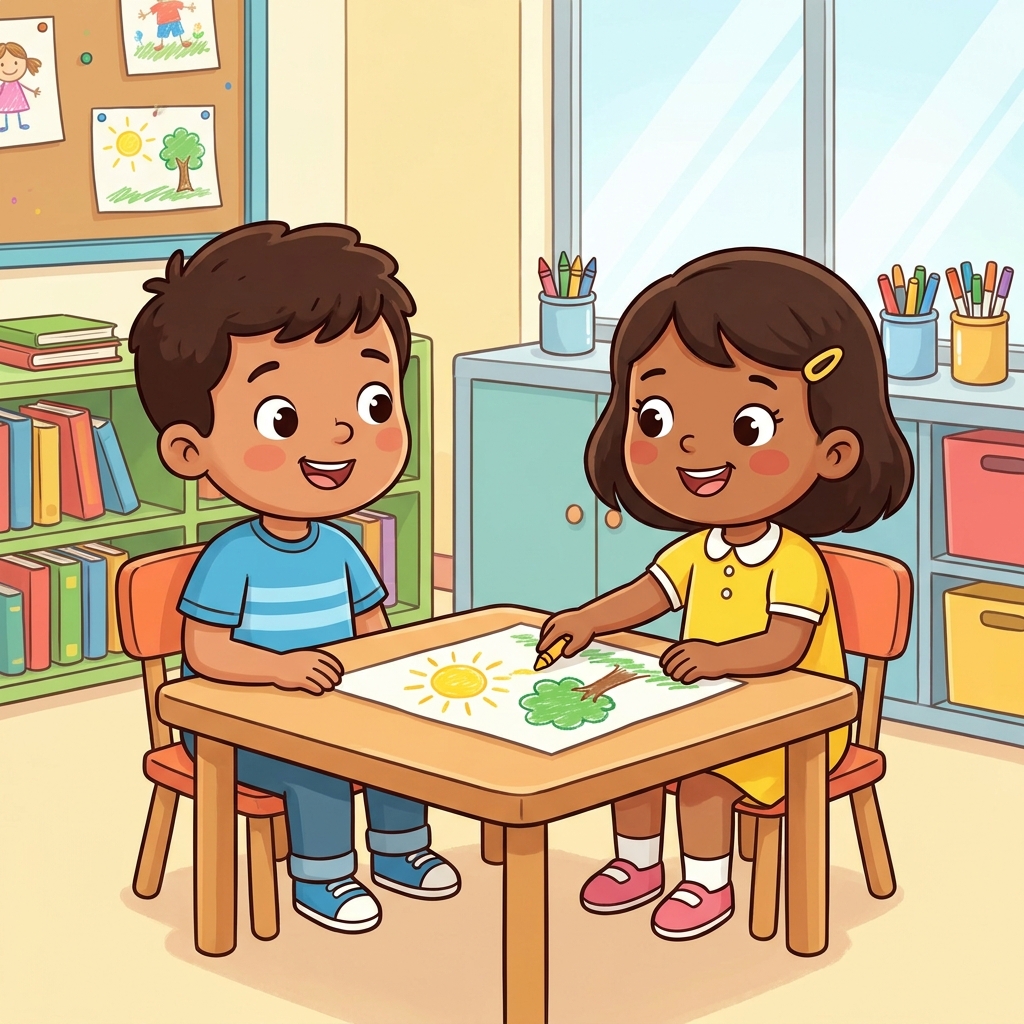
The one caveat is that you should be prepared to facilitate the peer feedback part of the standard yourself at first. Some students in this age range tend to just agree with their partners without giving or receiving meaningful advice. If you model the kinds of questions that prompt a detail, such as “What did you see?” or “What color was the dog?”, your students will quickly learn how to ask each other these things. Once they hear the right questions, they will start asking them on their own. It takes patience, but once a child learns to ask their own questions to add more, their writing output grows significantly. Seeing them realize they can control the richness of their own stories is one of the better moments you will have in a first grade classroom.
Related lessons

Pictures and Words, Using illustrations and text to convey a clear message
Following Two-Step Directions, Completing tasks by carefully listening to two sequential instructions

Sounds in Words, Recognizing and isolating individual phonemes within simple written words