

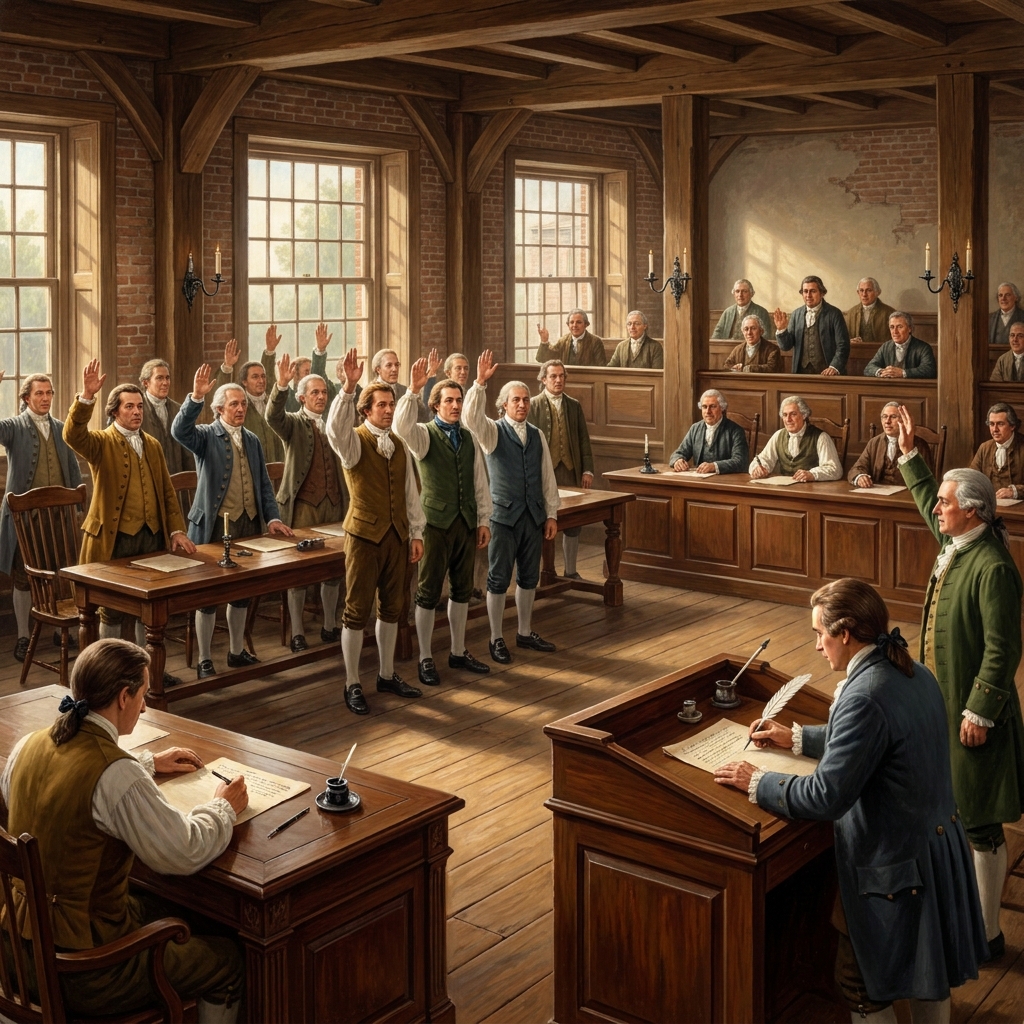
I remember a student asking me why we cannot just change the law overnight when something in our society stops working. It is a common frustration, but it misses the deliberate slow-down built into our governing framework. In a high school Government or Principles of American Democracy class, you need tools that show students exactly why that process exists, rather than just telling them that it takes a long time. The lesson titled The Amendment Process: Changing the U.S. Constitution is exactly what you need to bridge that gap between theoretical civics and historical reality.
This twelfth-grade Social Studies lesson focuses on the objective of explaining the two-step process Congress and the states follow to make changes to the United States Constitution. It sets the stage by comparing government procedures to organizational bylaws, explaining that just as a board of directors follows rules to change how an organization operates, our country must follow Article Five. By grounding the theory in this simple comparison, your students can start to grasp why the founders wanted the system to be rigid. Teachers in the Chaffey Joint Union High School District, Mt. Diablo Unified, El Dorado Union High School District, and Sierra-Plumas Joint Unified all cover this requirement as part of the state-mandated curriculum for government studies.
What the lesson actually asks students to do
This high school government amendment lesson walks students through the formal requirements for changing our governing rules. It defines key vocabulary like amendment, which is a formal and permanent change or addition to the text of the Constitution, and ratification, the official process state legislatures or conventions use to approve those changes. Students also work with the concept of a supermajority, which requires more than a simple majority vote specifically two-thirds in Congress or three-fourths of the states to ensure broad consensus before anything becomes law.

The lesson uses the 19th Amendment as a concrete, worked example. It details how the amendment granted women the right to vote after achieving the necessary two-thirds supermajority in both the House and the Senate in 1919. This is the heart of the proposal stage. Once your students grasp that specific scenario, the guided practice section asks them to imagine that an Equal Rights Amendment has been proposed by Congress and then work through the required pathway to success. It forces them to apply the mechanics of government rather than just memorizing a definition. You will find that this material works perfectly for a whole-class assignment, an intervention session for students who struggled during the initial lecture, or even for a substitute teacher day when you need the class to remain productive and focused on the core curriculum.
Where students slip
The biggest hurdle for students is usually the distinction between proposal and ratification. They often think that Congress has the final say, forgetting that the states hold the true power of ratification. Use the why-it-matters section of the lesson to address this head on. It explains that understanding this process is vital for informed citizenship, allowing students to follow news about proposed laws and understand why the government moves slowly on fundamental changes. It is a protective mechanism that prevents single leaders from changing our governing rules easily. This is the exact intent behind the standard CA.HSS-PoAD.12.4.2, which asks students to explain the process through which the Constitution can be amended.

This standard is part of the California-adopted standards for Principles of American Democracy. It is found within the cluster of standards requiring students to analyze the unique roles and responsibilities of the three branches of government as established by the U.S. Constitution. If you see a student struggling during the guided practice, point them back to the distinction between the two steps. Most often, they get lost because they assume the process is linear or simple, when in reality, it is intentionally cumbersome to ensure that only changes with broad consensus actually move forward. When you incorporate CA.HSS-PoAD.12.4.2 into your weekly planning, you are not just teaching a set of rules, you are teaching them how the structure of our democracy functions to protect us from impulsive legislative shifts.
Keep an eye on the students who rush through the proposal stage. They often want to jump to the finish line without accounting for the three-fourths of the states requirement. Remind them that a supermajority is the filter for our most important governing decisions. If they can articulate the struggle of gaining that much agreement, they have mastered the lesson.
Related lessons

Political Philosophies and Governance, Examines various political theories that shape modern democratic governance structures

Locating Your Federal Representatives, Teaches students how to identify their elected federal government officials
Understanding the Bill of Rights, Covers the first ten amendments and their role in protections