

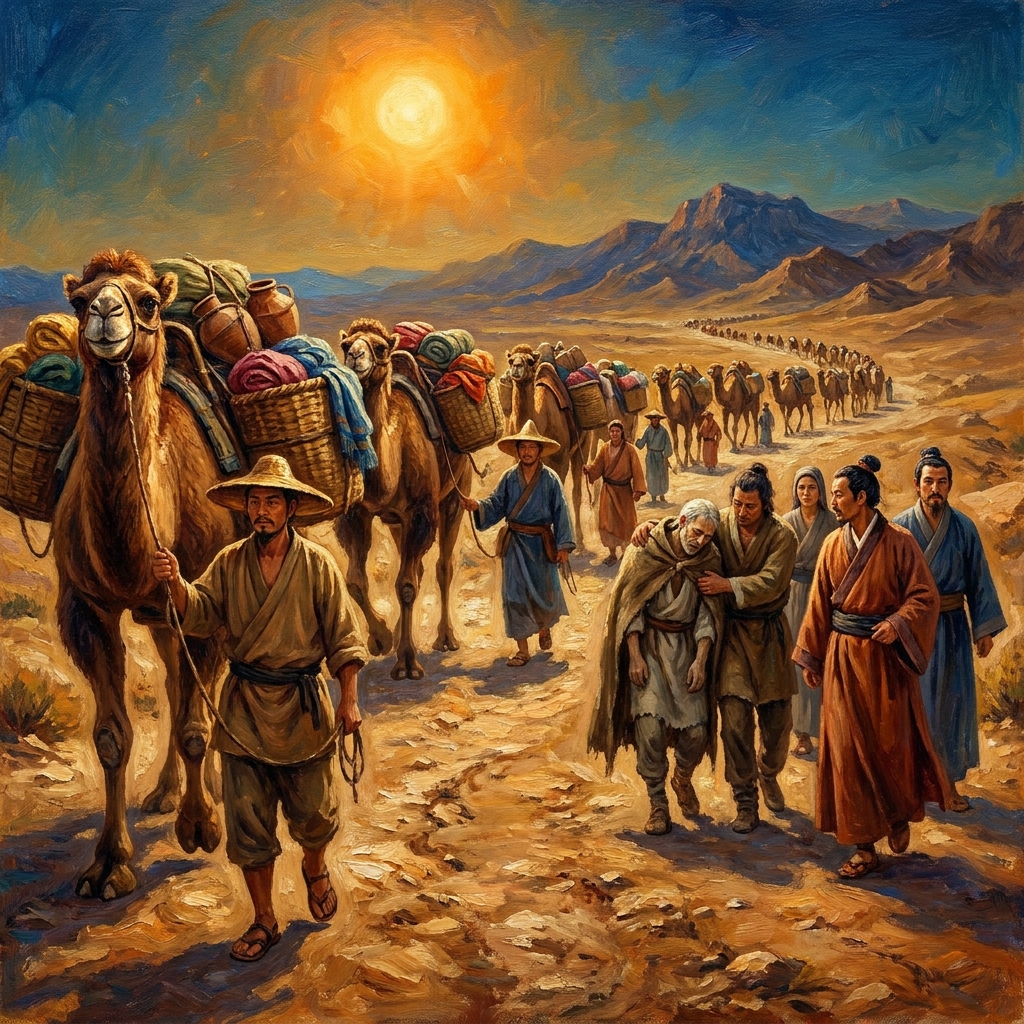
When you start planning your unit on the Middle Ages, the bubonic plague often feels like a topic that could take three weeks or three minutes. You do not need an entire month to get the point across, nor do you want to skim over it so quickly that the students lose the gravity of the event. The Spread and Impact of the Bubonic Plague provides a focused approach that keeps the history grounded in geography and trade. This 7th grade social studies lesson works well because it prioritizes the mechanics of how a pathogen travels through a society over just listing dates or kings.
This lesson asks students to understand the connection between human activity and disease movement. It avoids getting stuck in the gruesome details and instead uses the Silk Road as a way to visualize how pathogens move across borders. The objective is for students to see that the plague was not just a biological disaster but a result of interconnected global trade. The lesson material defines three specific terms that your students need to know before they begin their work:
- pandemic: A widespread disease that spreads across many countries or continents, affecting a large portion of the population.
- trade network: A system of connected routes and markets that allows people to exchange goods and ideas over long distances.
- demographic: The study of human populations, including changes in the number of people living in a specific area.
The core of this 7th grade bubonic plague lesson is to teach students that when people congregate or share resources, disease spreads. The lesson uses the Silk Road as a primary example of a path that linked China to the Middle East, allowing both goods and sickness to travel across thousands of miles. This helps students grasp why trade hubs were the first to experience the impact of the disease. Teachers in Fresno Unified, Clovis Unified, Gridley Unified, and San Jacinto Unified teach this same content to ensure students across the state have a clear grasp of historical geography.
Understanding the standard
The lesson specifically addresses CA.HSS-7.6.7. This California-adopted standard asks that students map the movement of the plague from Central Asia to China, the Middle East, and Europe. It also requires an analysis of how this movement changed global population numbers. It is a manageable standard, but it requires students to look at a map and actually think about why a port city would be more susceptible to an outbreak than a landlocked village. You want your students to connect the economic value of trade with the vulnerability of the population during the fourteenth century.

Where students slip
The hardest part for students in this lesson is the shift toward the demographic aspect of the disease. They can easily trace a line on a map, but asking them to imagine a city losing half its population in a single year requires a bit of coaxing. When you get to the guided practice, use the port city scenario to bridge this gap. Have them talk about why ships coming from different regions created such a high risk for cities on the coast. I find that when students frame the disease as a passenger on a trading ship, the logic behind the spread becomes much clearer. The lesson includes a why-it-matters section that links these historical patterns to how we view global health today. I suggest you spend a few minutes at the end of the class talking about this link so the students do not just view this as an isolated historical event.
Classroom implementation
You can use this material for a few different needs. It functions well as a whole-class assignment when you have forty-five minutes to dedicate to the medieval period. It is also a solid option for a student who missed the week, as the independent study flow of the lesson provides enough context for them to catch up without requiring you to reteach the entire unit. It is not an intensive research project, so do not expect it to fill a full week of curriculum. However, as a standalone look at the intersection of trade and public health in the medieval world, it hits the mark.
Related lessons

The Warrior Code: From Medieval Japan to Modern Life, Examining the social structure and values of medieval Japanese warriors
Foundations of Islamic Belief and Practice, Learning the core beliefs and practices within the Islamic faith
The Strength and Decline of Rome, Analyzing the political and economic factors behind the Roman collapse