

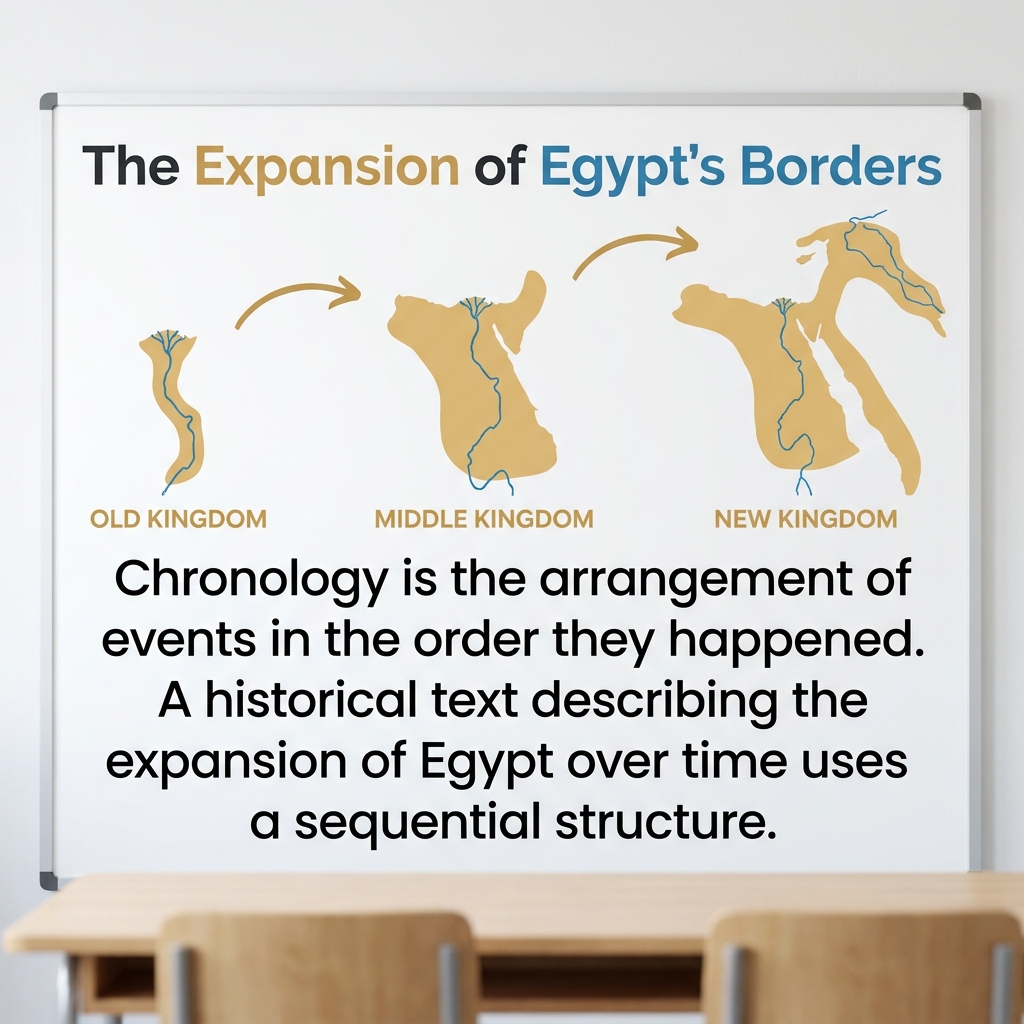
This 6th grade English Language Arts lesson does not pretend to teach the entire history of the world in forty-five minutes. It does not promise to make every student an expert historian overnight. Instead, Understanding How Authors Organize Information focuses on a single, vital mechanical skill: identifying how a writer puts their argument or narrative together. If you are a teacher looking for a straightforward way to address 6th grade text structure practice, this is your entry point.
We have all felt the calendar crunch. By this point in the year, many of us in West Contra Costa Unified, Elk Grove Unified, Rosedale Union Elementary School District, and Dos Palos Oro Loma Joint Unified are racing to balance curriculum pacing with the realities of daily classroom needs. It is far too easy to let direct instruction on nonfiction structure slide when there is so much content to cover. Yet, when students cannot identify how a text moves, whether it is laying out a sequence of events, comparing two city-states, or explaining the causal links behind a political shift, they lose the thread of the reading. This lesson is a tool meant to ease that pressure.
Identifying patterns in history
The lesson begins with a clear, concise hook. Students review how a historian might describe the construction of the Great Pyramid of Giza, noting that it is usually told in a specific, step-by-step order. From there, the material introduces three core vocabulary terms: sequential structure, comparative structure, and causal structure. The definitions are crisp. Sequential structure is simply the order in which events happen over time. Comparative structure shows how things are similar or different. Causal structure explains why something happened and what the results were. These are the building blocks for the California Common Core standard CA.ELA.RH.6-8.5.
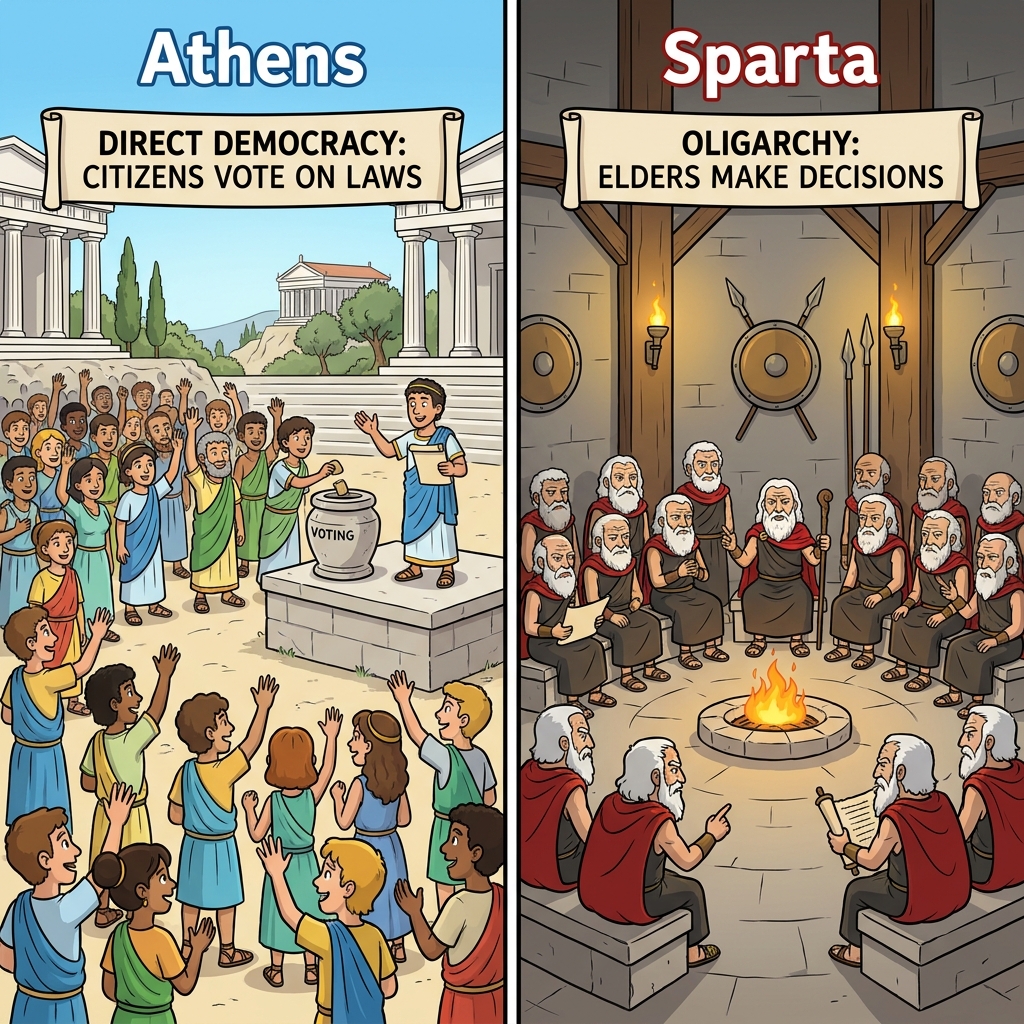
The standard asks students to describe exactly how a text presents information. It is not enough to just say a text is about history. A student needs to articulate the logic behind the presentation. The lesson provides a worked example using Athens and Sparta to show what a comparative structure looks like in practice. Because the text explicitly contrasts how citizens in Athens voted on laws versus how a small group of elders made decisions in Sparta, it forces the student to recognize the comparative framing. It is the kind of specific, concrete work that makes abstract reading strategies feel manageable.
Why this works for your classroom
I find this type of resource particularly helpful for a student who missed the week or for a quiet day of independent study when you need to be sure students are hitting their targets. It is also a relief to have in your pocket for a substitute day. You know exactly what the students are getting, and you know it aligns with the state expectations you are already tracking. Because the logic of the lesson is self-contained, a student can walk through the definitions, look at the provided examples, and move into the guided practice on the rise of the Pharaohs without needing you to lead every single step.
The objective is narrow: identify how authors organize information in a text to explain events and relationships. By keeping the scope tight, the lesson avoids the fatigue that sets in with long, sprawling units. It is a focused exercise in critical reading. If you find your class struggling to move from decoding words to understanding the actual architectural shape of an argument, this provides the scaffolding they need to get there.
The reality of the skill
One caveat: do not expect this single forty-five-minute session to make every student an expert at spotting text structures in complex, primary source documents. It is a starting point, not the end of the conversation. Students will still need your support when they move to denser, more nuanced texts later in the semester. However, for a quick check of understanding or a way to get students back on track after a long break or a string of absences, it hits the mark perfectly. It gives them the vocabulary they need to talk about what they are reading. When they start using these terms, calling out a causal structure in a news article or noticing a sequential timeline in their textbooks, you know they have internalized the concept.
Related lessons
Using Textual Evidence in History, Teaches students how to pull evidence from historical texts
Understanding Historical Processes, Explains how to identify and describe various historical events
Reading History Like a Detective, Covers how to analyze historical sources for hidden clues