

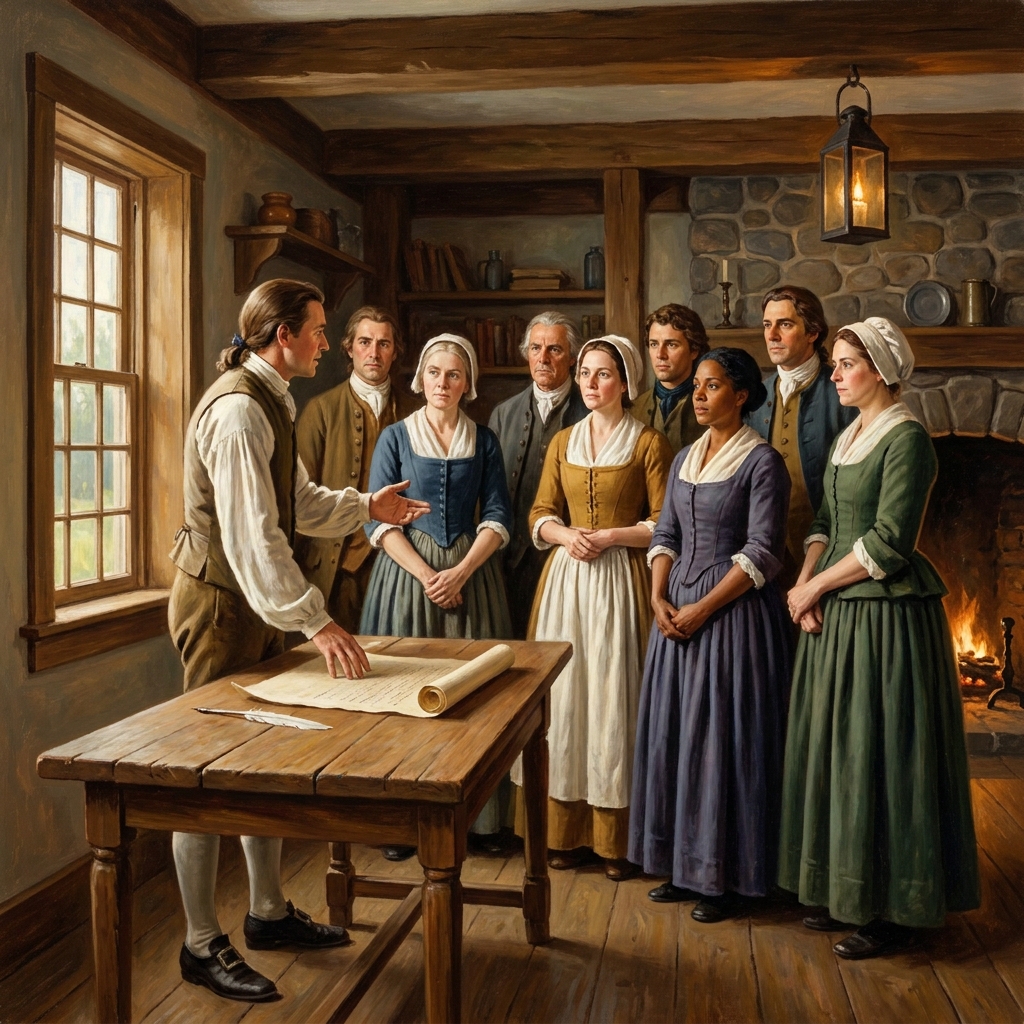
Fifth graders often assume that liberty means they can do whatever they want, whenever they want. When we start talking about the American Creed, they immediately jump to the idea of total personal freedom without considering the constraints of a functioning society. This is a common developmental hurdle, but it makes teaching the foundational concepts of our government tricky. You want them to value their rights, but they must also understand why those rights require limits to function in a shared space.
In this The American Creed: Liberty, Law, and the Constitution lesson, your 5th grade social studies students get a chance to see that freedom and order are two sides of the same coin. This material moves beyond basic definitions and forces them to weigh individual rights against the requirements of the Constitution. It is the kind of nuance they need to move from memorizing facts to thinking about how a republic functions. Teachers in districts like Sacramento City Unified, Anaheim Elementary School District, Delano Union Elementary School District, and Coalinga-Huron Unified are all working on these same concepts because they are central to understanding our history.
What the lesson actually asks students to do
The objective is for students to explain how the American Creed balances individual freedom with the rule of law and the Constitution. It starts with something they live every day, which is the concept of classroom rules. By comparing raising a hand to participate to the broader social contract, the lesson grounds abstract constitutional ideas in their lived reality. The text describes this perfectly: “In a classroom, rules help everyone learn together.”

You will guide them through three core vocabulary terms. Liberty is defined as the power or right to act, speak, or think as one wants without being held back by others. They then examine the Rule of Law, the principle that all people and the government must follow the same laws to keep society fair and safe, and the Constitution, which is the supreme law of the United States that outlines how the government works and protects the rights of the people. This American Creed 5th grade material uses the Bill of Rights as a worked example. It shows students that protecting freedom of speech is a specific part of liberty, but because it is part of the Constitution, that protection becomes the supreme law that the government must follow.
The standard served here is CA.HSS-5.7.5, which is part of the California-adopted standards for history and social science. This standard asks students to discuss the meaning of the American creed, specifically how it calls on citizens to safeguard the liberty of individual Americans within a unified nation, to respect the rule of law, and to preserve the Constitution. The lesson is part of a larger cluster, HSS-5.7, where students describe the people and events associated with the development of the U.S. Constitution and analyze the significance of that document as the foundation of the American republic.
Where students slip
The guided practice setup involves imagining a local town hall meeting where citizens debate a new law about where to build a park. They must follow a town charter, which functions like a local constitution. Students often struggle here because they want to pick the side of the park they prefer rather than focusing on the process of the town charter. Remind them that the process is the point. The American Creed is about creating a unified nation where diverse people are bound together by shared values rather than just geography. This unity allows citizens to resolve conflicts peacefully through the democratic processes established by the Constitution.

Use this lesson for a whole-class discussion if you have a solid forty-five minutes, or keep it in your back pocket for a student who missed the week and needs a quick way to catch up on the constitutional foundations. It also works well for a substitute day if you leave clear instructions for them to focus on the town hall simulation. When students understand these terms, they become better citizens who participate in our democracy and help their communities make fair decisions.
Related lessons
Moving West: The Journey and the Land, Covers the westward expansion movement and land acquisition
Building a New Nation: From Articles to Constitution, Focuses on the transition from the Articles to the Constitution

Building a Nation: State Constitutions and the American Revolution, Explores state-level foundations and the Revolutionary War period