

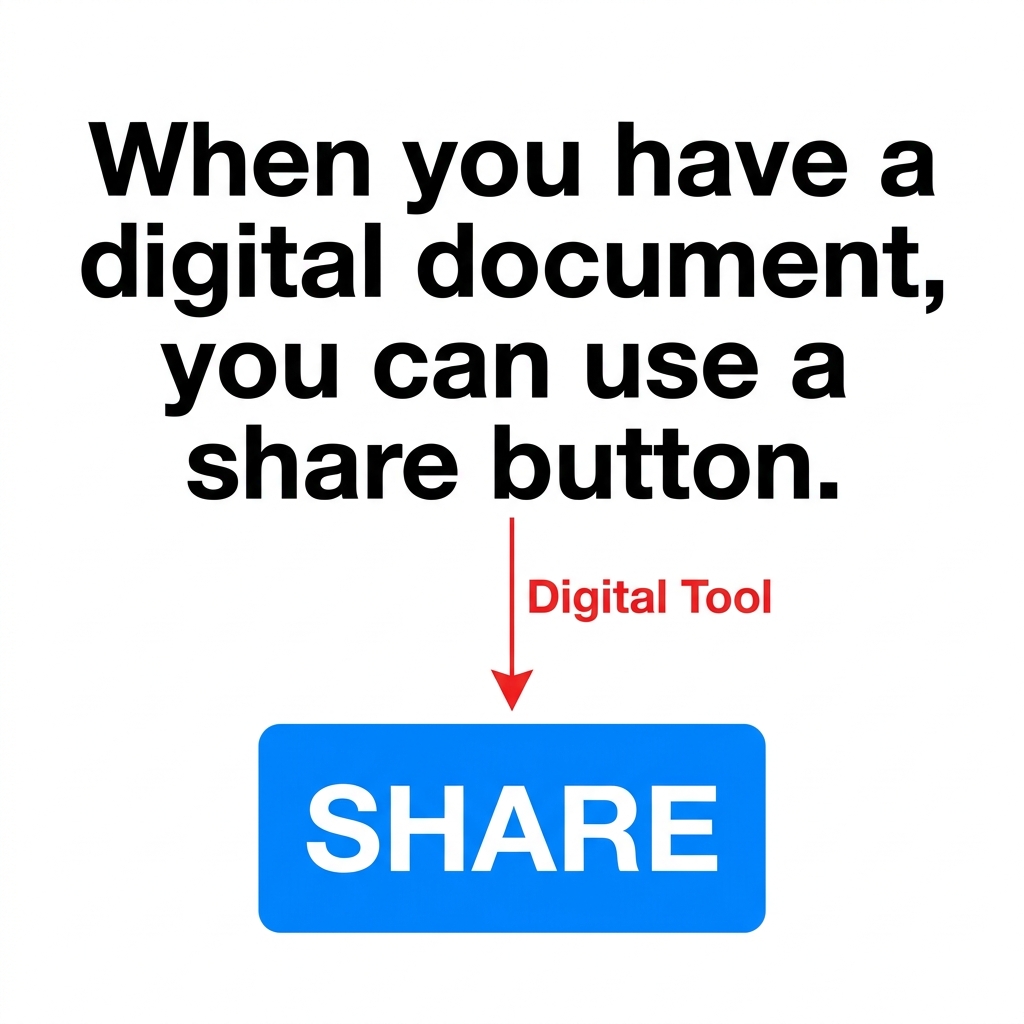
A teacher sits at a desk and types a story about a pet on a laptop. That is the first picture your third graders see in Writing and Sharing with Technology, and I like it more than I expected to. It starts with an adult doing the thing slowly and on purpose before anyone asks an eight-year-old to try it.
Team, this is my note on the third grade English language arts lesson I mentioned at our last planning meeting. It runs about 45 minutes, it lives in the writing course, and it is short on flash and long on habits. The objective is a single line: “Use a computer to write, save, and share your work with others.” Three verbs. Most of our students can do the first one slowly, skip the second entirely, and have never really thought about the third.
What the lesson asks students to do
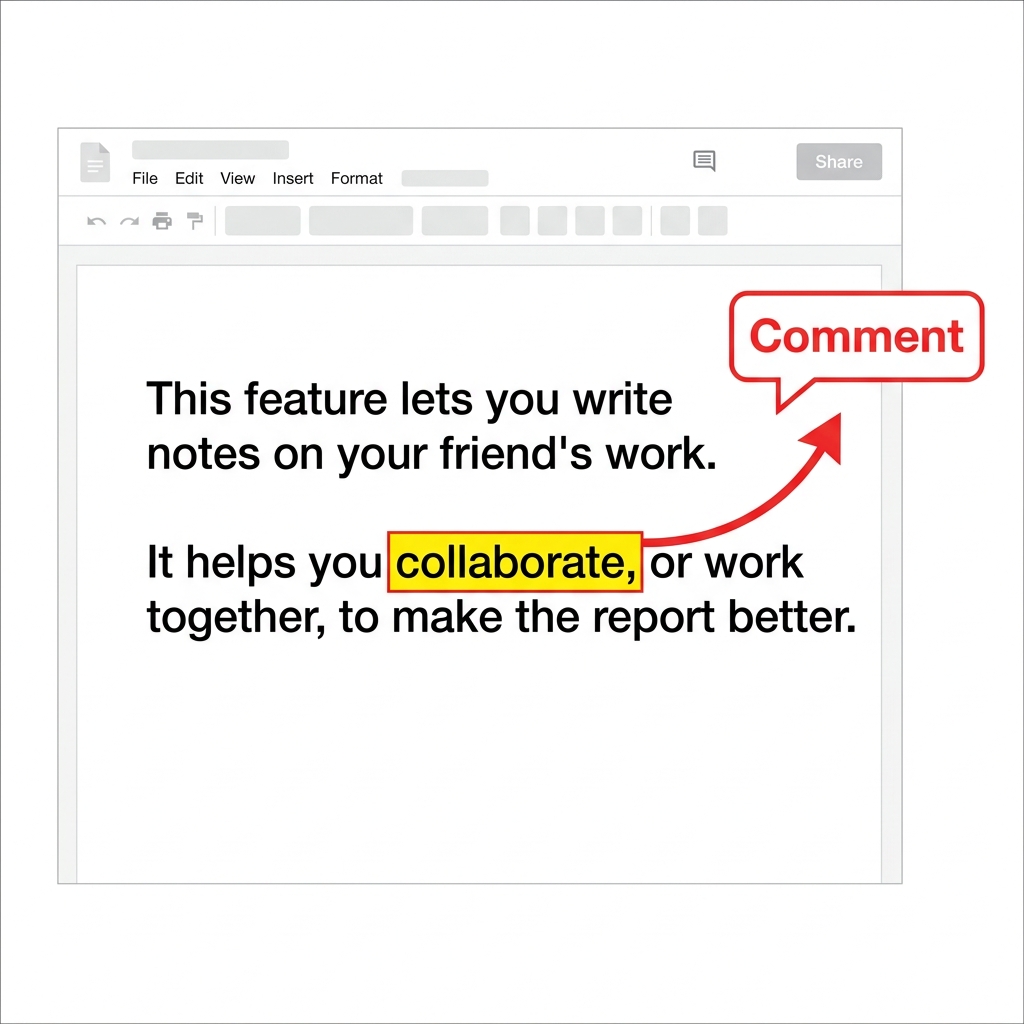
The opener reminds students that writing is how we share ideas, and that before a computer is any use, you have to be able to put words on the screen with a keyboard. Then comes the pet story model. From there the lesson moves to a worked example built around a book report: students learn that a comment feature lets them leave notes on a friend’s work, and the lesson names that act directly as collaborating, working together to make the report better. That vocabulary matters. Plenty of third graders hear “collaborate” and think it means sitting next to someone. This gives the word a concrete action attached to it.
Guided practice shifts to a space adventure story. Now the student is the author, and the task is to invite a peer to add a sentence. It is a small ask, one sentence, but it flips the role from commenter to host, and that is a different skill. For some kids, letting someone into their writing is much harder than writing notes on somebody else’s.
The lesson closes by explaining that digital tools let people work together even when they are far apart, and that authors and scientists use them daily to share discoveries. Fine as a frame. I would not spend long on it.
The standard here is CA.ELA.W.3.6, from the Production and Distribution of Writing cluster of the California Common Core standards for English language arts. It asks third graders, with guidance and support from adults, to use technology to produce and publish writing, keyboarding included, and to interact and collaborate with others. Read that first clause twice. The standard itself expects an adult in the loop, so nobody should feel guilty about hovering during this one. Third graders in Fremont Unified, Fresno Unified, Lemon Grove School District and Atascadero Unified are working toward this exact expectation, because the standard reads the same in every California classroom.
What to listen for and where it fits in the week
While students work, listen for the word “save.” Better yet, walk up to a few students and ask where their story is right now. If the answer is “on the screen,” they have not saved it, and you have found your mini-lesson for tomorrow.
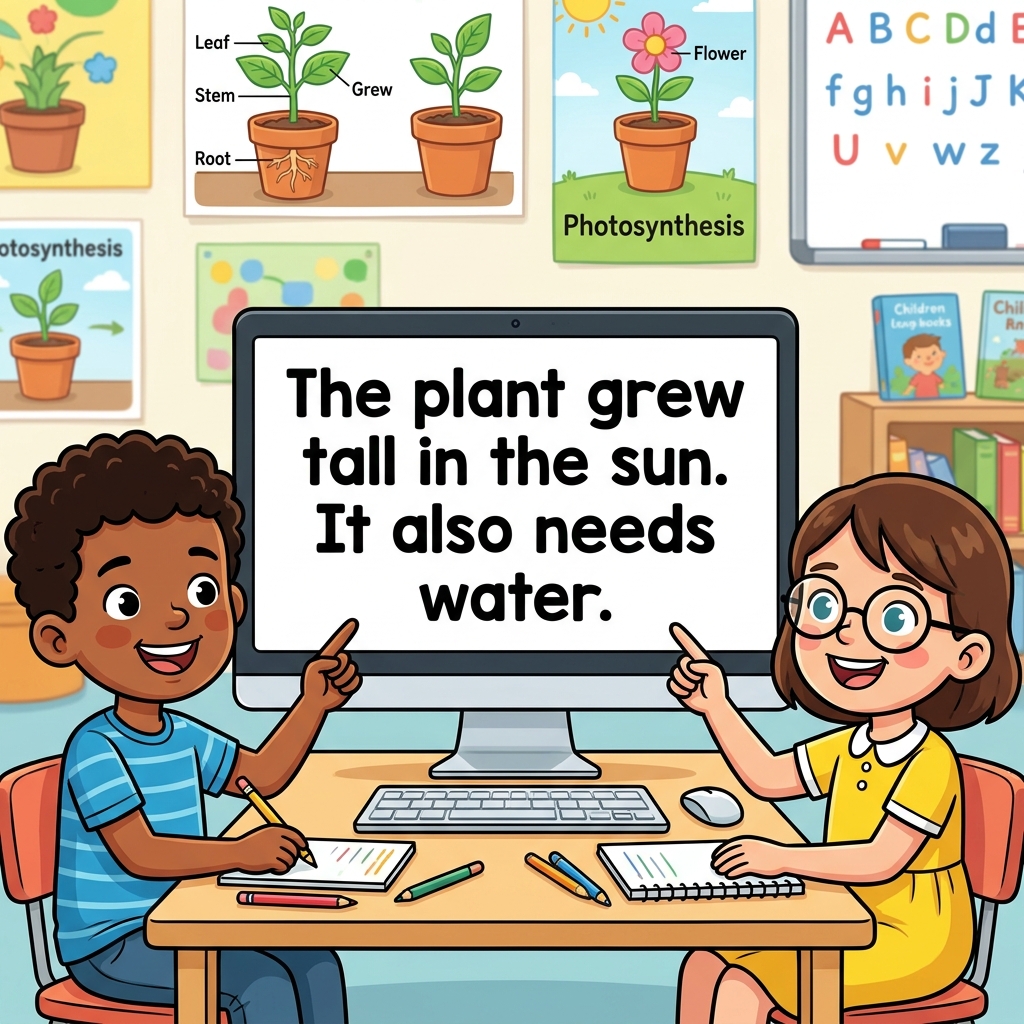
Listen to the comments too. The first round will be mostly “good job” and “I like it.” That is normal. What you want to hear by the end is something tied to the actual writing, like a note asking what the alien in the space story looks like. When you hear one, read it aloud to the class. Specific comments spread fast once kids hear one.
Watch the invitations in guided practice. A student who just says “add something” is doing it. A student who says “add what happens when the rocket lands” understands collaboration. Small difference, big signal.
Now the honest caveat. One 45-minute lesson will not build keyboarding fluency, and it is not trying to. You will still see hunt-and-peck typing on Friday. What the lesson builds is the routine: write, save, share, respond. It also describes the comment feature in general terms, so plan five minutes to show students where that button lives on whatever platform our classes actually use.
For placement, I would teach it as a whole-class lesson early in the week, right before a piece of writing that students will publish. That way the comment feature gets used for real during revision instead of being a one-day novelty. It pairs well with whatever genre unit you are in, opinion, informative or narrative, because the skill is the same regardless of what students are writing.
It also works for a student who missed the week. The model, the book report example and the space story practice are all self-contained, so a returning student can catch up on the routine without needing the whole class to restart. And it is a solid substitute day plan, partly because the standard already assumes adult guidance, and a sub can supervise typing and saving without needing deep background on our writing unit.
If you are searching later and cannot find my email, it comes up under third grade digital writing lesson. Open it before Monday and try the space story invitation yourself. You will see quickly which of your students will need you standing beside them.
Related lessons
Writing Strong Opinion Pieces, Writing opinion pieces that state a clear point of view

Writing Informative Paragraphs, Building paragraphs that explain a topic and share information
Writing Great Stories, Crafting narrative stories with strong storytelling elements