

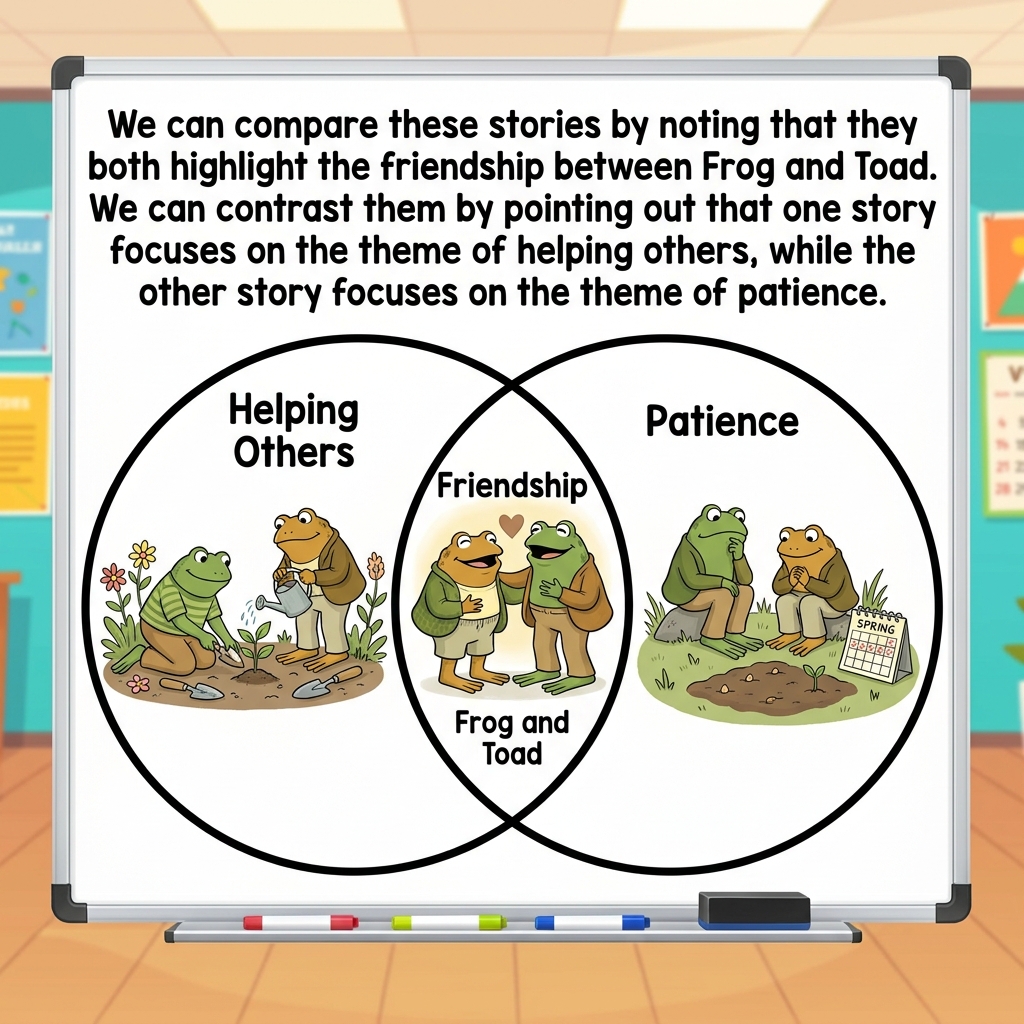
Third graders asked to compare two books from the same series will compare the characters. Almost every time. They will tell you Frog worries and Toad grumbles, and they will be right, and they will have missed the point, because in a series the characters are the one thing the author mostly leaves alone. What changes from book to book is the setting, the plot, and the lesson the story is trying to teach.
That gap is the whole reason Comparing Stories in a Series exists. It is a third grade English language arts lesson from the Reading: Literature course, it runs about 45 minutes, and it asks one focused thing of students: hold the character steady in your head, then look at what moved. If you are a counselor, an intervention teacher, or someone coordinating independent study, and you have a student who needs this standard a second time, it is a reasonable single assignment. I’ll explain what is in it, where it is thin, and how I would get evidence back to the classroom teacher.
What the lesson actually asks students to do
The lesson opens by defining its terms, which I appreciate, because a lot of eight-year-olds use the word “series” loosely. Here it means a set of books that share the same main character, and the lesson uses the word protagonist for that character. The framing is simple: when you read several of these books, you can notice how the stories are alike and how they are different.
Then comes the worked example, and it is a good one. It uses Frog and Toad, and it goes straight at theme, which is the hardest of the three things the standard names. In some Frog and Toad stories, the characters learn that helping a friend matters. In others, the lesson of the story is about being patient. Same two friends, different themes. That is exactly the move students fail to make on their own, and the example makes it in two sentences without any fuss.
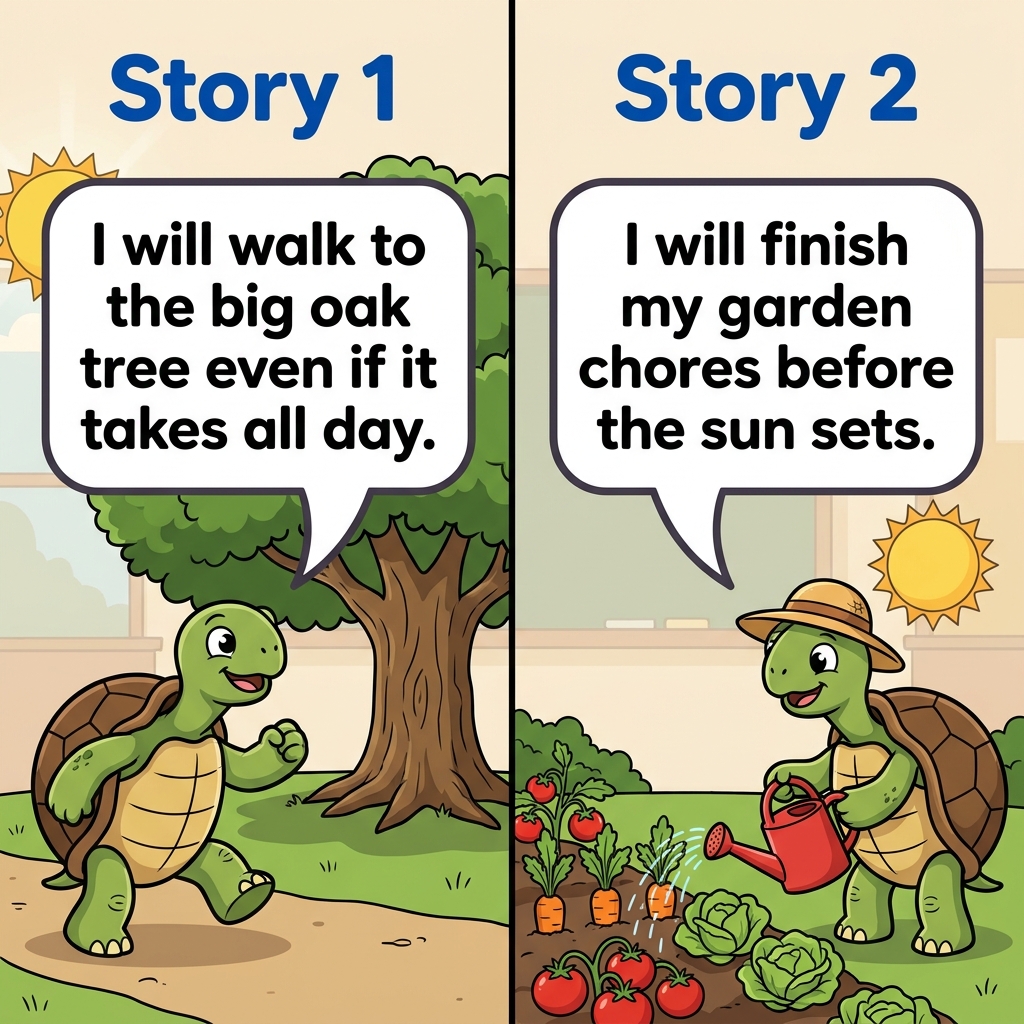
Guided practice shifts to Mercy Watson, the pig who loves toast. Students look at two Mercy Watson stories and do the comparing themselves this time, with the lesson supporting them. I like the choice. Mercy is a character kids remember after one book, which frees up attention for setting and plot, the parts the student actually needs to be thinking about.
The vocabulary a student should walk away using is short:
- series
- protagonist
- theme
- setting
- plot
- compare and contrast
The lesson closes with a why-it-matters piece connecting comparison to real life: when you read news stories or reviews, you compare them to see the whole picture and check whether different sources have the same information. That is true, and I don’t object to it, but it is a reach for most third graders. Few of them are reading reviews. If you are talking through the lesson with a student afterward, I would swap in something closer to them, like two episodes of a show they watch with the same characters doing something different each time.
One honest caveat. A comparison lesson works best when the student has actually read the books. A student who has never met Frog and Toad or Mercy Watson can still follow the reasoning, but the comparison will feel more like something they are told than something they notice. If your library has either series, handing the student one book before the lesson would make the 45 minutes count for more.
The standard behind it
The lesson is built on CA.ELA.RL.3.9, part of the California Common Core State Standards for English language arts. It sits in the Reading: Literature domain, under the cluster called Integration of Knowledge and Ideas. In plain terms, the standard asks third graders to compare and contrast the themes, settings, and plots of stories written by the same author about the same or similar characters, and it names books in a series as the obvious example.
What I like about this standard is how narrow it is on purpose. It does not ask students to compare any two stories. It controls for the author and the character, so the only things left to compare are the ones the student is supposed to analyze. That is why the characters-only answer is wrong here even though it is never quite false: the standard has already set the characters aside.
It is also the same expectation statewide. A third grader in San Diego Unified, Los Angeles Unified, Milpitas Unified, or Paso Robles Joint Unified is working toward this exact standard, so a student who moved mid-year or is finishing work through independent study is not doing a different version of third grade reading.
Where students usually slip on RL.3.9 is theme. Setting is concrete (where and when), plot is concrete (what happens), but theme asks for the lesson underneath, and third graders often give you a plot summary and call it a theme. The Frog and Toad example models the difference cleanly, which is the strongest argument for assigning this particular lesson to a student who missed the standard the first time.
Assigning it to a student who needs the standard again
I see three uses where this fits well. The first is intervention: a student who can retell a story but freezes when asked how two stories differ. The lesson’s structure (definition, a modeled example on theme, then guided practice) is the right sequence for that student, and 45 minutes fits inside a pull-out block. The second is independent study, because the lesson is self-contained and one standard deep, so a coordinator does not have to build anything around it. The third is a student who missed the week the class did series comparison and needs to catch up without the whole unit.
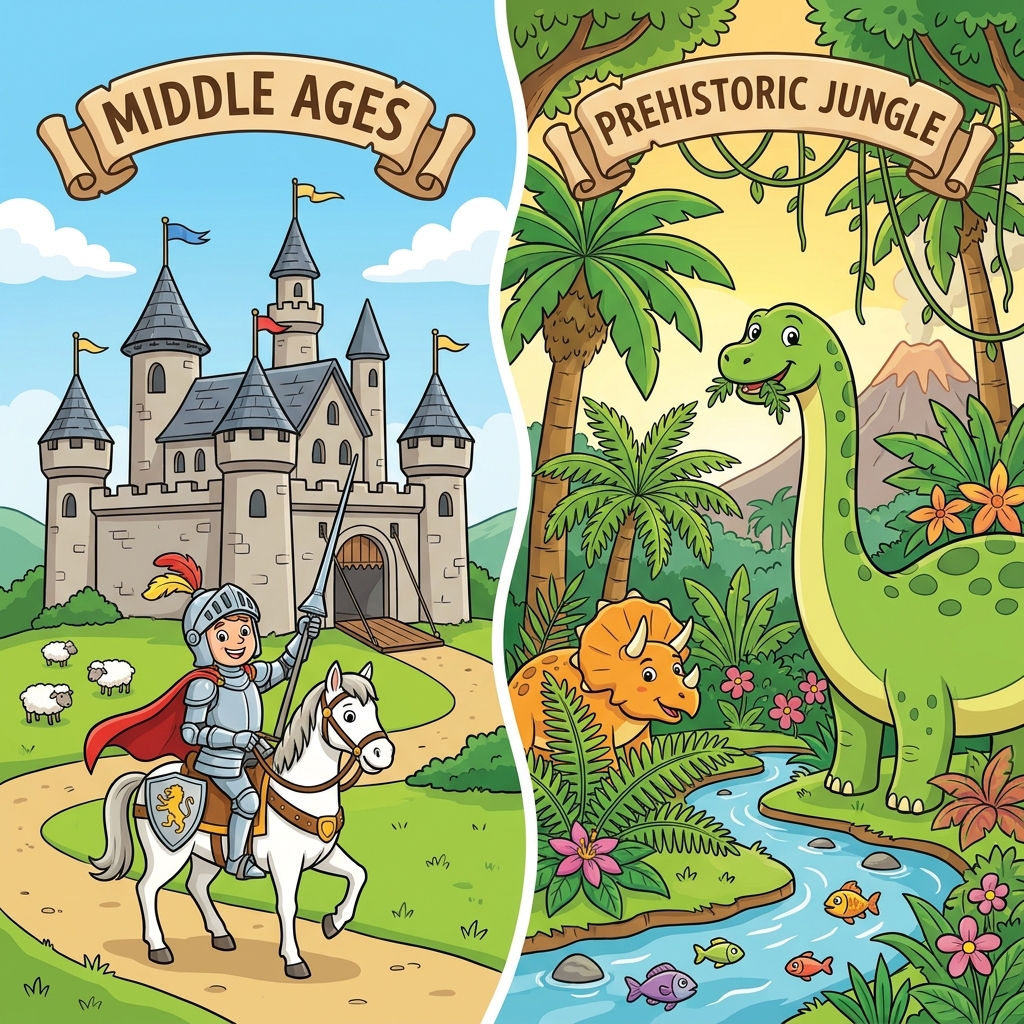
I would not reach for it as a broad review of reading literature. It does one thing. If a student’s trouble is more basic, say they can’t yet identify a setting or a plot in a single story, comparing two stories is a step too far, and they need that earlier work first.
On getting completion back to the classroom teacher: however your site records finished lessons, I would pair it with one small piece of the student’s own work. Ask for two sentences, one naming something that stayed the same across the Mercy Watson stories and one naming something that changed, with the word theme, setting, or plot in it. That takes five minutes, and it tells the classroom teacher far more than a checkmark does. If the student writes about Mercy’s love of toast in both sentences, you know they still have the characters-only habit, and you know exactly what to reteach.
If you are searching for a third grade compare and contrast stories lesson to hand a student this week, this is a tidy one. Give them a Mercy Watson book first if you can, and listen for the moment they stop talking about the pig and start talking about what happened to her.
Related lessons
Parts of a Story, Identifying the basic elements that make up a story
Understanding Stories: Finding the Main Idea, Finding the main idea of a story while reading
Understanding Different Points of View, Recognizing that characters and readers can see things differently