

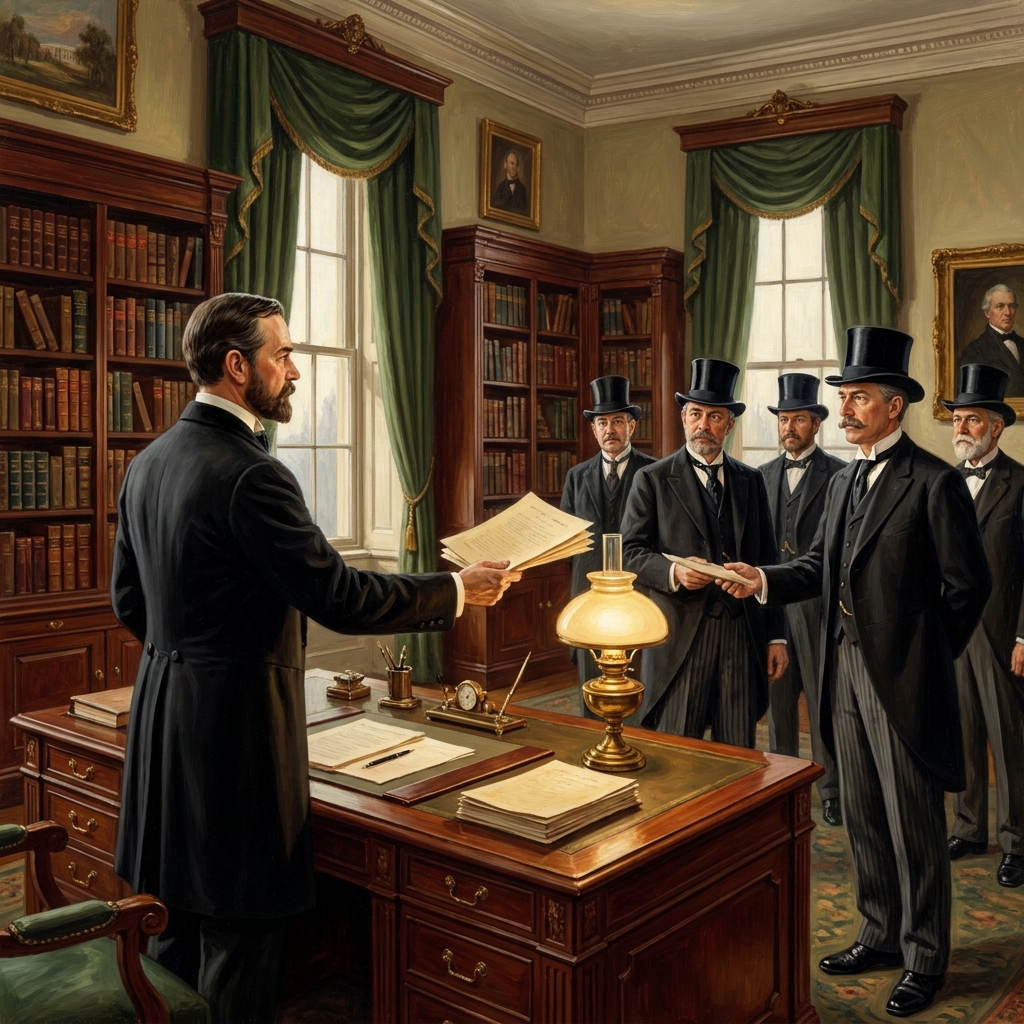
One of the more difficult moments to explain to eleventh graders is why the United States suddenly decided to insert itself into international trade in 1899. You see them struggle with the map of the world at the turn of the century. They often see countries as static, bounded spaces rather than fluid economic entities. The Open Door Policy and American Foreign Relations is a useful tool for those moments when you need to ground students in the reality of United States history and geography. It takes about 45 minutes, making it a solid choice for a student who missed the week, or for a student who needs a targeted intervention session to catch up on the curriculum.
Introducing the foreign policy conflict
This lesson starts with an analogy about a cafeteria table. It describes a situation where every student shares one large table to ensure everyone has an equal place to sit and eat, which is meant to prevent one group from claiming the entire space. This acts as a starting point for understanding how the United States viewed trade routes in China. The lesson then introduces the specific historical action taken by Secretary of State John Hay, who sent notes to major powers asking them to respect equal trade rights in China. It explains that this demand for trade access was an attempt to keep ports open and prevent any single nation from establishing a total monopoly. Students then engage in guided practice with a political cartoon from 1899 that shows major powers like Germany, Russia, and Japan carving up a map of China with various tools. The work here is to move students beyond just memorizing dates and into the high school US history and geography lesson about how these nations sought to establish exclusive zones of influence.

The standards and regional alignment
The material focuses squarely on CA.HSS-11.4.1, which asks students to list the purpose and the effects of the Open Door policy. This is part of the California-adopted history standards where students trace the rise of the United States to its role as a world power. Teachers in San Diego Unified, Fresno Unified, Desert Sands Unified, and Shasta Union High School District all teach this same standard as part of their requirements for juniors. The standard expects students to be able to explain the motivation behind the policy and identify the result of those diplomatic efforts. In my experience, students often find the cartoon analysis the most helpful part of the process because it visualizes the concept of spheres of influence in a way that dry text rarely manages.
Where students slip
The biggest hurdle for students is usually the connection between 1899 diplomatic notes and modern trade agreements. The lesson includes a why-it-matters section that explains how countries agreeing to open their markets leads to more choices for shoppers and more customers for businesses. Some students struggle to link that outcome to the 19th-century diplomatic maneuver. If you are using this for attendance recovery or independent study, you might want to spend a moment explaining that the primary goal was keeping trade routes accessible rather than just promoting peace. It is helpful to remind them that the Open Door policy was fundamentally about American business access. Once they see that the motivation was economic rather than purely altruistic, the lesson usually clicks into place for them.

Related lessons

Foreign Policy and Domestic Movements, Covers how overseas actions affect movements within the United States

Civil Liberties in the 1920s, Examines legal rights and personal freedoms during the 1920s decade

The Economic Transformation of 1920s America, Explores major shifts in the American economy during the twenties