

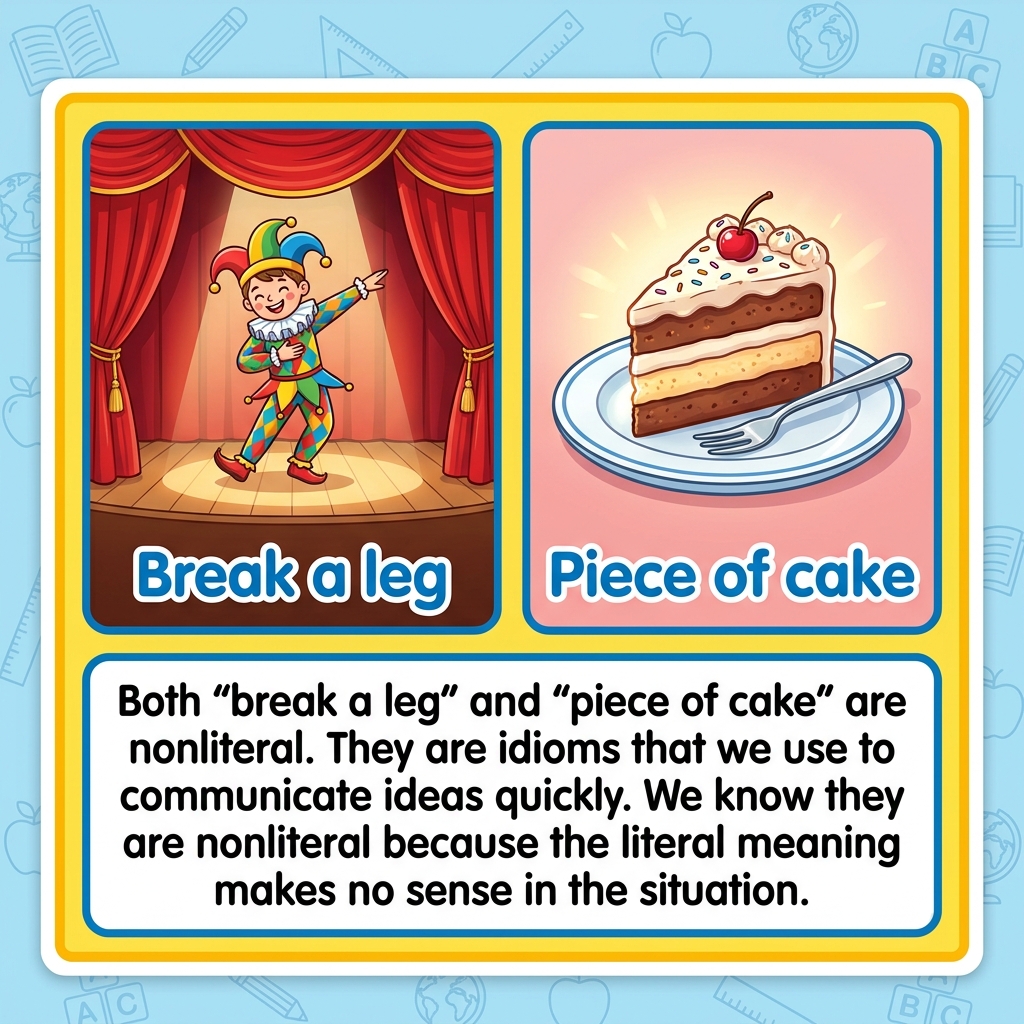
I have stood at my desk many times while a third grader stares at a page, completely baffled by a simple idiom. They take it all so seriously. When a character says they are feeling under the weather, a student might wonder if there is a literal storm cloud following them around the classroom. It is a classic moment of confusion that highlights why we need to explicitly teach the difference between words that mean exactly what they say and those that carry a different, figurative meaning. The Understanding Words and Phrases lesson is designed to address this exact frustration for students who need a bit more practice.
How to identify tricky language
This third grade English Language Arts lesson guides students through the nuances of language that often trip them up. It moves beyond basic definitions by showing students how authors use comparisons to paint a picture. For instance, the lesson explains that if someone mentions a piece of cake, they are talking about a task that is easy, not dessert. It also covers the structural side of reading by teaching students how to spot temporal and spatial markers. These are the specific words or phrases that tell us exactly when and where a scene is taking place. The material is concise, usually taking about 45 minutes to complete, which makes it a useful third grade reading comprehension lesson for an intervention session or a student working independently on a packet.

The lesson focuses on the California-adopted standard CA.ELA.RL.3.4. This standard asks students to determine the meaning of words and phrases as they appear in a text, specifically tasking them with the ability to distinguish between literal and nonliteral language. The California addition to this standard specifically requires students to identify words that mark spatial and temporal relationships in informational text. Teachers in Saddleback Valley Unified, Long Beach Unified, Dry Creek Joint Elementary School District, and Fruitvale Elementary School District all work with students to master this standard so they can interpret stories and instructions with more accuracy.
Why this lesson fits your classroom needs
When you have a student who missed the week, or an independent study student who needs to sharpen their analytical skills, this lesson is a straightforward tool. It introduces four key terms to keep the work focused: literal language, nonliteral language, temporal marker, and spatial marker. The explanation of nonliteral language as something that uses comparisons to mean something other than the exact words is clear and helpful. It avoids overcomplicating the concept, which is a relief for students who are already struggling to keep up. I appreciate how it connects the skill to real-world reading, noting that identifying these markers helps with everything from reading stories to following technical instructions for building a project.

The flow of the lesson feels natural for a student working alone. It starts with a simple, relatable opener about a farmer in a field, then moves into worked examples like the phrase break a leg. By the time the student reaches the guided practice, they are asked to imagine a character feeling under the weather. It is a logical progression that builds confidence before asking for independent output. One caveat to keep in mind is that while the lesson is excellent for building foundational knowledge, it is a focused review. If a student is fundamentally struggling with reading fluency or has significant gaps in vocabulary, they might need you to sit with them for the first few minutes to bridge those gaps before they move into the nonliteral language exercises.
For those managing attendance recovery or organizing a sub day, this module works because it is self-contained. It gives the student clear, actionable definitions and then immediately asks them to apply those definitions to specific scenarios. When they finish, you get a clear look at their understanding of the material. Whether you are using this as a quick intervention or as a way to reinforce previous instruction, it does the job without any unnecessary fluff. It is a practical resource for a teacher who needs their students to get better at reading between the lines.
Related lessons
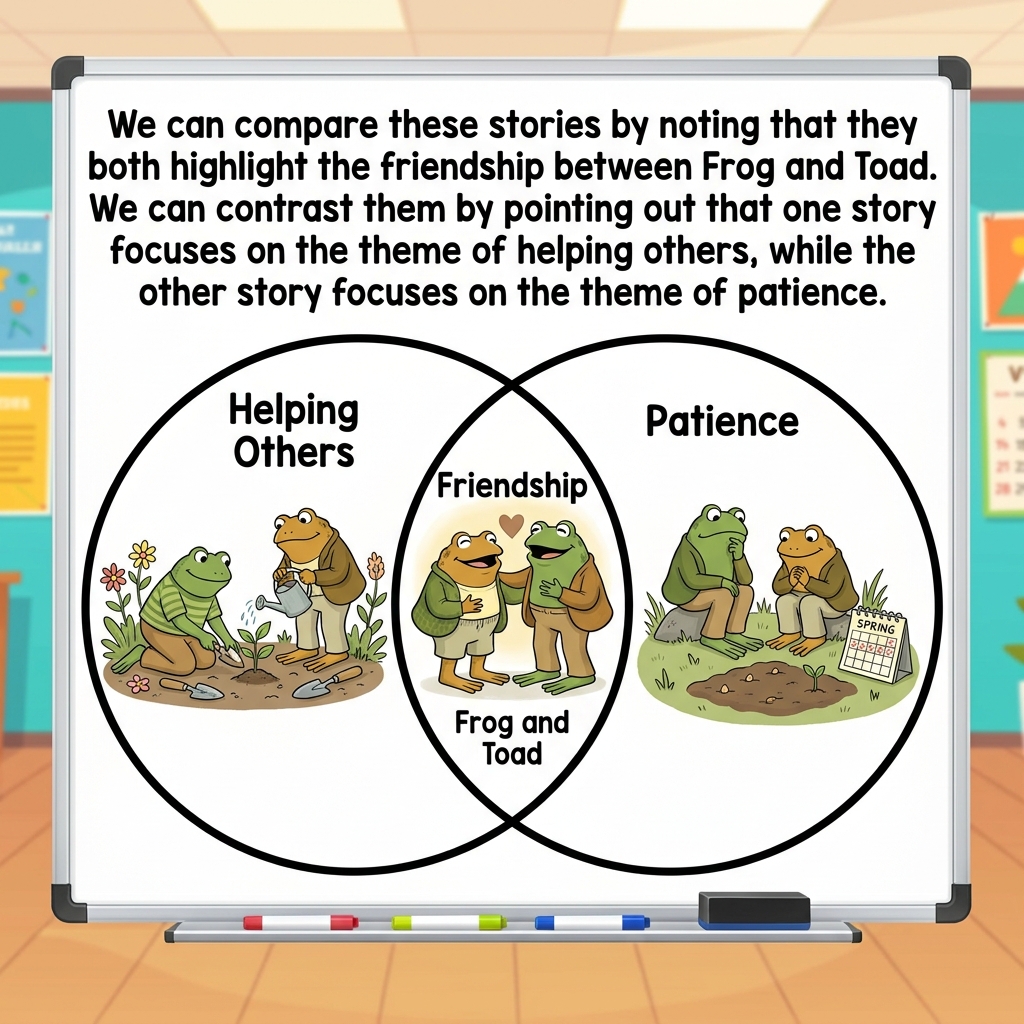
Comparing Stories in a Series, Teaches students to compare and contrast two stories

Finding the Lesson in a Story, Focuses on identifying the moral or central message
Using Pictures to Understand Stories, Explains how visual cues help with story meaning