


Imagine ten pencils sitting in a single box for five students to share. To manage this limited supply, a rule is established where each student receives exactly two pencils. This simple analogy starts the lesson Land Policies and the Northwest Territory, which frames the complex history of the Continental Congress through the lens of resource management and rules. If you are teaching fifth grade social studies, this is a clean, straightforward way to introduce how the early government handled the vast western lands.
The lesson does not try to do too much. It focuses on how the Continental Congress, which acted as the government during and after the Revolutionary War, created the policies that eventually turned a frontier into organized territory. The curriculum uses these concrete examples to help your students grasp that land was not just wild space, but a legal puzzle that needed a grid.
The mechanics of land policy
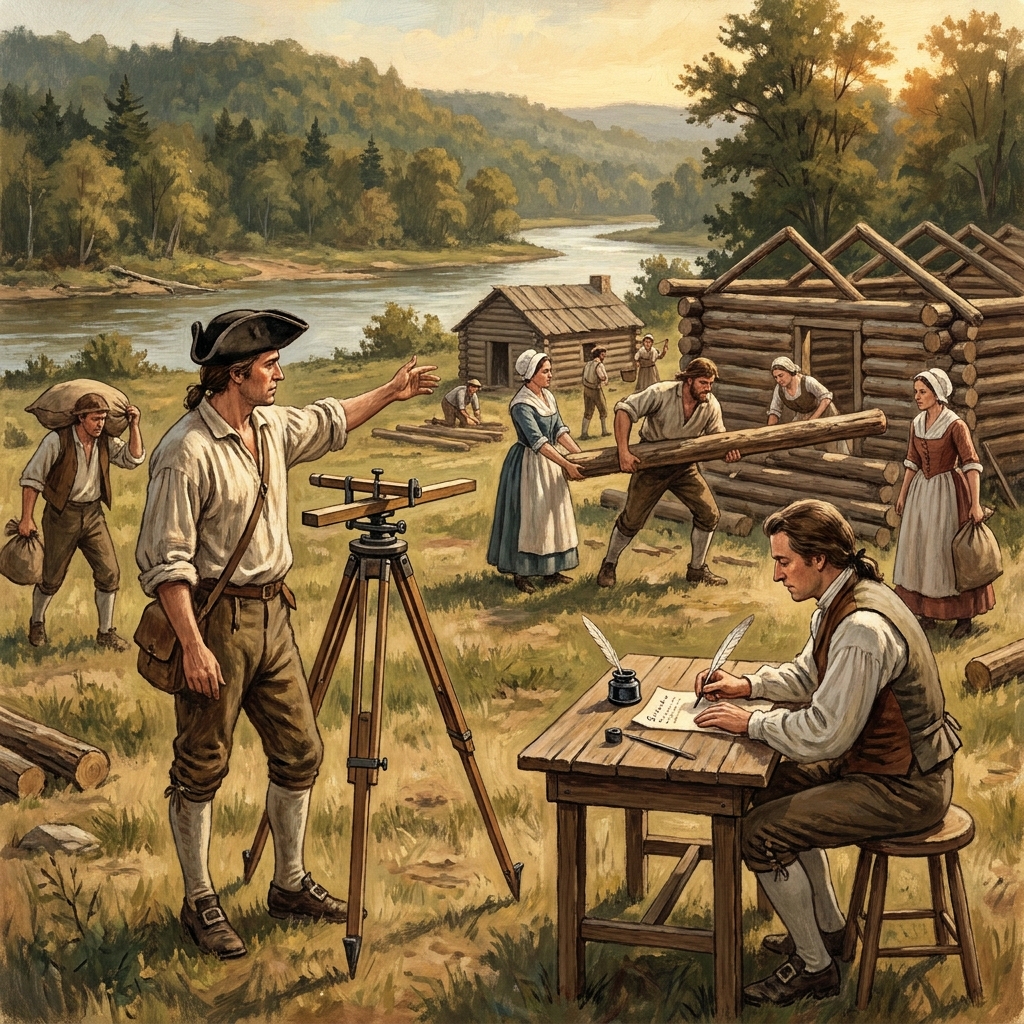
Your students will look at the Land Ordinance of 1785, which established a grid system to sell off western lands in square townships. This provided a systematic, if exclusionary, method for the government to manage property. When you explain this 5th grade land policy social studies lesson, emphasize that the goal was order, even if that order came at a high cost to others. The vocabulary is minimal but effective: students work with definitions for the Continental Congress, the Northwest Ordinance, sovereignty, and the frontier.

Teachers in Poway Unified, Folsom-Cordova Unified, Hueneme Elementary School District, and Hayward Unified all teach this same core content because it is the state standard. The lesson explains the 1787 Northwest Ordinance, which set the actual plan for how these western lands could eventually become new states. It is a necessary look at the administrative side of history.
Where the policy met reality
The lesson does not hide the conflict that these policies caused. It describes the shifting boundary line between areas settled by European-Americans and lands traditionally held by American Indian nations. This is where you can have a real conversation with your class. The lesson material notes that as the Continental Congress pushed the frontier further west, it created constant tension and conflict over land ownership.
This part of the work addresses CA.HSS-5.6.6, which is the California-adopted standard asking students to demonstrate knowledge of the significance of land policies developed under the Continental Congress and those policies’ impact on American Indians’ land. The standard is explicit about needing to see both sides of the coin: the government’s systematic approach to selling western lands and the direct consequence of those decisions on native sovereignty.
Reflecting on the legacy of land
I find that students sometimes struggle to connect a 1787 law to their current lives. The lesson includes a why-it-matters section that links these early decisions to property rights and news stories they might encounter today. It is a good way to show that policy is not just ink on a page; it is a force that shapes the map they see in their classroom atlas. This material works well for a whole-class assignment or for a student who missed the week and needs to catch up on the sequence of early American history.
There is one limitation worth noting. Because it covers so much conceptual ground in about 45 minutes, you might find that your students want more time to debate the idea of sovereignty. If you have an independent study student, encourage them to look up what happened to specific nations in the Northwest Territory after the 1787 law was passed. It is a heavy topic, but the structured approach in this lesson provides a clear path forward for a class at this level.
Related lessons

The Road to Revolution: Ideas and Interests, Covers the motivations and ideas leading to the American Revolution
Explorers and the Tools of Discovery, Discusses early explorers and technologies used for oceanic discovery
Native American Nations and Competing Claims for Land, Explores the perspectives and territorial claims of native nations