

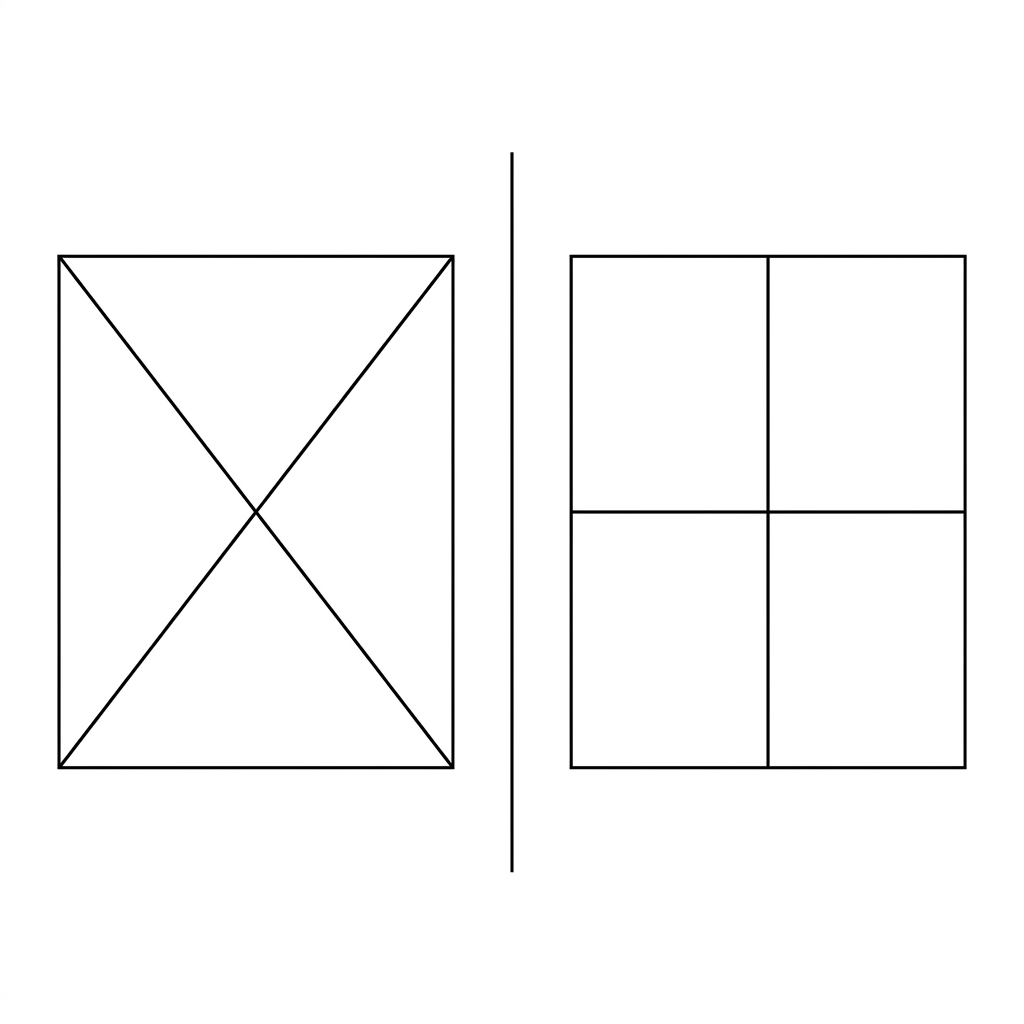
Mathematics instruction in the early grades often relies on clear visualization to bridge the gap between abstract concepts and concrete understanding. By using familiar objects like baking pans and floor tiles, teachers help students connect geometry to their daily experiences. This resource focuses on helping students grasp the structure of rectangles by breaking them down into simpler, equal parts.
Using arrays to understand geometry
Imagine a student looking at a baking pan with nine brownie pieces arranged in a neat three by three grid. This is how the lesson Counting Squares in Rectangles introduces the concept of an array. For your 2nd grade math class, this visualization is a perfect entry point. It takes the abstract idea of area and makes it concrete by using squares that students can physically track with their fingers or eyes.
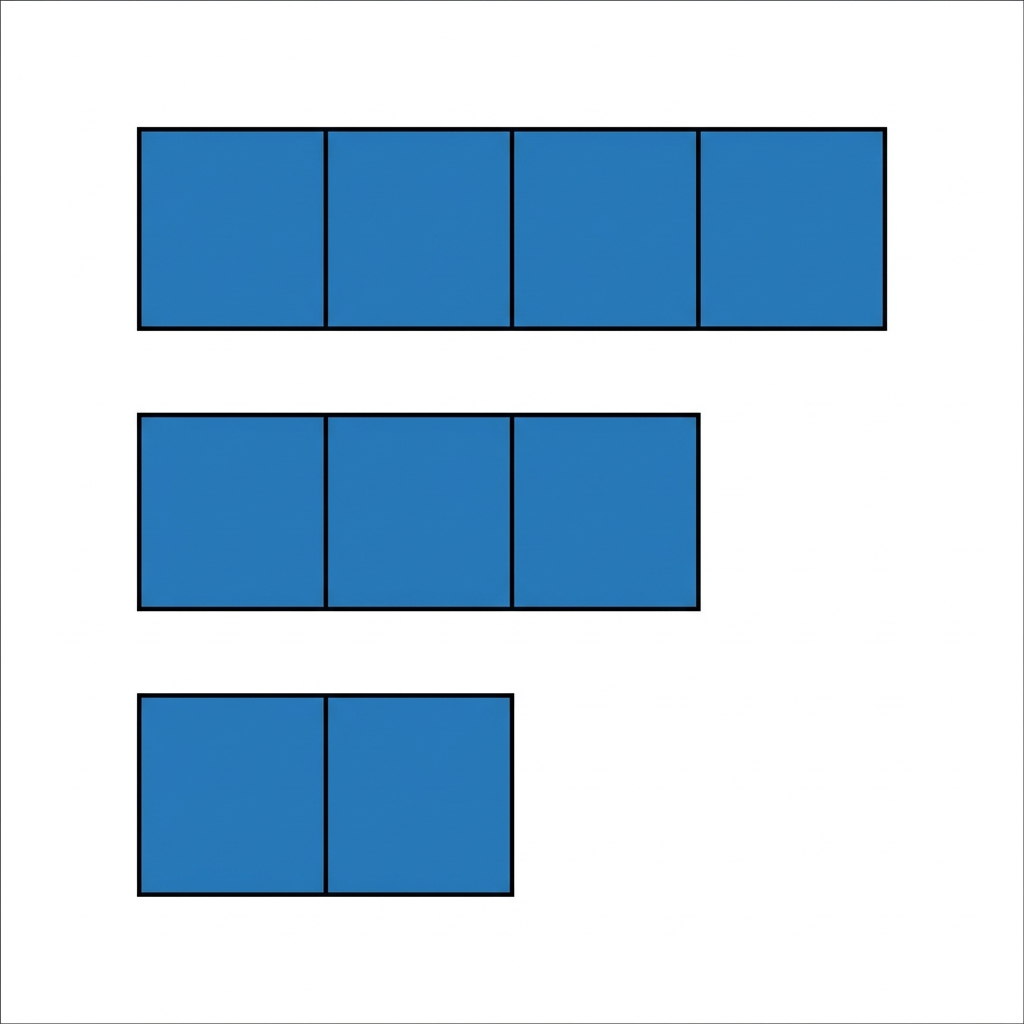
This lesson covers the fundamental skill of partitioning a rectangle into rows and columns of same-size squares. Students define a row as a line of objects arranged side-by-side from left to right, and a column as a line of objects arranged one above the other from top to bottom. By combining these, they learn that an array is simply a set of objects arranged in equal rows and equal columns. It provides a straightforward path for your students to count the total number of squares within a shape, which is the primary objective of the material.
The lesson aligns with the California-adopted standard CA.MATH.2.G.2. This standard asks that students develop the ability to partition a rectangle into rows and columns of same-size squares and count to find the total. Educators in Lodi Unified, Fontana Unified, Davis Joint Unified, and Lennox School District teach this same standard to ensure students build a solid foundation in reasoning with shapes and their attributes. It is a necessary building block for later work with multiplication and area models.
What to observe while students work
When you assign this second grade geometry array lesson, watch how your students count. You will often see them trying to count every single square one by one, which is fine at the start. However, keep an eye out for students who recognize the rows and columns. When a student stops pointing at every individual box and starts pointing at the entire row or column, you know they have grasped the concept of the array. This is the moment where their efficiency increases.
The lesson introduces a small bathroom floor with six square tiles as a way to transition from counting objects in a line to counting them in a grid. This is a subtle but important shift in their mathematical thinking. Some students might get confused about which way is a row and which is a column. I suggest keeping the vocabulary terms written on the board while they work through the guided practice. The theater seating block example in the guided practice is a great way to check if they have mastered the difference between the two dimensions.
Integrating the lesson into your schedule
You have a few ways to fit this into your week. It works well as a whole-class assignment when you are first introducing geometry concepts. If you have a student who missed the lesson during the week, this works well as a solid independent study module that they can complete with minimal guidance. It also works perfectly for a substitute day because the instructions are clear and the concepts are approachable for the students.
Architects plan buildings and gardeners plan their plots using these exact skills. Reminding your students of these real-world applications helps them see that counting squares is not just a page in a workbook. It is a tool they will use in many practical situations throughout their lives. You might find that some students enjoy creating their own grids on graph paper after they finish the digital component, which is a great way to extend the activity without adding extra work for yourself. Just keep an eye on those who struggle with the count and provide them with a concrete manipulative, like plastic tiles or blocks, to help them see the rows and columns more clearly before they go back to the screen.
Related lessons
Exploring Shapes and Their Parts, Identifying basic geometric shapes and their individual component parts
Sharing Fairly: Parts of a Whole, Introducing concepts of division through equal sharing of objects