

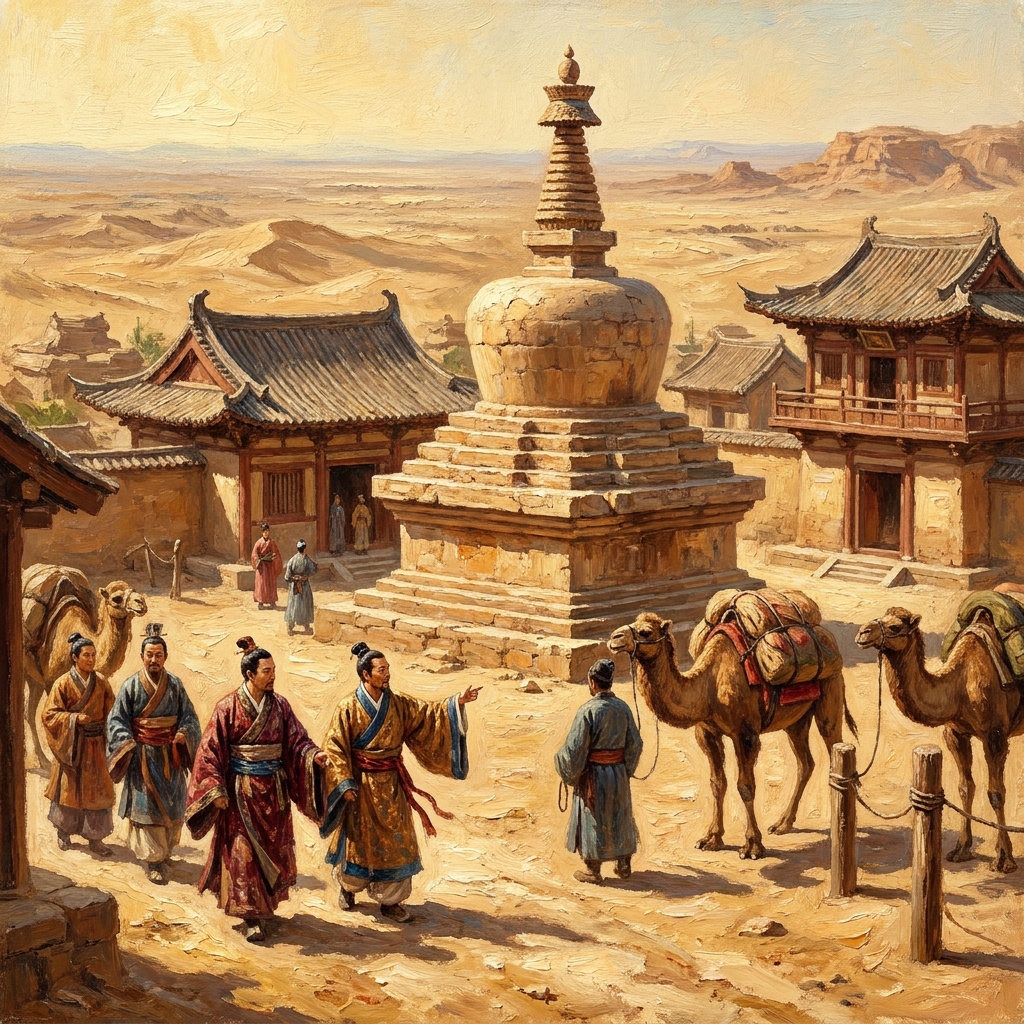
Students often make the mistake of thinking that trade in the ancient world was exclusively about physical goods. They see the Silk Road as a highway for silk and spices but miss the invisible, often more important, cargo that traveled with the merchants. When they fail to grasp that ideas move right alongside material commodities, they miss the entire point of how civilizations changed over time. If they do not understand this, they struggle later when we look at how religions or technologies transformed societies in later centuries.
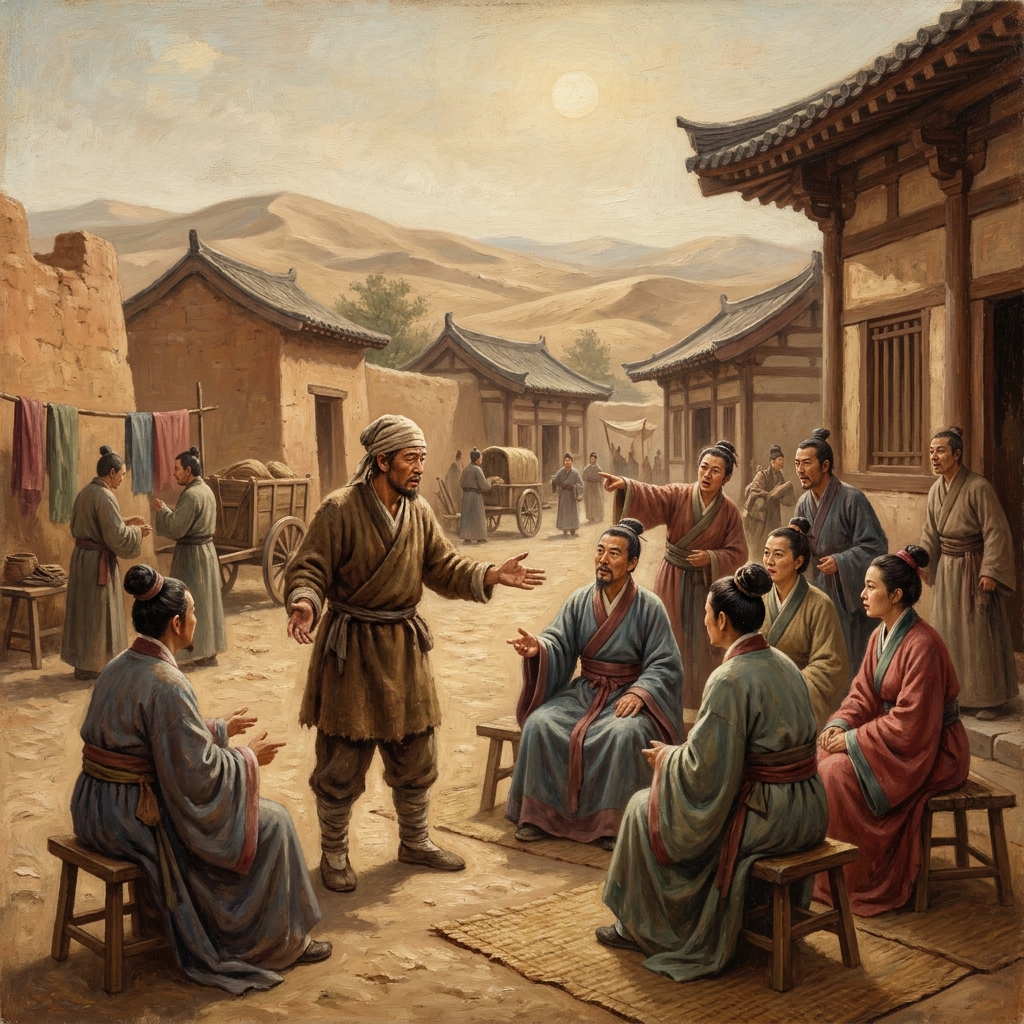
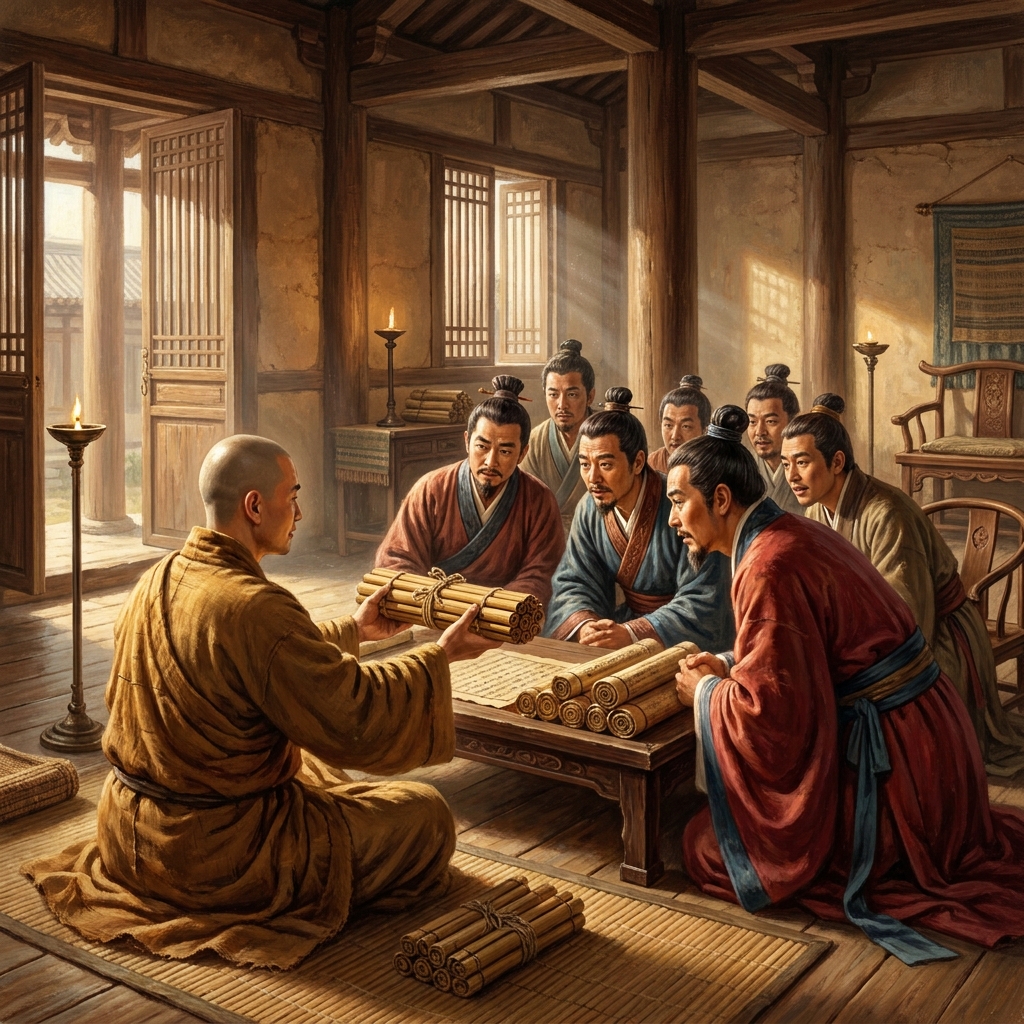
Buddhism’s Journey to China is designed to fix that misconception for your students in 6th grade social studies. The lesson walks the class through how Buddhist ideas traveled from India to China during the Han Dynasty. It does not just state that it happened. It gives them a concrete scenario to visualize. The material describes a merchant arriving at a busy Han market with scrolls of Buddhist stories. He sits down to share these narratives with people who are there to trade food and cloth. It shows that the transmission of culture was a human interaction, not a magical leap across borders.
How ideas move along trade routes
The core of this 6th grade social studies lesson is the concept of cultural diffusion. The lesson uses the example of stupas, which are dome-shaped Buddhist shrines, found in Chinese border towns. Because these architectural structures mirror Indian designs, students have physical evidence that Buddhist beliefs were being integrated into Chinese society. The lesson explains that this process is how we share ideas, learn from each other, and solve problems together. This is the same principle of exchange that we see today with the internet, even if the tools have changed.
This material fulfills the requirements of CA.HSS-6.6.8, which is the California-adopted standard asking students to describe the diffusion of Buddhism northward to China during the Han Dynasty. This is a foundational expectation that holds steady whether students attend classes in Capistrano Unified, Lodi Unified, Murrieta Valley Unified, or the Burlingame Elementary School District. The standard expects students to analyze the religious and social structures of early Chinese civilization. By focusing on this specific shift in belief systems, students meet the criteria of the standard without getting bogged down in too much abstract theory.
Why this foundation matters
Vocabulary is kept tight so students can focus on the movement of people and ideas. Here are the key terms the lesson introduces:
- Cultural diffusion: The process where ideas, beliefs, or customs spread from one group of people to another through trade, travel, or migration.
- Silk Road: A network of trade routes that connected China with the West, allowing for the exchange of goods and ideas.
- Han Dynasty: A period in Chinese history known for its strong government and the expansion of trade along the Silk Road.
If you have a student who missed the week or needs to complete an independent study module, this lesson works well because it stands on its own. It is also an excellent option for a substitute day because the narrative of the merchant in the marketplace is easy for a guest teacher to facilitate. I find that my students sometimes have trouble pinning down the specific shift in belief, so I often ask them to contrast the Han government focus with the spiritual shift brought by the monks and traders. It makes the concept of CA.HSS-6.6.8 much clearer to them when they see it as a competition or a merger of two different ways of seeing the world.
One caveat is that the lesson moves quickly through the Han Dynasty. You might want to pull out a map to show the actual distance these ideas traveled before students start the activity. It helps them appreciate how difficult that journey actually was. If they can track the route, they understand why it took so long for these ideas to become part of Chinese life.
Related lessons
Tools and Fire in Paleolithic Life, Development of early human tools and fire usage techniques
Jewish Migration and Roman Conflict, Historical events involving Jewish migration and Roman empire tensions
The Foundations of Ancient Rome, Early political and social structures of the Roman civilization