

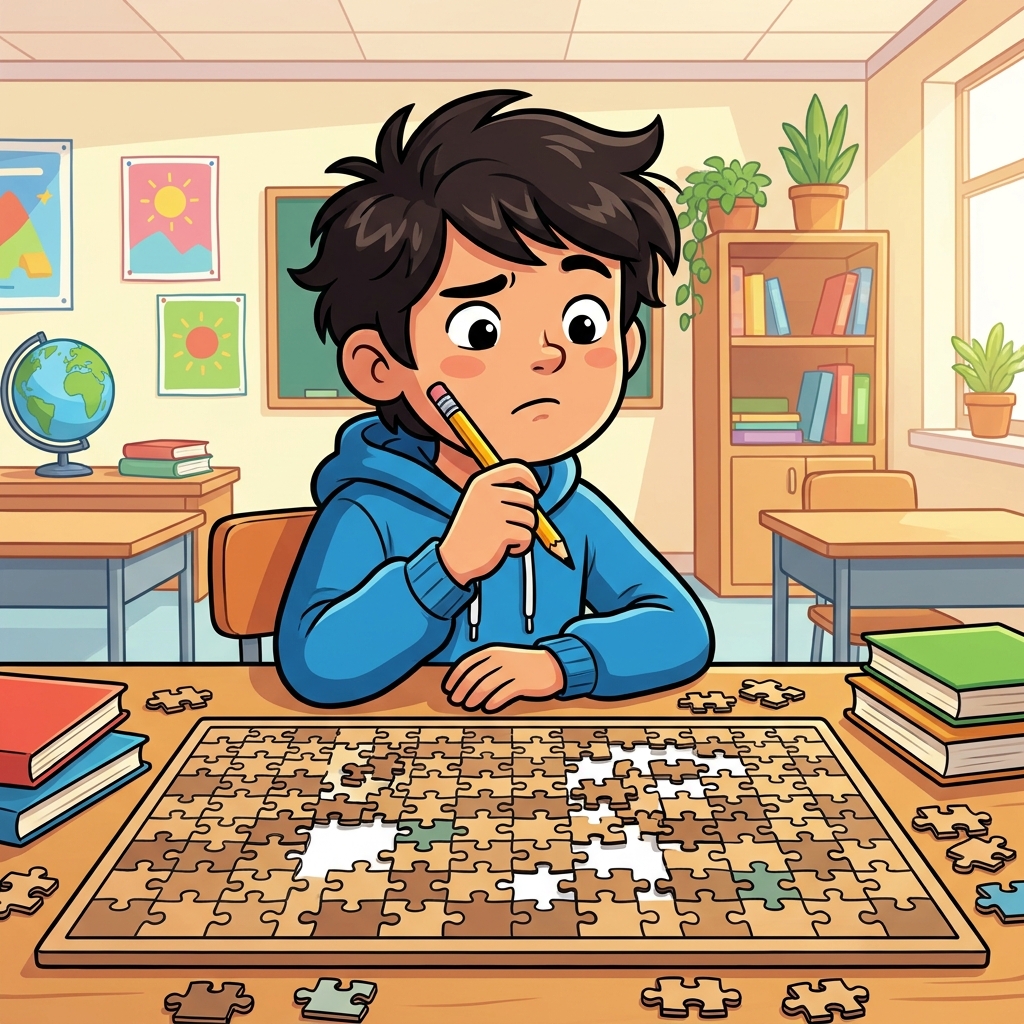
The biggest hurdle for my kindergarten students when they face a challenge is that they simply go silent. They stare at their paper, look around the room, or just put their head down instead of speaking up. If you are tired of the aimless wandering that happens during independent work time, Asking for Help is a straightforward way to teach students exactly how to signal when they are confused.
This kindergarten English Language Arts lesson is designed to be quick, clocking in at about fifteen minutes. It centers on the core concept that I can ask for help when I am confused. The material guides students through the process of acknowledging when they do not understand a task, specifically when they are faced with multi-step directions. It is a fundamental shift from passivity to active participation.
What the lesson actually asks students to do
In this kindergarten oral directions lesson, students practice the specific verbal scripts needed to request clarification. The objective is to ensure that a student can identify exactly when they have hit a wall and then reach out for support in a way that allows them to get back on track quickly. The lesson models this by demonstrating how to listen to directions, identify the unclear step, and ask a question to resolve that confusion.
The content is aligned with CA.ELA.SL.K.2. This standard asks students to confirm their understanding of information presented orally by asking questions about key details and requesting clarification. The sub-standard CA.ELA.SL.K.2.a adds the expectation that students must also understand and follow one- and two-step oral directions, which is the bedrock of classroom management. These expectations remain consistent whether you are teaching in San Francisco Unified, Newport-Mesa Unified, Lake Elsinore Unified, or Palm Springs Unified, as the standard is the same across the state of California.
When we break down the mechanics of the lesson, we focus on the specific scripts. Students learn to say phrases like, I heard the first step, but what comes next? or I know I need to go to my desk, but I forgot what I am doing when I get there. By giving students the exact language to use, you remove the anxiety of not knowing how to initiate a conversation with the teacher. They learn that their voice is the tool they use to gain clarity, rather than a disruption to the classroom flow.
Where students slip and how to support them
The trap with this standard is assuming that students naturally know what a clarifying question sounds like. Most kids think that saying I do not get it is enough, but that is rarely helpful to a busy teacher. During guided practice, I make sure to push them to identify the specific part of the instruction that caused the confusion. If you give a two-step direction, like go to your desk and take out your blue folder, a student might stop at the desk. You want them to ask, Which folder? instead of just stopping entirely.
I recommend using this as a whole-class assignment early in the year, but it also serves perfectly for a student who missed the week or even for a substitute day. It is short enough that it does not disrupt your flow, but it gives you a common language to use with your class for the rest of the school year. When a student knows exactly what to say to ask for help, the entire classroom dynamic improves. It turns a moment of frustration into a simple exchange of information, and that is a relief for both you and the student.
Watch them closely during the oral directions segment. You will see some students hesitate to speak up. That hesitation is exactly what this lesson aims to remove. Give them the scripts, model the frustration, and then show them how the confusion melts away once the right question is asked. By modeling the frustration ourselves, we show students that asking for help is a sign of engagement, not a lack of intelligence. This is a critical lesson for early learners who are just beginning to manage their own learning process in a classroom environment. Giving them these scripts early ensures that they have the confidence to speak up during independent work, small group rotations, or when they are tackling a new, complex task for the first time.
Related lessons
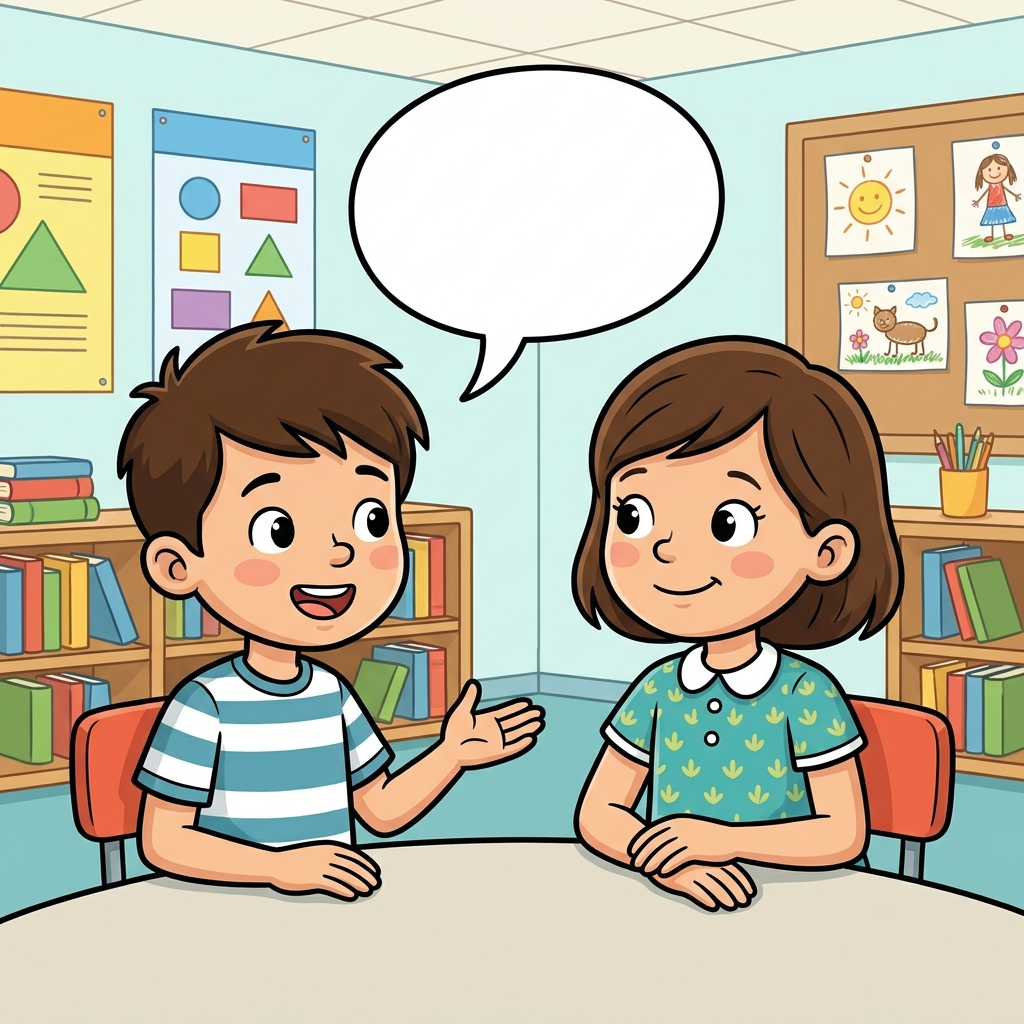
Talking Together, Students practice building conversation skills with their classroom peers
Learning From Our Day, Reflecting on daily activities to build memory and comprehension
Finding Story Details, Identifying key pieces of information within a read aloud